How to Verify Watch Purchase Provenance Safely
Published September 8, 2026 · Last updated October 17, 2026 · By Lume Wrist Watches Editorial Team
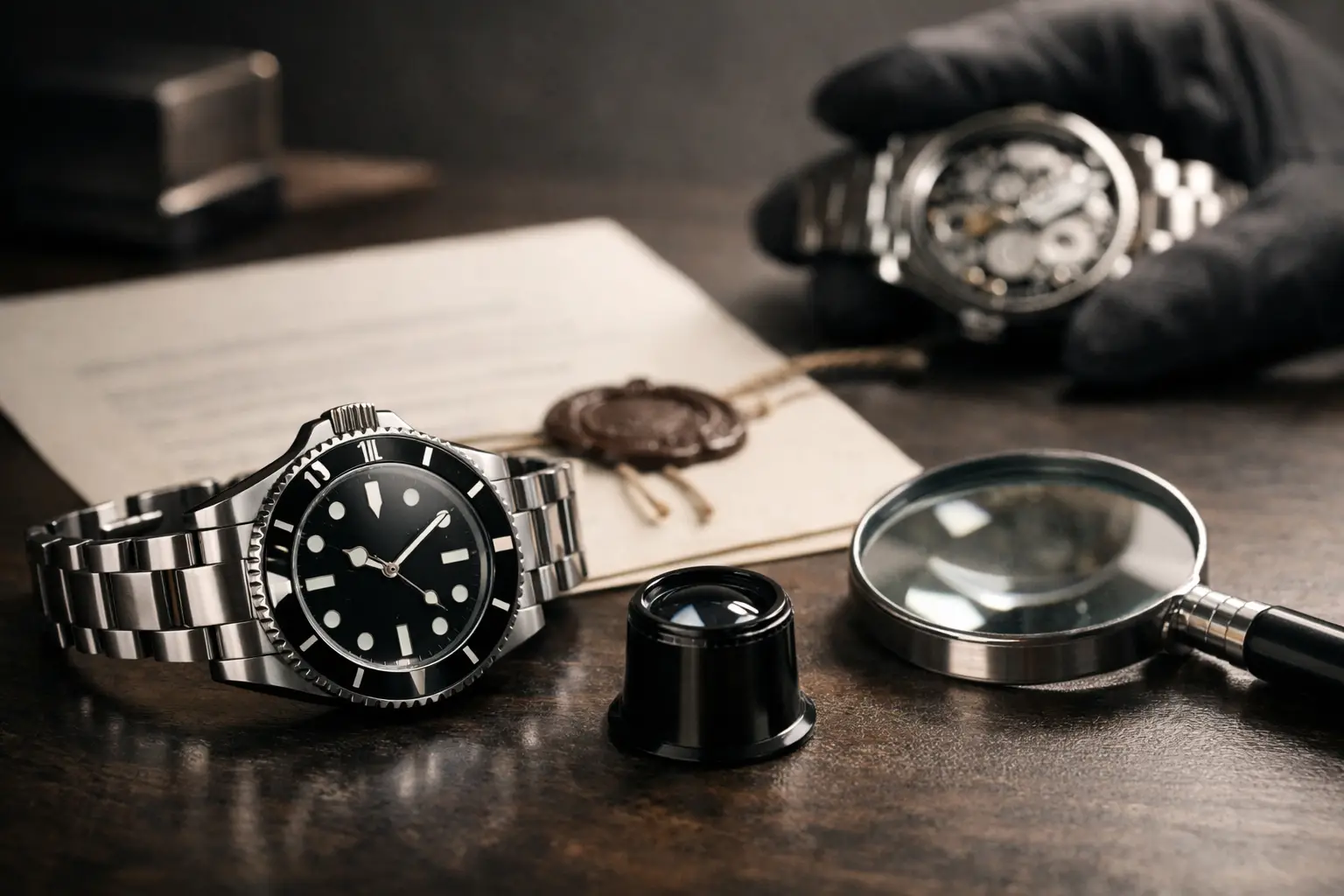
A luxury watch can be authentic and still raise questions that matter at resale, service, or insurance time. Before funds change hands, take the time to verify watch purchase provenance: the documented history connecting a specific watch to its reference, serial number, prior ownership trail, and supporting records. For a Rolex, Patek Philippe, Audemars Piguet, Omega, or comparable high-value timepiece, provenance is not decorative paperwork. It is part of the purchase decision.
Provenance does not mean every watch must arrive with a complete archive from its first day of sale. Many excellent pre-owned watches do not. It means the seller can provide a credible, consistent account of the piece in front of you, and that the watch itself supports that account.
What Provenance Proves - and What It Does Not
Authentication answers a focused question: is this watch genuine, and are its major components consistent with the claimed model? Provenance goes further. It considers where the watch has been, how it has been represented, whether its documentation aligns with its identifying details, and whether there are unexplained gaps that affect confidence.
A complete original set may include the factory warranty card or papers, presentation box, manuals, hang tags, purchase receipt, and service documentation. These items can strengthen a watch's collectibility, especially for sought-after references. But a box and papers alone do not prove that every component is correct or that the documents belong to the specific watch offered. Documents must be checked against the physical watch.
Conversely, the absence of original papers does not automatically disqualify a watch. Older pieces are often separated from their original accessories over decades. In that case, the standard should shift toward professional inspection, clear disclosure, serial and reference verification, condition reporting, and a retailer willing to stand behind the sale.
How to Verify Watch Purchase Provenance Before You Buy
The strongest approach is cumulative. One convincing record is useful. Several independent details that agree with one another are far more meaningful.
Start with the reference and serial information
Ask for the exact reference number and, where appropriate, the serial number or a securely redacted version of it. The reference identifies the model configuration. It should align with the case shape, dial layout, bezel, bracelet or strap configuration, caliber, and period-correct features.
Serial numbers require more discretion. A reputable seller may not publish a full serial number online, particularly for modern high-value watches. That is reasonable. What matters is that the retailer has inspected it, recorded it for its internal files, and can confirm that it corresponds with the supplied documents when documents are included.
Be alert to vague listings that identify a watch only by a broad family name. “Rolex Submariner” or “Patek Philippe Calatrava” is not enough for a high-consideration purchase. A proper listing should identify the specific reference and disclose material details such as production era, dial type when relevant, bracelet condition, included accessories, and service history if known.
Match documents to the watch, not merely the brand
Original warranty cards, certificates, invoices, and service receipts can be valuable evidence when their details match the watch. Review whether the reference is correct, whether the serial information is consistent, and whether the dates make sense for the watch's production period and stated history.
Pay attention to formatting, print quality, stamps, handwriting, and alterations. A document with missing or inconsistent information is not necessarily invalid, but it deserves an explanation. The seller should be direct about what is original, what is later-issued service documentation, and what cannot be independently confirmed.
Service records deserve particular attention. A manufacturer or qualified watchmaker service record can show that a watch was handled as the claimed model and may document work performed. It does not necessarily establish uninterrupted ownership history, but it adds a useful point of verification. If parts were replaced during service, ask which parts were changed and whether the originals are included. For collectors, that distinction can materially affect desirability.
Evaluate the watch's physical consistency
A credible provenance review includes the watch itself. The case, dial, hands, movement, bracelet, clasp, crystal, and engravings should make sense together for the stated reference and era. This is where experienced in-house evaluation matters, because small inconsistencies can be easy to overlook in photographs.
Condition should also be described with precision. A polished case is not inherently a problem, but excessive polishing can soften edges and alter the original geometry. A replacement bracelet or service dial may be appropriate and professionally installed, yet should be disclosed rather than presented as original to the watch. The right configuration depends on your objective: daily wear, historical originality, or a balance of both.
High-resolution images should support, not replace, inspection. Look for clear views of the dial, case sides, lugs, bezel, bracelet, clasp, caseback, and any relevant hallmarks or engravings. If the photos avoid the areas that establish condition, request additional images or select a seller that has already documented them clearly.
Ask who is accountable for the representation
Provenance is also about the selling process. Determine whether the seller has inspected the piece in-house, whether it offers its own authentication and condition assessment, and what happens if the watch is not as represented. A seller's willingness to provide documentation, answer specific questions, and place clear terms around the transaction is meaningful.
For an expensive watch, informal assurances are not enough. You should know the return window, shipping method, insurance terms, and warranty coverage before purchasing. These safeguards do not replace a careful provenance review, but they provide practical recourse if the delivered watch differs materially from the description.
Lume Wrist Watches offers in-house certified timepieces, free insured US shipping, a 30-day return window, and a two-year warranty. For buyers comparing pre-owned luxury watches, protections like these establish who remains accountable after delivery.
Records That Add Confidence
The value of a record depends on its relevance to the exact watch and whether it can be connected to other evidence. The most useful materials commonly include:
- Original warranty card, certificate, or papers that align with the reference and serial number.
- Original purchase receipt or a credible historical invoice, when available.
- Manufacturer or qualified service documentation identifying the watch or its serial number.
- A detailed condition report and high-resolution photographs from the selling retailer.
- Written confirmation of authentication, return eligibility, warranty coverage, and insured shipping arrangements.
Not every watch will have all five. A modern, full-set watch may have most of them. A vintage or long-discontinued piece may have fewer original materials but a stronger case for purchase when its construction, condition, service history, and dealer documentation are thoroughly evaluated. The goal is not to demand perfection from every pre-owned watch. It is to understand exactly what evidence supports the seller's description.
Red Flags That Call for a Pause
A provenance concern is not always proof of a problem. It is often a reason to ask better questions before moving ahead. Be cautious when a seller will not state the reference, provides only generic photos, avoids discussing condition, or claims that documents are available without showing enough information to connect them to the watch.
The same applies to unusually broad claims such as “all original” with no supporting detail. Originality is nuanced. A watch may have a later replacement crystal, a service crown, or refreshed hands while remaining authentic and appealing. What matters is transparent disclosure. A knowledgeable seller should distinguish between factory-original components, later manufacturer service parts, and items whose history cannot be verified.
Also pause when the story changes between the listing, photos, and direct communication. If the stated year, configuration, accessories, or service history shifts without a clear explanation, do not treat that as a minor administrative issue. On a luxury purchase, consistency is part of confidence.
Provenance After Delivery
Your verification should continue when the watch arrives. Before removing protective materials or wearing it, compare the delivered watch with the listing photos and written description. Confirm the reference, inspect the stated accessories, and review the documents provided. Keep the invoice, condition report, correspondence, and shipping records together in a secure place.
If you plan to insure the watch, these records can help establish what was purchased and in what condition. They are also useful if you later sell, service, or pass the watch to another owner. For collectible pieces, preserving even routine transaction records can strengthen the story of the watch over time.
A well-bought watch should not leave you guessing about its identity, condition, or the party standing behind it. Ask for the details that connect the documents, the physical timepiece, and the transaction itself. That discipline is one of the most practical ways to buy with confidence.