What Swiss Made Means on a Luxury Watch
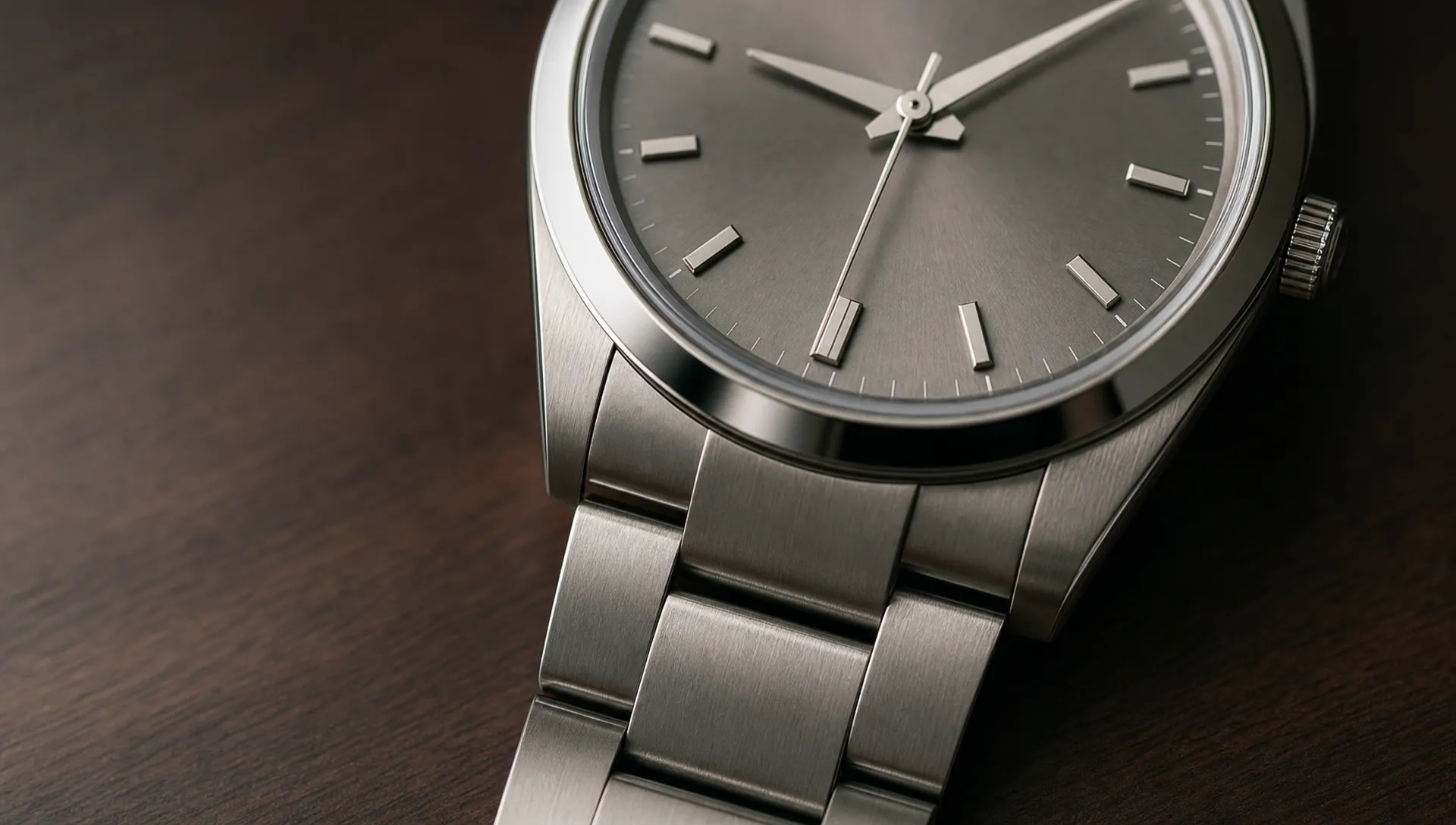
Swiss made is a legal origin mark, not a blanket promise of quality or resale performance. This guide explains the requirements, common misconceptions, and what to inspect before buying a pre-owned luxury watch.
# What Swiss Made Means on a Luxury Watch Swiss made means a watch meets specific Swiss legal requirements for origin, movement work, casing, final inspection, and manufacturing cost. It does not, by itself, prove authenticity, condition, originality, service history, or future resale performance. That distinction matters. Many buyers see the words at 6 o'clock on the dial and treat them as a complete answer. They are not. They are a starting point for evaluating a luxury watch, especially in the pre-owned market. ## The plain-English definition of Swiss made For a modern watch to be called Swiss made, Swiss law requires more than a logo on the dial. According to the Federation of the Swiss Watch Industry, the watch must use a Swiss movement, be cased up in Switzerland, receive final inspection in Switzerland, and have at least 60 percent of its manufacturing costs generated in Switzerland. Here is the practical version. | Requirement | What it means in practice | Why it matters to a buyer | |-------------|---------------------------|----------------------------| | Swiss movement | The movement must meet Swiss movement rules, including Swiss assembly and inspection | The engine of the watch is not merely imported and labeled | | Cased up in Switzerland | The movement is installed into the case in Switzerland | Final watch assembly has a Swiss origin component | | Final inspection in Switzerland | The manufacturer performs final quality control in Switzerland | The finished watch is checked under Swiss oversight | | 60 percent Swiss manufacturing costs | At least 60 percent of qualifying production costs are generated in Switzerland | The label reflects meaningful Swiss production, not only branding | This is a country-of-origin standard. It is not a grading report. A heavily polished watch, a watch with a replacement dial, and a well-preserved original example can all carry Swiss made wording. The label does not separate those conditions for you. ## Swiss made vs Swiss movement Swiss made and Swiss movement are often confused. They are related, but not identical. A Swiss movement refers to the mechanism inside the watch. A Swiss made watch refers to the finished watch and its qualifying production process. A watch can advertise a Swiss movement without meeting the broader requirements for a Swiss made watch. | Marking or term | Applies to | What it suggests | What it does not prove | |-----------------|------------|------------------|-------------------------| | Swiss Made | The finished watch | The watch meets Swiss origin rules | Authenticity, originality, condition, or service status | | Swiss Movement | The movement | The caliber meets Swiss movement requirements | That the complete watch is Swiss made | | Swiss | Often seen on older dials | A Swiss origin claim, sometimes period-specific | That every part is Swiss-made | | Geneve or Genève | Brand or model language, often associated with Geneva | Brand heritage or model naming | A legal quality grade by itself | | Chronometer | Usually tested precision, often through COSC when stated | The movement met defined accuracy criteria when tested | Current accuracy after years of wear | For first-time buyers, the important point is simple. Swiss made can tell you where and how the watch qualifies. It cannot tell you whether the specific watch in front of you is a good example. ## Why the label became so powerful Switzerland built its watch reputation over centuries through specialized suppliers, skilled regulation, movement development, case finishing, dial production, and brand continuity. The best Swiss brands made mechanical watches durable, repairable, and culturally recognizable. That reputation has commercial value. It is why the wording is protected. It is also why the label is sometimes misunderstood. Place matters in luxury because it compresses trust. The same logic appears in other high-trust purchases, from provenance-sensitive art to an [expert-guided Uganda gorilla trekking safari](https://pawmacsafaris.com/), where local knowledge, licensing, and execution matter as much as the destination name. In watches, Swiss made should prompt better questions, not end the conversation. ## What Swiss made does not tell you A luxury watch is a collection of details. The dial, hands, case geometry, bracelet, clasp, movement, serial range, service history, and accessories all matter. The Swiss made line does not verify any of those details. | Question | Does Swiss made answer it? | What you should verify instead | |----------|----------------------------|--------------------------------| | Is the watch authentic? | No | Dealer authentication, movement inspection, reference consistency | | Is the dial original? | No | Dial printing, lume type, aging, period-correct details | | Has the case been overpolished? | No | Lug shape, bevels, caseback condition, bracelet fit | | Was it serviced recently? | No | Service records, timing results, pressure testing when relevant | | Does it include box and papers? | No | Accessories listed with the watch, serial matching where applicable | | Will it increase in value? | No | No label guarantees appreciation or resale performance | This is where many buyers overpay. They buy the brand and the dial text, then discover condition is the real market separator. ## Dial markings, age, and reference context On many modern watches, Swiss Made appears at the lower edge of the dial. On vintage and transitional pieces, you may see variations such as Swiss, T Swiss T, or Swiss T<25. These markings can relate to production era and luminous material. Collectors pay close attention to these details. A dial that looks correct at first glance may be wrong for a serial range. A service dial may be genuine, but not original to the watch. Replacement hands may be authentic, but not period-correct. None of this is automatically bad. It just needs to be disclosed and priced accordingly. For example, a vintage Omega, Rolex, Heuer, or Breitling should be evaluated by reference, caliber, case shape, dial configuration, and production context. A two-word dial marking is not enough. ## How Swiss made compares with other watch standards Swiss made is not the only mark a buyer may encounter. Some labels relate to origin. Others relate to accuracy, finishing, or testing. | Standard or mark | Main focus | Common buyer takeaway | Important limitation | |------------------|------------|-----------------------|----------------------| | Swiss Made | Origin and manufacturing threshold | The watch qualifies under Swiss rules | It is not an authentication certificate | | COSC Chronometer | Movement accuracy testing | The movement met chronometer standards at testing | It does not confirm current condition decades later | | METAS Master Chronometer | Accuracy, magnetic resistance, and performance testing for certified models | Strong technical testing when present | Applies only to specific watches that carry the certification | | Geneva Seal | Origin, finishing, and functional criteria tied to Geneva | High-level finishing and regional criteria | Not all excellent watches qualify or seek it | | Manufacturer warranty card | Sale and warranty documentation | Can support provenance and ownership history | Cards can be missing, expired, or not sufficient alone | A good watch can lack some of these marks. A poor example can still carry one of them. The best evaluation combines the label with physical inspection and documentation. 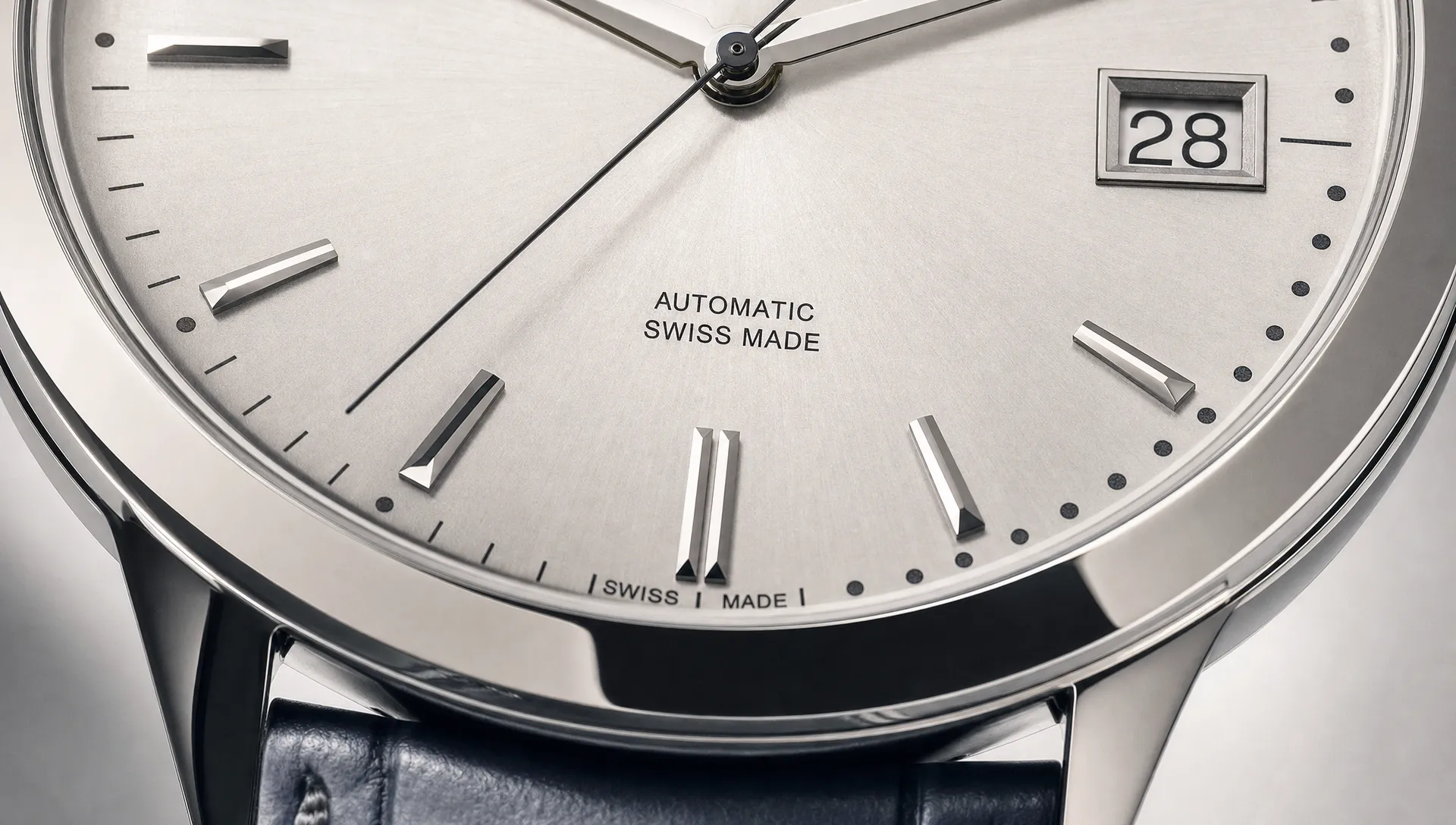 ## What to inspect before buying a Swiss made pre-owned watch In the pre-owned market, the safest approach is methodical. Start with the reference number. Then move outward to the movement, dial, case, bracelet, accessories, and service condition. A short checklist helps. - Confirm the reference number and model family before comparing prices. - Ask whether the movement has been inspected and serviced. - Review case condition, especially lugs, crown guards, bezel edges, and caseback engraving. - Check whether the dial, hands, bezel, bracelet, and clasp are correct for the reference. - Clarify whether box, papers, manuals, tags, or service receipts are included. - Understand the warranty, return policy, shipping insurance, and payment terms before sending funds. Servicing is especially important. A mechanical watch may look excellent and still need costly movement work. If you are comparing older watches, Lume's guide to [luxury watch servicing intervals and maintenance costs](https://lumewrist.com/blog/luxury-watch-servicing-intervals-costs) is a useful companion to this topic. ## Examples: Swiss made as one part of the buying decision A classic automatic Rolex such as the [Rolex (4470)](https://lumewrist.com/product/rolex-4470) is a good example of how to think beyond the dial text. The Swiss made identity matters, but the stronger buying questions are about authentication, case condition, movement inspection, service status, and whether the watch fits your wrist and use case. The same applies to an older Omega such as the [Omega Genève (166.0117)](https://lumewrist.com/product/omega-geneve-166-0117). The reference, dial condition, movement condition, and overall originality shape the buying decision more than the presence of Swiss wording alone. | Watch or reference | What Swiss made tells you | What still needs separate review | |--------------------|---------------------------|----------------------------------| | Rolex (4470) | The watch belongs to the Swiss luxury watch tradition and uses Swiss production identity | Authentication, automatic movement condition, case shape, service status | | Omega Genève (166.0117) | The model sits within Omega's Swiss watchmaking history | Dial originality, movement condition, reference consistency, accessories | | Heuer Monaco 73633 | The watch carries Swiss brand and production context | Case condition, dial variant, movement caliber, collector-specific details | | Breitling Premier 777 | The watch should be evaluated through Swiss brand context and reference detail | Case, dial, movement, bracelet or strap, service condition | This is why reference-level evaluation matters. A watch is not just a brand name. It is a specific configuration. ## Fit, budget, and total ownership cost Swiss made does not tell you whether a watch fits. For many buyers, fit is the difference between a watch that gets worn and one that stays in a box. | Wrist size | Often comfortable case range | Notes | |------------|------------------------------|-------| | Under 6.25 in (159mm) | 31mm to 36mm | Lug-to-lug length matters as much as diameter | | 6.25 to 7 in (159mm to 178mm) | 34mm to 40mm | Most classic dress and sport watches sit well here | | 7 to 7.75 in (178mm to 197mm) | 38mm to 42mm | Bracelet adjustment and case thickness become important | | Over 7.75 in (197mm) | 40mm to 44mm | Larger watches can work, but proportion still matters | Budget also needs context. A $2,000 to $8,000 first Swiss watch may prioritize reliability, clean condition, and easy servicing. A $8,000 to $50,000 collector purchase may focus more on reference nuance, dial variant, production era, and originality. | Buyer type | Common budget range | Main risk | Best use of Swiss made information | |------------|--------------------|-----------|------------------------------------| | First luxury watch buyer | $2,000 to $8,000 | Overpaying for brand name alone | Treat it as a quality filter, then inspect condition | | Gift buyer | $3,000 to $10,000 | Choosing the wrong size or style | Use it for reassurance, then focus on wearability and return terms | | Collector | $8,000 to $50,000+ | Missing reference or originality issues | Use it as baseline context, not the deciding factor | | Pre-owned vs retail buyer | Varies by model | Ignoring service and ownership cost | Compare warranty, servicing, condition, and liquidity without assuming appreciation | No watch should be bought on origin wording alone. Total cost of ownership includes servicing, straps or bracelet parts, insurance, storage, and possible future maintenance. For a broader framework, see Lume's guide on [how to choose a luxury wrist watch that lasts for decades](https://lumewrist.com/blog/how-to-choose-a-luxury-wrist-watch-that-lasts-for-decades). ## How Lume evaluates Swiss made watches Lume Wrist Watches is an independent luxury watch retailer in New York City. It is not an authorized dealer for Rolex, Patek Philippe, Audemars Piguet, Omega, or other brands. Brand names are used for identification only. For pre-owned watches, the Swiss made label is only one part of the review. Lume's inventory is authenticated pre-owned, listed in Excellent condition, certified authentic by Watch CSA, and serviced before shipping. Watches are inspected in-house by specialists before being offered for sale. Buyer protections matter as much as the label. Lume offers free insured shipping within the United States, international shipping on request and quote, a 30-day return guarantee, and 2-year warranty coverage. Payment options include bank wire transfer as the primary method, credit card, and cryptocurrency. ## Frequently Asked Questions **Does Swiss made mean every part is made in Switzerland?** No. Swiss made is based on specific legal requirements, including movement rules, Swiss casing and inspection, and a Swiss manufacturing cost threshold. It does not mean every component must be Swiss-made. **Is Swiss made the same as authentic?** No. A counterfeit dial can carry false wording, and a genuine watch can have non-original parts. Authentication requires inspection of the movement, case, dial, reference, serial details, and overall configuration. **Does Swiss made mean the watch is better than a non-Swiss watch?** Not automatically. Many Swiss watches are excellent, but quality depends on the brand, movement, finishing, materials, serviceability, and condition. Some non-Swiss watches are also highly respected. **Should I avoid a watch without box and papers?** Not always. Box and papers can support provenance, but condition and authenticity remain more important. A watch without papers can still be a strong purchase if properly authenticated and priced accordingly. **Does Swiss made help resale value?** It can support market recognition, especially for established Swiss brands, but it does not guarantee resale value or appreciation. Brand, reference, condition, originality, demand, and service history matter more. ## A careful next step If you are comparing Swiss made watches, start with the label, then move to the reference, condition, movement, service status, and seller protections. To review authenticated pre-owned examples with clear buying terms, explore Lume's current [luxury watch selection](https://lumewrist.com/shop).