How to Inspect Watch Condition Before You Buy
Published September 14, 2026 · Last updated October 17, 2026 · By Lume Wrist Watches Editorial Team
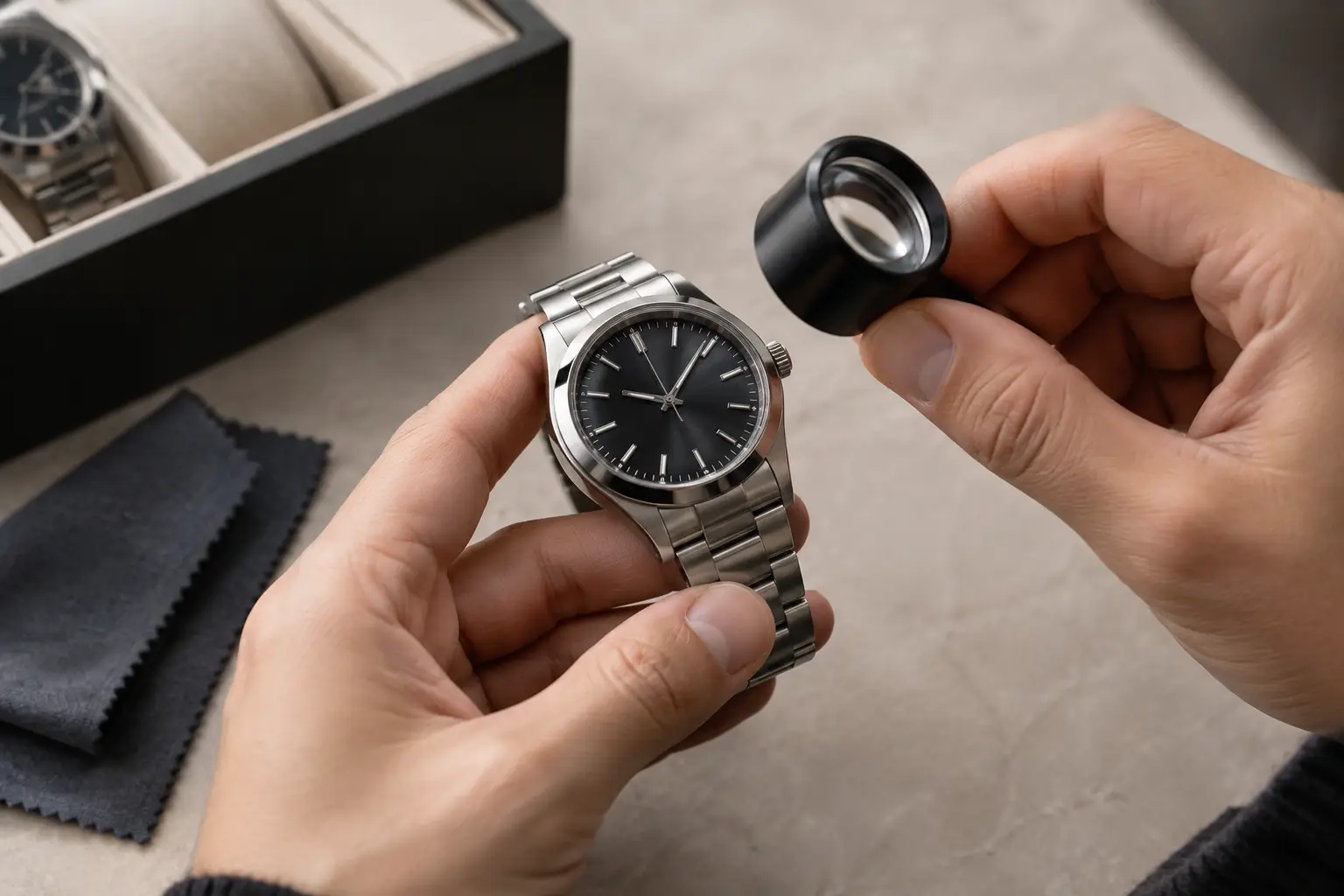
A luxury watch can be authentic, desirable, and still be the wrong example to buy. A heavily polished Rolex case, a moisture-marked Patek Philippe dial, or an Audemars Piguet bracelet with excessive stretch can materially change both the ownership experience and long-term collectibility. Knowing how to inspect watch condition means looking beyond a clean product photo and asking what has been preserved, what has been repaired, and what those details mean for the specific reference.
Condition is not a single grade. It is the combined state of the case, bracelet, dial, hands, crystal, movement, and supporting documentation. A watch with honest wear and strong original components may be more compelling than a cosmetically perfect example that has lost important factory detail through aggressive refinishing.
Start With the Complete Watch
Begin with the watch as a whole. Ask whether the condition appears consistent across all components and appropriate for its age. A vintage Omega that shows gentle wear to the case, dial, and bracelet can feel coherent. A sharply finished case paired with a heavily aged dial and a loose bracelet deserves closer attention. It may be entirely legitimate, but the contrast should be explained.
Look for high-resolution photographs taken from multiple angles. Front-facing images are useful, but side profiles and close views of the lugs, bezel, clasp, crown, and caseback reveal much more. Clear photography does not replace an in-person inspection, yet it gives a serious buyer the information needed to ask precise questions before committing.
A condition report should distinguish between normal wear, professional service work, replacement components, and material damage. “Excellent condition” is too broad on its own. The meaningful details are whether the case has been polished, whether the crystal has been replaced, when the movement was serviced, and whether the dial and hands remain original to the watch.
Inspect Watch Condition at the Case and Bracelet
The case is where refinishing is most visible. Factory case geometry is part of a luxury watch’s design. On a Rolex sports model, for example, lug proportions, chamfers, and brushing patterns help define the reference. On an Audemars Piguet Royal Oak, the transitions between brushed and polished surfaces require particular care. Poor polishing can soften edges, round lugs, blur bevels, and remove metal that cannot be put back.
A polished watch is not automatically a poor purchase. Many watches have been professionally refinished during routine service, and a careful polish may be appropriate for a modern piece intended for regular wear. The trade-off is that collectors often place a premium on sharp, minimally altered cases, especially for discontinued or vintage references.
Examine the case for deep dents, corrosion, tool marks around the caseback, and uneven gaps between the case and bracelet. Check that bezel numerals, tachymeter scales, and engraved details remain crisp. For watches with rotating bezels, test whether the action feels correct for the model. Excessive looseness, grinding, or misalignment should be disclosed and evaluated.
On a bracelet, inspect the links, clasp, screws, and end links. Light marks on polished center links are expected with wear. More significant concerns include severe stretch, loose pins, bent links, damaged screw heads, or a clasp that does not close securely. Bracelet condition matters because correct replacements can be expensive and because an original bracelet contributes to a watch’s completeness.
Read the Dial, Hands, and Crystal Carefully
The dial is often the most sensitive component in a collectible watch. Original dials can develop patina over decades, and that aging may be desirable when it is even, stable, and consistent with the watch. Water damage, spotting, flaking, or uneven discoloration are different matters. They can signal past moisture intrusion and may affect desirability even after the movement has been repaired.
Look closely at printing, luminous material, markers, and date windows. The text should be sharp and correctly positioned. Hour markers should sit evenly, and the date should align cleanly in its aperture. On vintage pieces, matching color between the dial lume and handset lume may support originality, though there are legitimate exceptions based on service history and aging patterns.
Hands deserve the same attention. Corrosion, missing luminous material, or noticeable color mismatch may indicate replacement or damage. Replacement hands are not inherently disqualifying, particularly on a watch that has been regularly serviced. Their significance depends on the reference, age, collector interest, and whether the seller discloses the change clearly.
A crystal may show light surface marks that can be addressed, depending on its material. Deep chips, cracks, and edge damage are more consequential. With sapphire crystals, inspect for chips near the bezel. With older acrylic crystals, look for crazing or fractures. Any evidence of moisture under the crystal warrants a more detailed review of the dial and movement.
Look Beyond Cosmetics to Movement Health
A watch can photograph beautifully and still require mechanical attention. Ask whether it is running, when it was last serviced, and whether its functions have been tested. For a time-only watch, that includes winding, setting, and timekeeping. For a chronograph, test the start, stop, reset, and subdial functions. For calendar complications, confirm that the date changes properly and that all correctors operate as intended.
Timekeeping should be considered in context. A vintage mechanical watch may not perform to modern chronometer expectations, while a newer Rolex, Omega, or Patek Philippe should generally show stable operation appropriate to its age and service history. The key question is not whether a watch is flawless, but whether its performance has been assessed and whether known issues are stated plainly.
Water resistance is another area where assumptions create risk. A screw-down crown and a diver-style case do not mean a pre-owned watch is ready for swimming. Gaskets age, seals can fail, and pressure resistance should be tested before exposure to water. If water use matters to you, request clear confirmation of the watch’s current water-resistance status.
Confirm Originality, Configuration, and Documentation
Authentication establishes that a watch is genuine. Originality is a separate and more nuanced question. A genuine watch may have service components, a replaced bezel insert, a later bracelet, or refinished hands. None of these facts necessarily make it a poor choice. They do affect how accurately the watch should be described and how a collector may evaluate it.
Compare the reference, dial configuration, bracelet code, and serial-era details against what is correct for the model. This is especially valuable for older Rolex, Patek Philippe, and Omega watches, where details can vary by production period. Box and papers can add confidence and completeness, but their absence does not determine authenticity or condition. Their relevance depends on the watch and the buyer’s priorities.
A professional seller should be prepared to explain material condition points without relying on vague language. For higher-value purchases, request clarification on case refinishing, service history, replaced components, functionality, and included accessories. The quality of those answers is part of the buying decision.
Choose Protection That Matches the Purchase
Even a careful inspection cannot eliminate every risk from photographs or a brief conversation. The purchase process should give you time to assess the watch after delivery and recourse if the item is not as represented. Authentication, a documented condition review, insured shipping, a defined return period, and warranty coverage all matter because they create accountability after payment.
At Lume Wrist Watches, timepieces are authenticated and in-house certified, with free insured US shipping, a 30-day return window, and a two-year warranty. Those safeguards are particularly valuable when evaluating a complicated mechanical watch or a reference you have not handled previously.
If a seller cannot clearly describe the watch, provide detailed images, or explain its protection terms, restraint is reasonable. The right watch should withstand informed questions. Buy the example whose condition you understand, whose configuration fits your goals, and whose purchase protections let you inspect it with confidence once it is in your hands.