Misrepresented Watch Condition: What to Check
Published September 28, 2026 · Last updated October 17, 2026 · By Lume Wrist Watches Editorial Team
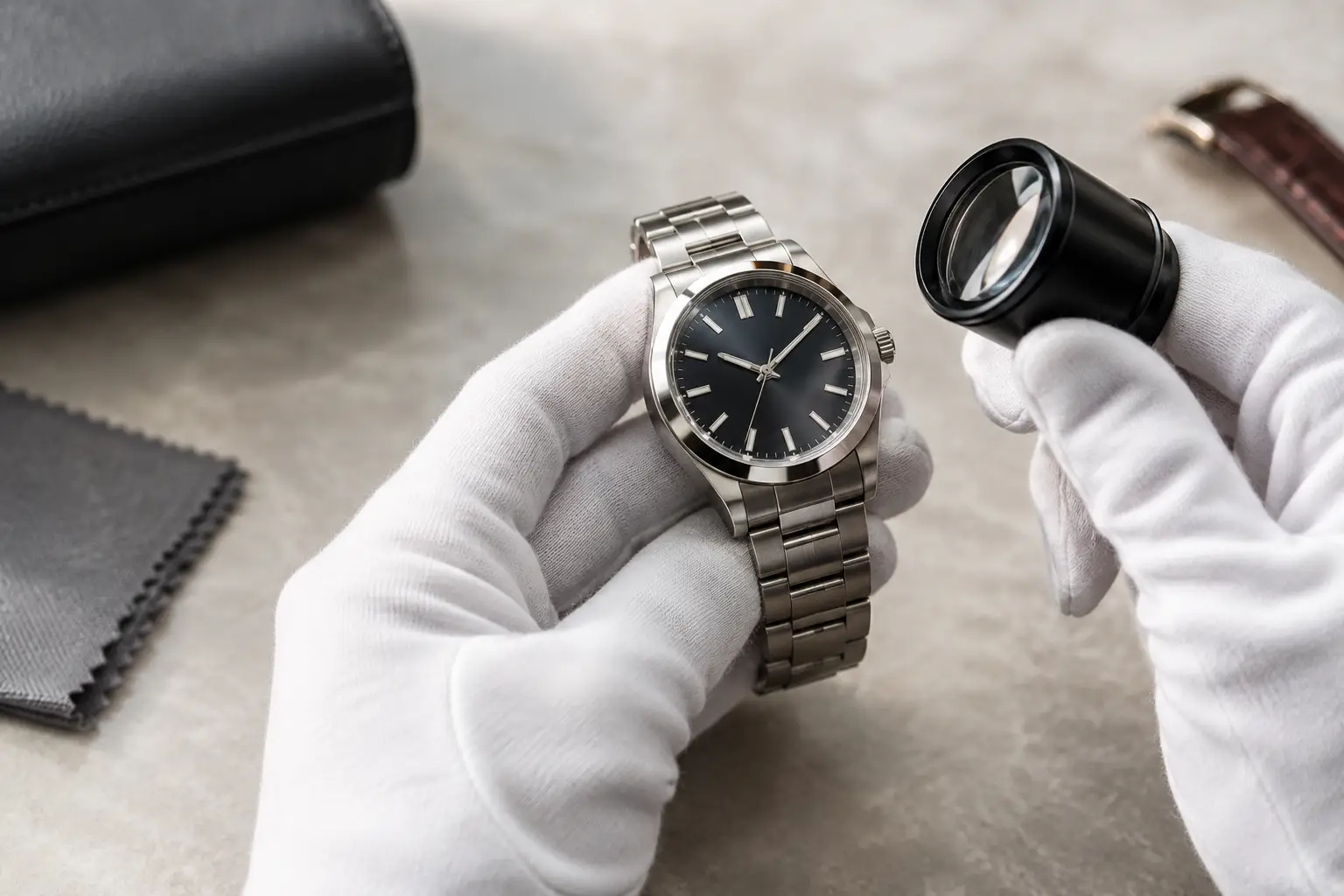
A misrepresented watch condition is rarely limited to a faint scratch that escaped a listing photo. On a Rolex, Patek Philippe, Audemars Piguet, or Omega, condition can affect wearability, originality, service needs, collector appeal, and the confidence you should have in the purchase. A watch described as “excellent” may still have an over-polished case, replacement components, moisture damage, or a bracelet stretched beyond what the photographs reveal.
For a high-value pre-owned watch, condition is not a marketing adjective. It is a set of verifiable facts. The more clearly those facts are documented before payment, the less likely a buyer is to face an expensive surprise after delivery.
What Misrepresented Watch Condition Usually Means
Condition is misrepresented when the description, photographs, and actual watch do not align in a material way. Sometimes that means visible wear was omitted. More consequentially, it can mean that restoration, component replacement, mechanical faults, or prior damage were described vaguely or not disclosed at all.
A seller does not need to call a watch “mint” for a description to be misleading. Terms such as “clean,” “sharp,” “unpolished,” “all original,” and “recently serviced” carry specific implications. If the lugs have been softened by polishing, the dial has been altered, or a service was limited to regulation rather than a full overhaul, the language should reflect that reality.
The issue is not that a pre-owned watch has wear. Honest wear is expected, and many exceptional vintage and modern watches show it. The concern is whether the buyer can understand the watch’s true state and make an informed decision.
Start With the Case, Bezel, and Crystal
The case is where aggressive refinishing often becomes apparent. A properly maintained watch may have light surface marks from normal use. A heavily polished example can lose the crisp geometry that defines its reference: softened lug edges, rounded bevels, uneven brushing, distorted case lines, or a bezel that no longer has its intended profile.
This matters especially on models known for strong case architecture. The difference between original, sharp lines and excessive metal removal may be subtle in a listing photo, yet clear under close inspection. Ask for direct, high-resolution images of the case sides, lugs, bezel, crown guards, and caseback, taken in neutral lighting rather than filtered studio light.
A crystal also deserves more than a quick glance. Light marks can often be addressed, depending on the material. Chips, deep scratches, edge damage, haze beneath the crystal, or signs of moisture inside the watch raise more serious questions. Condensation or spotting under the crystal can point to compromised seals or previous water intrusion, neither of which should be treated as a cosmetic detail.
Dials and Hands Require Careful Disclosure
The dial is often the most sensitive element of a collectible watch. It should be evaluated for more than whether it looks clean. Look for uneven coloration, spotting, corrosion, paint loss, damage around the markers, and inconsistencies in printing. On luminous dials and hands, variation can be normal with age. What matters is whether the appearance is consistent with the watch’s era and whether any replacement or restoration has been disclosed.
A dial that appears unusually perfect for an older watch is not automatically a problem, but it warrants a closer conversation. Refinishing can alter typography, minute tracks, luminous plots, and the character that collectors expect from an original dial. Likewise, replacement hands may be entirely appropriate after service, but they can affect originality and should not be presented as original to the watch.
Photographs should show the dial straight on and at close range, not only from angles designed to conceal texture or surface flaws. If the seller cannot provide clear dial images, the buyer is being asked to accept uncertainty where it matters most.
Originality Is Not the Same as Cosmetic Perfection
Collectors often prefer honest signs of age over a watch made to look newer than it is. A light, even patina may be desirable on one reference and less relevant on another. A modern luxury sports watch can reasonably be expected to have a fresh appearance, while a decades-old vintage piece should be judged by preservation, not by an unrealistic standard of perfection.
The key is accurate classification. A watch can be attractive, wearable, and correctly priced for its condition without being untouched or fully original. Clear disclosure allows the buyer to decide where their own priorities fall.
Inspect the Bracelet, Clasp, and Fit
Bracelets are frequently under-documented. Photos taken flat on a surface can hide looseness between links, worn clasp components, dents, uneven polishing, and nonmatching sections. On older watches, some bracelet stretch is common. The question is degree, along with whether the bracelet is period-correct and properly paired to the watch.
Request images of the bracelet hanging vertically, the clasp interior, end links, and any reference or date markings. Examine whether the finish on the bracelet matches the case. A mismatched finish may indicate partial refinishing or replacement parts, which may or may not be a concern depending on the watch and the disclosure.
Fit also matters. Confirm bracelet length and the inclusion of removable links before committing. A beautiful watch that cannot be comfortably sized without sourcing additional components creates an avoidable complication.
Mechanical Condition Cannot Be Judged From Photos
A watch can look nearly flawless and still require meaningful mechanical work. Timekeeping, winding performance, automatic winding behavior, chronograph operation, date changes, power reserve, and water resistance are functional questions that require professional evaluation.
“Running” is a low bar. It does not establish that a movement is operating within appropriate expectations for its age and caliber, nor does it confirm the watch has been serviced. Ask what testing was performed, whether timing results are available, and what “serviced” specifically means. A complete service, a minor adjustment, and a basic inspection are different levels of work.
Water resistance deserves particular caution. Unless the watch has been pressure-tested and the result is explicitly documented, do not assume it is suitable for swimming, showering, or even routine exposure to water. Vintage pieces and watches with uncertain service histories call for additional restraint.
How to Verify a Condition Claim Before Buying
A serious seller should be prepared to discuss condition in specific terms. Broad reassurances are less useful than direct answers about polishing, replaced components, visible defects, service history, and functional testing.
Before purchasing, compare the written description against every photograph. Look for wording that is more precise than “excellent condition.” A useful description identifies notable marks, explains whether the case shows signs of refinishing, addresses the condition of the dial and bracelet, and distinguishes between known service history and unknown history.
It is also reasonable to ask for current photographs if the listing images appear old, heavily edited, or incomplete. Confirm that the watch shown is the watch being sold, including its exact configuration and included accessories. For a complicated or vintage reference, a conversation with a knowledgeable specialist can clarify details that a standard listing cannot fully communicate.
Protection Matters When Condition Is Subjective
Even careful buyers can disagree with a seller’s assessment after seeing a watch in person. That is why the purchase process matters as much as the description. Authentication, in-house inspection, insured shipping, a defined return policy, and warranty coverage create practical recourse when a watch is not as represented or develops an issue covered by the terms.
Lume Wrist Watches presents authenticated, in-house certified timepieces with free insured US shipping, a 30-day return window, and a two-year warranty. Those safeguards do not replace careful review, but they provide a more structured path than relying only on a private seller’s opinion of condition.
When to Walk Away
A seller’s unwillingness to answer direct questions is often more revealing than any single scratch. Be cautious when condition language is unusually vague, photographs avoid key angles, the dial is not shown clearly, service claims cannot be explained, or requests for additional documentation are dismissed.
There will always be another watch. The right one is not necessarily the most cosmetically perfect example. It is the example whose condition, originality, mechanical state, and purchase protections are disclosed clearly enough for you to buy with confidence.