Investing in Vintage Rolex GMT-Master Watches: Collector Guide
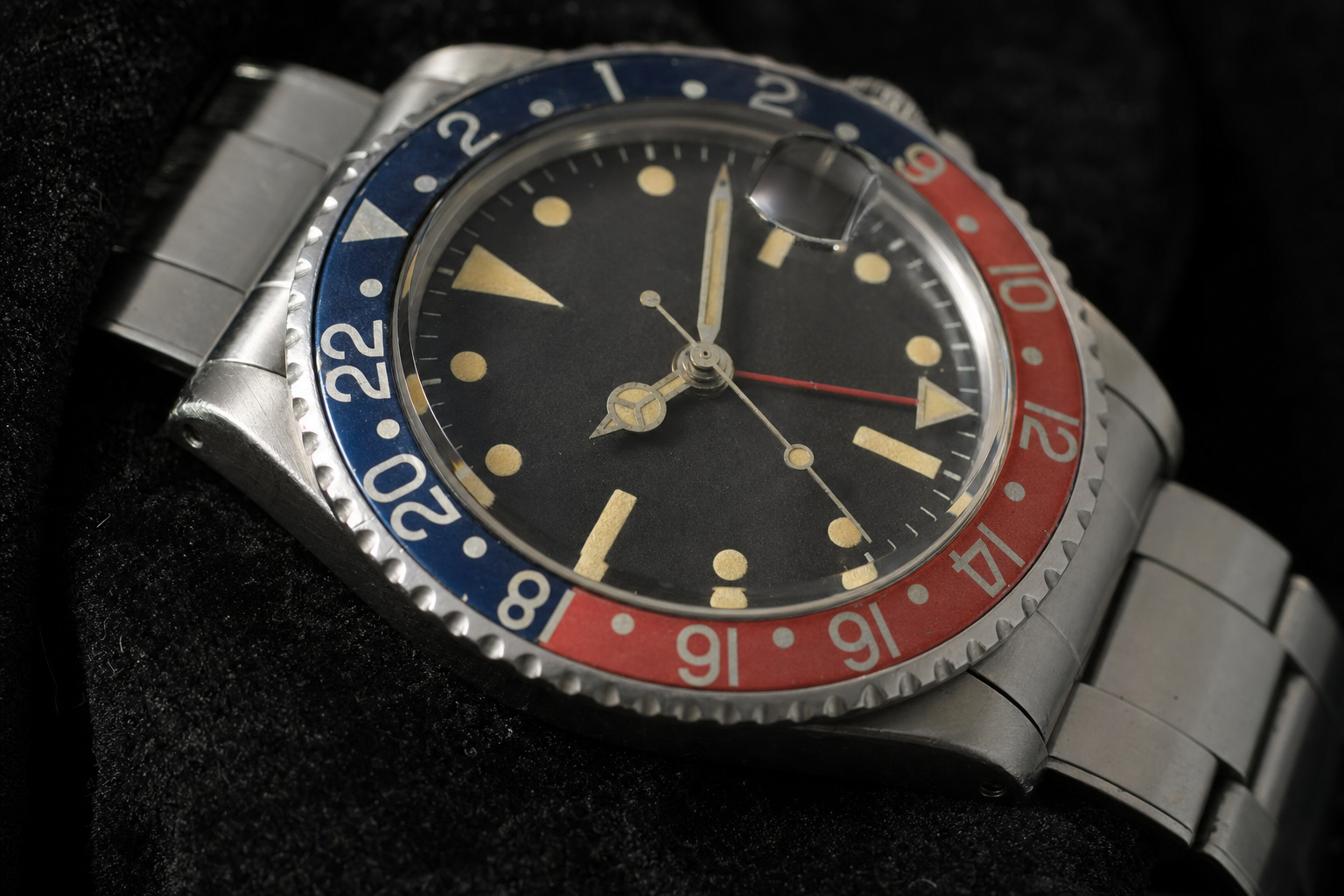
Explore our comprehensive guide on investing in vintage Rolex GMT-Master models, covering reference numbers, market trends, provenance, and valuations.
# Investing in Vintage Rolex GMT-Master Watches: Collector & Investor Guide When Pan American World Airways approached Rolex in the early 1950s requesting an instrument that could track dual time zones simultaneously for transatlantic flight crews, few predicted the resulting timepiece would become one of the most lucrative alternative asset classes in luxury horology. The Rolex GMT-Master transformed tool watch utility into a cultural landmark, evolving from an essential aviation instrument into an icon of blue-chip watch collecting. For collectors seeking capital appreciation and tangible mechanical heritage, navigating the vintage GMT-Master market requires a disciplined understanding of references, dial executions, movement iterations, and market liquidity. While contemporary sports models command significant waiting lists, vintage execution offers predictable scarcity and historical significance that modern mass production cannot replicate. Understanding the progression from the fragile Bakelite bezels of the 1950s to the transitional sapphire references of the late 1980s is fundamental for making informed capital allocations. Today, vintage Rolex GMT-Master investment strategies demand precise forensic analysis, as subtle dial distinctions can translate to tens of thousands of dollars in secondary market equity. --- ## The Genesis of a Horological Icon (1954–1959) The origins of the GMT-Master stem directly from commercial aviation's Jet Age, when Boeing Stratocruisers and Pan Am Clipper flights began routinely crossing multiple time zones. Rolex developed a system…