Should You Buy New Versus Preowned Rolex?
Published September 4, 2026 · Last updated October 17, 2026 · By Lume Wrist Watches Editorial Team
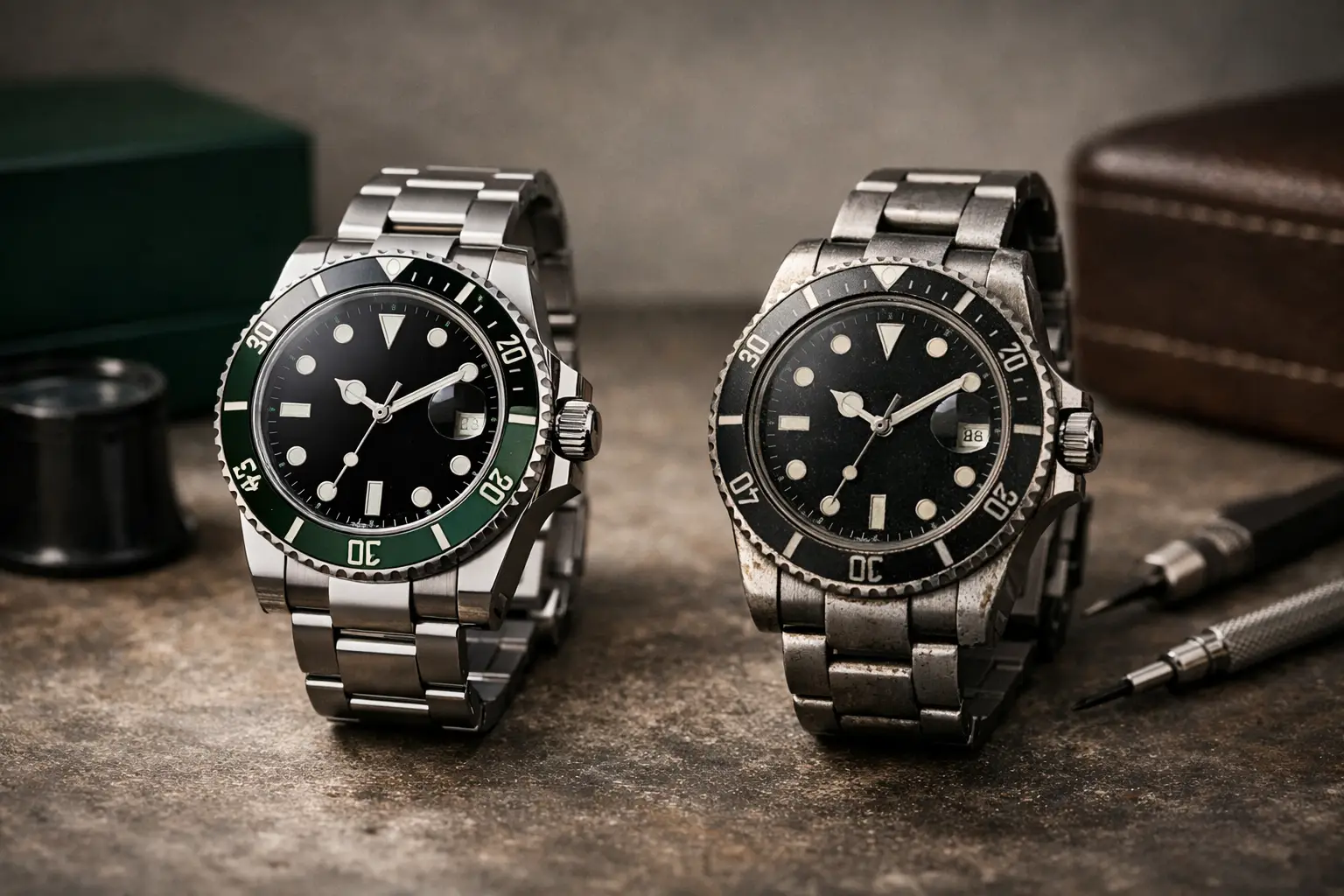
A Rolex purchase can begin with a simple preference - an untouched watch with a full retail presentation, or a specific reference that is no longer readily available. The decision between new versus preowned Rolex is not simply about age. It is about the exact watch you want, the condition you expect, the documentation available, and the protections behind the transaction.
For many buyers, a new Rolex delivers the appeal of being the first owner. For others, the preowned market provides access to discontinued references, prior generations, distinctive dial configurations, and immediate availability. Both paths can be appropriate when the watch, seller, and purchase terms meet a high standard.
New Versus Preowned Rolex: Start With the Reference
Before comparing condition or paperwork, identify the reference you actually want. Rolex evolves its collections gradually, but the details can matter significantly to a collector: case proportions, bracelet construction, bezel material, dial layout, movement generation, and production era all influence the ownership experience.
If you want a current-production Submariner, GMT-Master II, Datejust, or Day-Date in an exact configuration, a new purchase may be the natural preference. If your interest is a discontinued Rolex Daytona reference, an earlier Explorer II, a five-digit Submariner, or a particular dial variation, preowned may be the only practical route.
Availability also changes the comparison. A watch being in the current catalog does not necessarily mean it is readily available for immediate purchase. Preowned inventory can offer a more direct path to a sought-after reference, provided the watch has been properly authenticated and its condition is accurately represented.
What a New Rolex Provides
A new Rolex is generally purchased unworn through an authorized retail channel. The appeal is straightforward: you receive a current-production watch in factory-new condition, with its original presentation set and manufacturer warranty beginning at the point of sale.
For a first-time Rolex owner, this can offer a clean and uncomplicated starting point. There is no prior wear history to assess, no prior polishing to evaluate, and no question about whether the bracelet has stretched through years of use. You set the ownership record from day one.
That said, “new” should not be treated as the only definition of quality. A Rolex that has been carefully worn, maintained, and professionally evaluated can offer an exceptional ownership experience. Newness is a preference, not a universal measure of desirability.
There can also be practical limitations. Current references may have limited availability, and buyers who are focused on a specific discontinued configuration will not find it through a new purchase. A new watch gives you the current Rolex design language. A preowned watch can give you a broader view of the brand’s history.
Why Preowned Rolex Appeals to Serious Buyers
The preowned market is where Rolex collecting becomes more specific. It offers references from prior production eras, retired dial and bezel combinations, and watches with characteristics that may no longer be offered. For an informed buyer, that selection is often the central advantage.
A preowned Rolex may be described as unworn, like new, excellent, very good, or vintage, but these labels need context. A professional seller should explain what is included, identify meaningful signs of wear, disclose service history when known, and provide clear photographs of the actual watch.
Condition is especially important because Rolex cases and bracelets can change over time. Light surface wear may be expected on a regularly worn modern watch. More consequential issues include excessive polishing that softens case edges, bracelet wear, deep bezel damage, moisture-related dial deterioration, or non-original components. None of these factors should be assumed from a listing title alone.
Preowned also does not automatically mean heavily used. Some watches enter the secondary market shortly after purchase and remain close to their original condition. Others have been worn for decades and carry the character of their era. The right choice depends on whether you value a pristine presentation, a particular reference, or an honest example with a well-documented history.
Authentication and Provenance Matter More Than Packaging
A Rolex box, card, booklet, or hang tag can be valuable as part of a complete set, but accessories alone do not establish authenticity. The watch itself must be evaluated: its case, dial, hands, movement, bracelet, clasp, serial and reference details, and consistency with the correct production period.
Provenance also supports confidence. Original warranty documentation, service records, and a documented ownership history can help a buyer understand what accompanies the watch and how it has been cared for. However, a watch without every original accessory is not inherently unsuitable. The priority is accurate authentication, transparent condition reporting, and proper disclosure of what is and is not included.
For collectible references, originality requires particular attention. A service dial or replacement bracelet may be entirely functional, yet it can affect collector interest compared with an all-original example. This is not a reason to avoid service parts categorically. It is a reason to ensure the watch is represented precisely and priced according to its actual configuration.
Compare the Protection Behind the Purchase
The difference between new and preowned becomes less significant when a preowned purchase is supported by disciplined verification and clear post-purchase protections. In a high-value category, the seller’s process matters as much as the listing itself.
Before committing, confirm how the watch is authenticated, whether it receives an in-house inspection, how condition is assessed, and what warranty applies. Ask whether the watch will be insured in transit, whether a return period is available, and whether the seller stands behind the timepiece after delivery.
For buyers in the United States, Lume Wrist Watches provides in-house certified timepieces, free insured US shipping, a 30-day return window, and a 2-year warranty. Those safeguards address practical concerns that should never be left to assumption: authenticity, shipping exposure, the ability to inspect the watch personally, and support if a covered issue arises.
Manufacturer warranty can also be relevant on a newer preowned Rolex if active coverage remains and the original documentation is included. It should be considered alongside, rather than instead of, the independent retailer’s warranty terms. Review the coverage carefully so you understand its duration, exclusions, and service process.
The Condition Questions Worth Asking
A confident preowned purchase is built on specific answers, not broad assurances. Ask whether the case has been polished, whether the bracelet shows notable stretch or wear, whether the watch has been serviced, and whether all functions have been tested. For date models, that includes date advancement; for GMT models, it includes independent hour-hand operation; for chronographs, it includes start, stop, and reset performance.
It is also reasonable to ask whether the watch retains its original dial, hands, bezel, bracelet, and clasp. On vintage Rolex watches, small differences can carry meaningful significance. On modern watches, the emphasis may be less on rarity and more on overall condition, accuracy, and completeness.
Clear photographs should support the written description. Look closely at the lugs, crown guards, bezel, crystal, clasp, bracelet links, and dial surface. A reputable description identifies material wear without minimizing it, allowing the buyer to decide whether it is consistent with their expectations.
Which Rolex Purchase Is Right for You?
Choose new if your priority is being the first owner, receiving a current-production configuration in untouched condition, and beginning with a full factory retail experience. This route is particularly compelling when the exact reference is available and the appeal of new ownership outweighs interest in prior generations.
Choose preowned if the reference itself is your priority. That may mean access to a retired model, an earlier case profile, a specific dial, or a watch that is available without an uncertain wait. It can also be the better choice for buyers who want a Rolex with a documented history and collector character.
Neither route eliminates the need for diligence. A new watch should come from an appropriate authorized source. A preowned watch should be authentic, accurately described, and supported by meaningful buyer protections. The more specific the Rolex, the more important those standards become.
The best next step is to define the reference and condition level you would be happy to own for years, then evaluate the watch in front of you rather than relying on a label such as new or preowned. When the details are verified and the purchase is properly protected, the right Rolex is the one that meets your expectations every time you put it on.