Serial Number Lookups vs Registry Verification: 2026 Guide
Published October 20, 2026 · Last updated October 21, 2026 · By Lume Wrist Watches
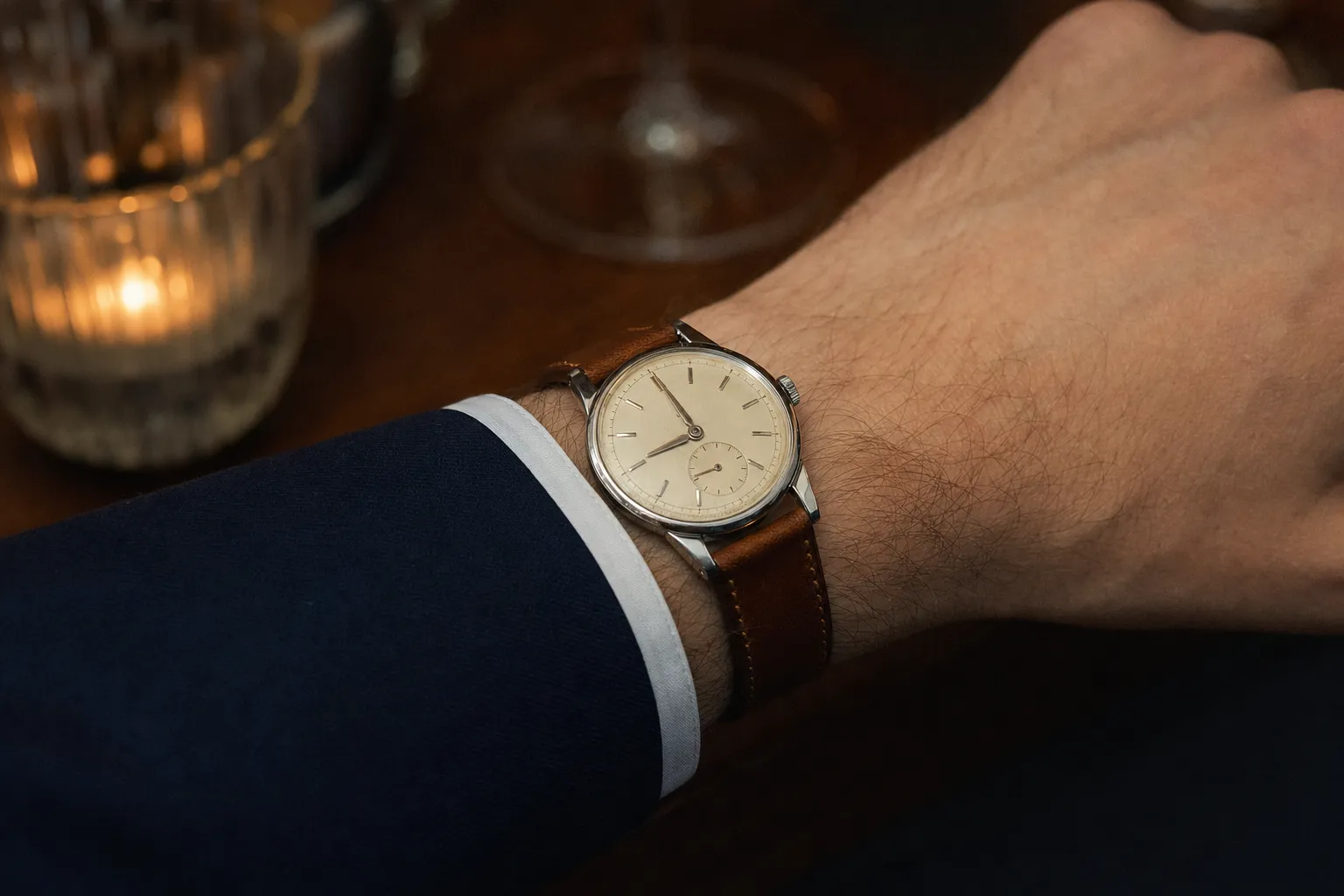
Serial number lookups and registry verification serve fundamentally different roles in luxury horology: static lookup tables date a reference and confirm catalog plausibility, whereas dynamic registry verification checks real-time international databases to ensure a timepiece has not been stolen, lost, or subjected to insurance fraud. For absolute security in 2026, rely on static lookups merely as an initial chronological filter and treat global registry checks alongside physical forensic validation as the non-negotiable standard before purchase.
---
Side-by-Side Specification Table
| :--- | :--- | :--- |
|---|---|---|
| Primary Objective | Determine production year, era, and reference catalog alignment | Identify theft reports, insurance loss markers, and police records |
| Database Mechanism | Static, reverse-engineered charts or manufacturer archival releases | Live, secure global digital crime ledgers and manufacturer cloud networks |
| Data Sources | Collector tables, historical catalogs, forum research, public tables | Law enforcement feeds, insurer claims lists, auction houses, dealer networks |
| Protection Against Superclones | Minimal (counterfeiters routinely replicate valid historical serials) | Moderate-High (flags clones carrying duplicates of marked or registered serials) |
| Protection Against Stolen Goods | Zero protection (identifies age, never status or legal chain of custody) | Maximum protection (actively screens global loss reports) |
| Execution Speed | Instantaneous via community charts and production year databases | Minutes to 48 hours depending on manual registrar vetting |
| Typical Cost | Generally free | $15–$50 per check via commercial platforms, or dealer-absorbed |
| Core Limitation | Completely fails on modern randomized/scrambled serial numbers (e.g., post-2010 Rolex) | Does not guarantee physical component originality (calibers, dials, hands) |
---
Design and Wearability Compared
While serial lookups and registry checks are administrative disciplines, their physical execution directly impacts how a watch is inspected, disassembled, and worn.
### Physical Serial Locations and Case Ergonomics A traditional serial lookup demands direct optical access to microscopic engravings on the case. On a neo-vintage Wittnauer Wittnauer Professional 238T (7004A) Black Dial Burgundy Bezel or vintage tool watches, serial numbers sit stamped deeply on the exterior caseback or inside the screw-down casing.
Conversely, examining modern watches like the Tudor Tudor Black Bay 79230R Black Dial Steel with Burgundy Bezel requires inspecting laser-etched alpha-numeric sequences positioned discreetly on the underside of the 7 o'clock lug. On contemporary models from our Rolex collection, lookups require examining the inner rehaut ring under the sapphire crystal at 6 o'clock—a design shift implemented around 2005–2007 to allow identification without detaching bracelets.
### Wearer Disruption: Mechanical Integrity vs Non-Invasive Search Static lookups on older luxury watches frequently mandate removing steel end-links using spring-bar tools. This mechanical intervention risks micro-marring high-polish lug inner surfaces—a notable aesthetic concern for collectors assessing mint-condition casework.
Registry verification, by contrast, operates entirely non-invasively once the identifying alphanumeric string is retrieved. You simply submit the confirmed case number, brand, and model designation to verified platforms like The Watch Register or Enquirus. For daily wearers prioritizing peace of mind without needing a loupe and strap pliers at every transaction, registry clearance delivers seamless legal certainty before a watch ever touches your wrist.
---
Movement and Accuracy Compared
Neither a clean registry certificate nor a historically accurate serial number ensures that the escapement inside is authentic or beating within factory specifications. This structural disconnect is where buyers frequently stumble.
### The Superclone Paradox: Perfect Engravings, Spurious Calibers Sophisticated illicit workshops can easily machine an accurate serial number onto a rehaut or lug flank. Using open-source production charts, counterfeiters replicate valid serial runs from authentic production years. A collector who relies solely on a static serial lookup may confirm that serial number `W325***` matches an authentic 1995 production period. However, that static match does not prove that the movement within is a genuine Rolex Caliber 3135.
As explored in our detailed guide on movement inspection: what a watchmaker looks for in 2026, true authentication requires uncasing the movement to verify: - Balance wheel geometry, hairspring architecture, and regulating micro-stella screws - Bridges, plate beveling (anglage), and genuine perlage versus stamped industrial finishing - Caliber-specific serial engravings and balance frequency under a precision timing machine
### Archival Registries and Caliber-to-Case Matching The most authoritative registry verification services do more than screen for theft: they match the case serial strictly to the movement serial number. For collectors browsing Patek Philippe timepieces, an Extract from the Archives links the specific movement caliber number to the exact case reference and date of sale recorded in Geneva.
Similarly, modern references in our Omega collection—such as an Omega Omega Seamaster Automatic Steel & Gold Silver-Tone Wave Dial—feature micro-laser serial etchings on the movement bridges that must align perfectly with the case lug and the digital METAS Master Chronometer certification database. If the serial lookup confirms a 2018 reference but registry records or physical teardown reveals a non-conforming, older caliber, you are holding an unauthenticated assembly. To spot these anomalies early, examine our guide on service parts, Franken-watches & disclosure in luxury watch authentication.
---
Price and Value Retention Compared
Understanding provenance verification directly safeguards capital allocation in the secondary watch trade. In secondary market dynamics, documentation, origin tracking, and legal clearance heavily shape value retention.
### Market Premium of Verified Provenance In current market transactions across major hubs—whether you are acquiring luxury watches in New York or purchasing luxury watches in California—a piece backed by documented registry clearance and clear archival status trades at a 10% to 25% premium over an identical "naked" watch.
| :--- | :--- | :--- |
|---|---|---|
| Unchecked Serial Only | Base secondary market baseline; buyer assumes all provenance and legal risk | Slowest; subject to extensive dealer holding and vetting |
| Static Lookup + Matching Papers | Estimated +5% to +12% value retention over baseline | Standard market liquidity among private collectors |
| Full Loss-Registry Certificate (e.g., The Watch Register) | Estimated +8% to +15% over baseline; guarantees no seizure liability | Rapid liquidity; instantly accepted by major pre-owned dealers |
| Manufacturer Archival Extract (Patek, Omega, AP) | Estimated +15% to +25% premium, essential for vintage assets | Immediate liquidity among top-tier auction houses and specialists |
### Protecting Residual Capital Against Confiscation The primary financial hazard in pre-owned acquisitions is not simply buying a clone—it is purchasing an authentic watch that carries an active theft flag on an international database. Under United States common law, an individual cannot acquire valid legal title to stolen property, even when purchased in good faith without knowledge of the theft.
If you purchase an unchecked luxury watch that is subsequently sent to a brand service center (such as Audemars Piguet in Le Brassus or Rolex in Lititz, Pennsylvania), the watch will be cross-referenced against the brand's internal registry. If flagged as stolen, the watch will be confiscated, and the owner faces civil and criminal complications without compensation. Registering and pre-screening through dedicated loss registries mitigates this total-loss scenario.
---
Who Should Buy Which — Three Clear Buyer Profiles
Depending on your collecting ambitions and where you source your timepieces, the balance between static lookups and registry checks changes.
### 1. The Vintage Horology Enthusiast - Primary Focus: Pre-2000 mechanical watches, vintage tool chronographs, and legacy references. - Recommended Strategy: Heavy reliance on Static Serial Number Lookups coupled with Manufacturer Archival Requests. - Why: Modern loss registers rarely hold complete police logs from the 1960s or 1970s. For vintage acquisitions, serial tables are indispensable for determining whether the case production window aligns with the dial variant (e.g., transitional dials, serif fonts, gilt-versus-matte iterations). Once verified, request official manufacturer documentation, as detailed in our guide to papers, boxes, and provenance in luxury watch authentication.
### 2. The Contemporary Pre-Owned & Grey-Market Collector - Primary Focus: High-demand references from all featured maisons produced from 2010 to 2026. - Recommended Strategy: Absolute reliance on Dynamic Registry Verification and In-House Physical Inspection. - Why: Since Rolex shifted to randomized 8-digit serials around 2010, static serial tables cannot reveal the production year from the case engraving alone. Buyers must utilize real-time registry checks to screen for unresolved insurance claims, paired with rigorous forensic verification of ceramic bezels, laser rehauts, and movements. If you source high-value sports watches in major financial centers like luxury watches in Florida or luxury watches in Texas, run a registry clearance prior to transferring bank wire funds.
### 3. The Modern Lifestyle Watch Buyer - Primary Focus: A single, iconic luxury timepiece for daily wear, sourced through reputable commercial channels. - Recommended Strategy: Partnering with an authenticated dealer providing Turnkey In-House Verification. - Why: If you are buying a premier dress or everyday sports model, you should not need to navigate law enforcement databases or decipher complex alpha-numeric reference coding on your own. When you purchase from our authenticated collection, each piece has already cleared physical forensic screening, mechanical movement diagnostics, and exhaustive registry checks.
For an overarching blueprint on structuring your acquisition due diligence, review our core Watch Authentication & Provenance Guide.
---
Frequently Asked Questions
### Can you determine the exact year of a Rolex using only its serial number? For Rolex models produced prior to autumn 2010, static serial lookups can pinpoint the approximate production year using sequential serial number charts. However, starting in late 2010, Rolex transitioned to randomized, eight-character alphanumeric serial numbers. For these modern pieces, production dates cannot be determined via community lookup charts and can only be validated against the original warranty card or official service documentation.
### Does an "Extract from the Archives" confirm that a watch is 100% authentic? No, an Extract from the Archives—available from maisons like Patek Philippe, Audemars Piguet, and Omega—confirms that the specific serial number matches the factory ledger records for production date and original reference configuration. It does not certify that the physical watch in your hands is genuine or free from aftermarket modifications, as counterfeiters can engrave archival serials onto unoriginal cases.
### What happens if I send a pre-owned watch to a manufacturer service center and it is flagged as stolen? If a timepiece sent for maintenance matches an active theft report in the manufacturer's global database, the service center will immediately impound the watch. The maison will notify local law enforcement and the rightful owner or insurance firm that settled the loss claim. The secondary buyer typically loses both the watch and the purchase funds unless protected by dealer provenance warranties.
### Are commercial watch registry checks accessible to private individuals? Yes, leading international registries such as The Watch Register and Enquirus offer individual search capabilities for private collectors and dealers. By submitting the serial number, make, and model along with a modest administrative fee, buyers receive an official clearance certificate confirming the item is not registered as lost, stolen, or subject to active insurance disputes.
### How do counterfeiters exploit real serial numbers on superclones? Counterfeiters frequently copy authentic serial numbers observed on social media, public forum listings, or auction house catalogs and laser-etch them onto duplicate replica cases. Consequently, a serial number that appears valid in a static lookup table can still belong to a counterfeit watch. Advanced physical screening, including UV light and microscopic analysis, remains mandatory to verify authenticity.
---
Contact Lume Wrist Watches
Every timepiece in our inventory undergoes meticulous physical inspection and multi-point provenance verification before being offered to our clients.
- Email: sales@lumewrist.com
- Phone: +1 (332) 285-2190
- Office: 18 East 48th Street, Suite 1503, New York, NY 10017
- Hours: Monday – Friday, 9:00 AM – 7:00 PM ET · Closed Saturday & Sunday
- Connect: Schedule an appointment via our contact page or browse our shop.
Payment methods accepted: Credit Card and Bank Wire only. Every purchase includes fully insured delivery through our verified shipping & delivery protocols.
---
Final Thoughts
Static serial number lookups and dynamic registry verification should never be viewed as competing approaches. Instead, they represent two complementary stages of horological due diligence. A serial lookup provides essential historical context, confirming whether a dial, bezel, and case configuration align with a maison's manufacturing era. Meanwhile, registry verification provides critical legal security, confirming that your investment carries clear provenance and undisputed ownership.
Never settle for partial verification when securing your next fine timepiece. Explore our authenticated collection at Lume Wrist Watches to acquire horological icons vetted by rigorous forensic inspection and verified ownership histories.