Cartier Tank Asymétrique 1996 vs Privé: Which to Buy in 2026?
Published October 30, 2026 · Last updated October 31, 2026 · By Lume Wrist Watches
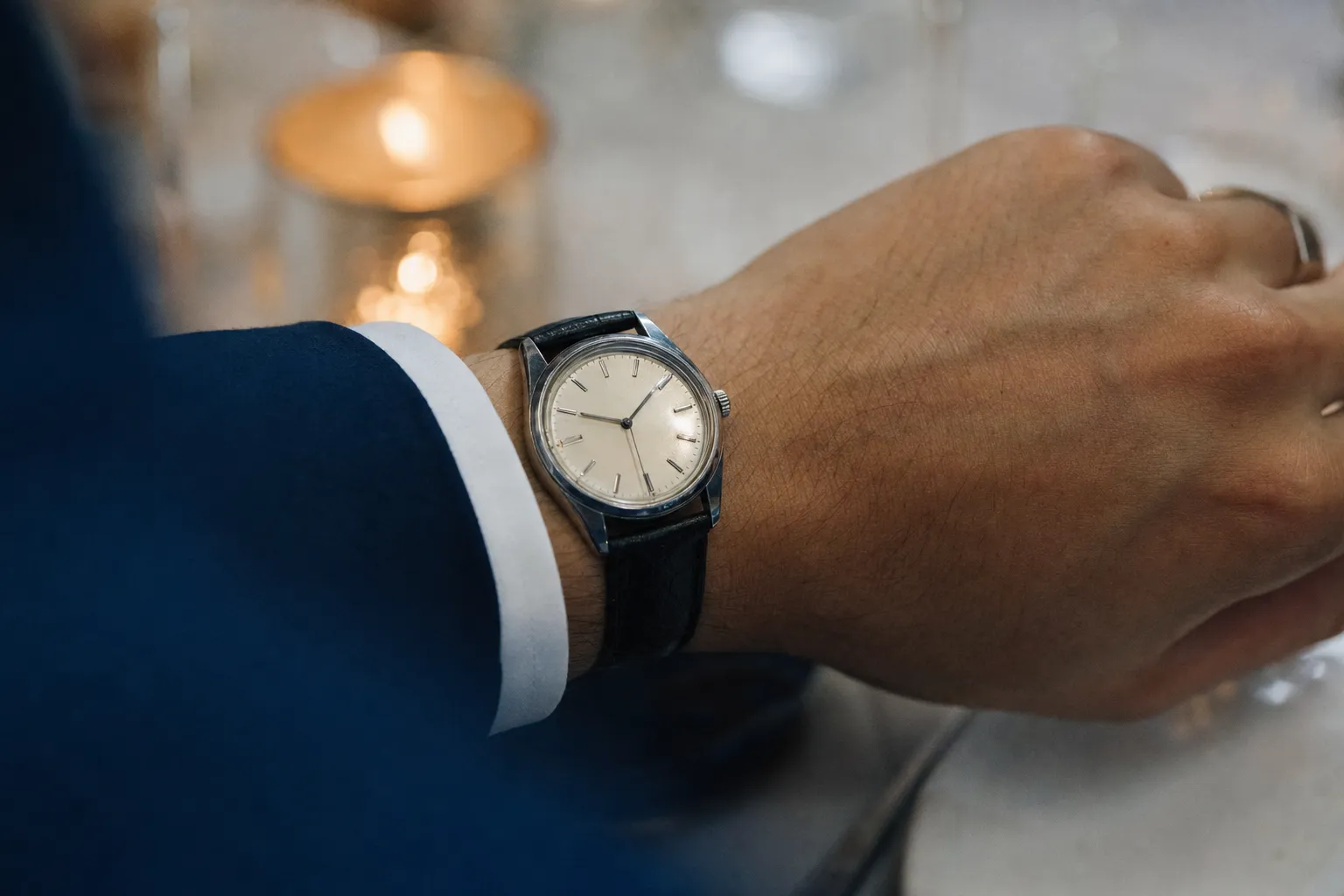
If you want an unmistakable shaped wrist presence with genuine mid-century proportions, purchase the 1996 Cartier Tank Asymétrique (or its subsequent 1999 CPCP counterpart); if you desire contemporary case stability, modern mechanical reliability, and sharper modern finishing, choose the 2020 Cartier Privé Tank Asymétrique. Both iterations honor Louis Cartier’s revolutionary 1936 parallelogram case—rotated 30 degrees clockwise so 12 o'clock aligns with the upper-right corner for effortless reading while driving—yet they wear, function, and trade very differently in today's secondary market.
Originally conceived in 1936 under the moniker Parallélogramme, the Tank Asymétrique broke traditional horological geometry. As collectors continue exploring the broader Cartier Watches: Complete 2026 Buying Guide to Shaped Cases, this off-kilter icon has shifted from a quirky design footnote into one of the maison's most fiercely contested collector pieces. In this guide, we evaluate the classic late-1990s limited runs against the 2020 Cartier Privé revival to help you determine which belongs in your rotation.
---
Side-by-Side Specification Table
Understanding the dimensional and mechanical shifts between the 1990s re-editions and the 2020 modern Cartier Privé collection is essential before making an acquisition.
| Specification | 1996 Limited Edition / CPCP Tank Asymétrique (Ref. 2488 / W1534251) | 2020 Cartier Privé Tank Asymétrique (Ref. WGTA0042 / WGTA0043 / WGTA0044) |
|---|---|---|
| :--- | :--- | :--- |
| Production Era | 1996 (Pre-CPCP, 300 yellow gold, 100 platinum) & 1999 (CPCP) | 2020 (Cartier Privé, 100 numbered pieces per metal) |
| Case Dimensions | 23.0 mm width × 35.5 mm length (excluding lugs; ~40.0 mm lug-to-lug) | 26.2 mm width × 47.15 mm length (lug tip to lug tip) |
| Case Thickness | ~6.0 mm to 6.2 mm | 6.38 mm |
| Case Geometry | 30° clockwise skewed parallelogram, central dual-pin lugs | 30° clockwise skewed parallelogram, triple integrated lug bars |
| Movement | Cartier Caliber 9P2 (Jaeger-LeCoultre 846 base manual wind) | Cartier Manufacture Caliber 1917 MC manual wind |
| Power Reserve | ~38 to 40 hours | ~38 hours |
| Frequency | 21,600 vph (3 Hz) | 21,600 vph (3 Hz) |
| Dial Layout | Roman or Arabic numerals tilted 30°, blued-steel hands | Restyled Arabic numerals and baton indices, faceted cabochon |
| Lug Width | Non-standard proprietary strap (~17 mm - 18 mm) | Bespoke curved-end strap (~19 mm) |
| Water Resistance | 0 to 30 m (treat as non-water resistant vintage) | 30 meters (splash resistant only) |
| Approximate Secondary Value (2026) | $28,000 – $42,000 (precious metals) | $35,000 – $55,000 (standard metal variants; skeletons higher) |
---
Design and Wearability Compared
While both references share the same 30-degree rotation of the balance and dial layout, their wrist presence differs drastically. Sizing on the Asymétrique is counter-intuitive: because the case is an oblique parallelogram, length measurements must account for the offset diagonal points rather than a uniform rectangular span.
### Wrist Geometry and Case Architecture The 1996 and 1999 CPCP (Collection Privée Cartier Paris) references retain mid-century proportions. At 23 mm wide and effectively 40 mm from corner lug to corner lug, these references tuck cleanly onto smaller and medium wrists (6.0 to 7.0 inches). The bezel lines are softer, with subtle, rounded brancards that mirror original 1930s custom-order commissions.
Conversely, the 2020 Cartier Privé variant feels muscular and architectural. Spanning 47.15 mm diagonally from lug tip to opposite lug tip, it commands attention. On wrists under 6.5 inches, the lower-left and upper-right horn lugs can extend beyond the wrist margin if worn loose. However, Cartier deliberately limited the thickness to an ultra-slim 6.38 mm, meaning the watch lies completely flat, sliding beneath tailored shirt cuffs without snagging.
### The Lug Systems and Strap Integration A major collector talking point is the central third lug. The 1996 edition employs a dual-pin configuration that hinges gracefully around smaller wrists, allowing the leather strap to drape straight down.
In the 2020 Privé iteration, Cartier implemented a more pronounced triple-lug layout on both ends. This design creates visual equilibrium with the diagonal case lines, but it also necessitates bespoke, factory-fitted Cartier straps with shaped spring bars. If you frequently swap aftermarket straps, the 1990s models offer marginally more flexibility, though neither watch plays nicely with standard straight-bar straps.
For those who love non-traditional geometries, the Asymétrique delivers an entirely different experience compared to other historic designs like the Cartier Cloche Privé vs CPCP: Which Should You Buy in 2026? or the rounded, organic contours explored in our Cartier Baignoire Watches: The Complete 2026 Buying Guide.
---
Movement and Accuracy Compared
The internal mechanics of these two eras highlight the tectonic shifts in Cartier’s modern watchmaking evolution.
### Caliber 9P2 / JLC 846 (The CPCP / Late-90s Foundation) During the late 1990s, Cartier’s upper-echelon dress timepieces utilized calibers from elite movement specialists, specifically Jaeger-LeCoultre and Frédéric Piguet. The 1996 Asymétrique and subsequent CPCP models house the Cartier Caliber 9P2, derived from the JLC Caliber 846.
This movement is revered among purists. With 18 jewels, a traditional balance, and compact dimensions, it operates at 21,600 vibrations per hour. It provides a tactile, smooth winding resistance with definitive clicks. Because of its JLC lineage, any experienced independent watchmaker can service it without proprietary tool locks, an undeniable benefit for long-term ownership.
### Caliber 1917 MC (The In-House Cartier Privé Engine) Inside the 2020 Privé Asymétrique sits the Manufacture Caliber 1917 MC. Introduced during Cartier’s contemporary push to replace supplied movements in its fine-watchmaking collections, the 1917 MC is an ultra-thin manual-wind movement measuring just 2.9 mm high.
While offering the same 38-hour reserve and 3 Hz frequency as the vintage JLC base, the 1917 MC benefits from modernized tolerances and superior modern escapement components. It also features contemporary shock protection, making it more resilient for light daily wear. However, servicing an in-house modern caliber generally requires routing through Cartier's authorized service network.
Collectors seeking classic round or tonneau mechanical watches with equally pedigree movements often look toward the Cartier Tortue Watches: Complete 2026 Buying Guide or modern manual pieces like the Cartier Cartier Rotonde de Cartier W1556252 Rose Gold Silver Dial.
---
Price and Value Retention Compared
Neither the 1996 editions nor the 2020 Privé models were regular-catalog production items. Both were strictly limited, which anchors their value exceptionally well in the secondary market.
All pricing figures mentioned below represent approximate secondary market observations for 2026 and should not be construed as firm quotes.
### Market Dynamics for the 1996 / CPCP Reference 2488 Yellow Gold (1996, limited to 300 pieces): Often transacts between $28,000 and $36,000, depending heavily on whether the original deployant clasp and guarantee certificates remain intact. Platinum (1996, limited to 100 pieces): Typically observed between $38,000 and $48,000, commanding a heavy premium due to ultra-scarcity and its subtle ruby cabochon. * Value Trajectory: Historically stable. These pieces rarely trade publicly; when they do appear through specialized auctions or through our authenticated collection, they find immediate buyers among vintage Cartier connoisseurs.
### Market Dynamics for the 2020 Privé Reference (WGTA0042 / 43 / 44) Pink Gold & Yellow Gold (WGTA0042 / WGTA0043, 100 pieces each): Generally observed between $35,000 and $44,000. Platinum (WGTA0044, 100 pieces with silver dial and ruby cabochon): Commands between $48,000 and $58,000 on the pre-owned market. Privé Skeleton Variants (WHCA0010): Observe market ranges stretching well past $75,000 to $95,000. Value Trajectory: The modern Privé collection (which includes the Crash, Cintrée, Tonneau, and Cloche) has experienced sustained collector interest.
To contextualize extreme high-end Cartier valuations, examine How Much Does a Cartier Crash Cost in 2026? Price Guide to see how asymmetrical shapes have outperformed classical forms over the past decade.
---
Who Should Buy Which — Three Clear Buyer Profiles
Selecting between these two standout generations comes down to your wardrobe, wrist dimensions, and philosophical approach to collecting.
### 1. The Heritage Purist & Sub-7.0-Inch Wrist Wearer Your Watch: 1996 Limited Edition or 1999 CPCP Tank Asymétrique Why: You prioritize mid-century dimensions that do not dominate the forearm. You love the horological romance of the JLC-supplied Caliber 9P2, prefer the softer brancard edges, and want a reference whose historical value is fully solidified. This collector values low-key prestige over modern wrist presence.
### 2. The Contemporary Sartorialist & Modern Connoisseur Your Watch: 2020 Cartier Privé Tank Asymétrique (Yellow or Pink Gold) Why: You have a wrist measuring 6.75 inches or larger, and you prefer contemporary watch sizing that works alongside modern tailoring or smart casual attire. You demand modern build tolerances, sharp chamfers, and crisp Arabic hour markers that stand out clearly across a dinner table.
### 3. The Avant-Garde High Horology Collector Your Watch: 2020 Cartier Privé Tank Asymétrique Squelette (Platinum or Rose Gold) Why: You aren't merely looking for a dress watch; you want a sculptural wrist exhibition. The skeletonized Caliber 9623 MC aligns its movement bridges directly with the 30-degree parallelogram case, creating an architectural marvel that bridges traditional Cartier design with high-concept independent watchmaking.
If you prefer classical straight-sided elongated geometry over diagonal architecture, compare alternatives in our Cartier Tank Américaine vs Tank Cintrée: 2026 Comparison, or consider ready-to-wear classics like the Cartier Cartier Tank Américaine W26015K2 Yellow Gold Silver Dial or the refined Cartier Cartier Tank Américaine 1713 White Gold Silver Dial.
---
Alternative Shaped Icons to Consider
While the Tank Asymétrique represents an extreme expression of geometric experimentation, it exists alongside a lineage of groundbreaking non-round watches. Understanding where it sits relative to other historic pieces helps clarify your collecting priorities:
- For Everyday Utility: If the Asymétrique feels too delicate or avant-garde for daily duties, read our analysis on Cartier Santos-Dumont vs. Santos de Cartier to see how industrial, screw-bezel sports-dress versatility performs.
- For Divergent Tastes: If you appreciate historic sports silhouettes with unique crown systems, look at the distinctive Cartier Cartier Pasha Seatimer 2790 Black Dial Stainless Steel.
- Broader Industry Context: Collectors who appreciate high horology beyond Cartier frequently explore the broader context in our survey, Beyond the Big Four: Essential Luxury Watch Maisons to Know in 2026, or compare unconventional shapes against round legends in the Rolex Submariner versus GMT for Collectors analysis.
---
Frequently Asked Questions
### Why is the Cartier Tank Asymétrique dial tilted at 30 degrees? The dial was originally oriented 30 degrees clockwise in 1936 to function as a driver's watch. When your hands rest on a steering wheel, the shifted 12-to-6 axis naturally aligns with your line of sight, allowing you to read the time accurately without lifting your wrist.
### Is the Cartier Tank Asymétrique difficult to set or wind? Setting the time requires a moment of acclimation because the hands rotate around an angled axis, but the operational feel is identical to any standard manual-wind watch. Winding requires pulling or turning the faceted cabochon crown at the upper-right corner of the parallelogram case, which is easy to access.
### Can I wear the Tank Asymétrique on my right wrist? While designed historically for left-wrist wear (ensuring the dial angles naturally toward the wearer's face), right-wrist wearers can certainly wear it. However, the 30-degree forward tilt will slant outward rather than directly toward your gaze, altering the intended ergonomics.
### How does the 2020 Privé Asymétrique wear compared to a standard Tank Louis Cartier? The 2020 Privé wears significantly longer on the wrist than a standard Large Tank Louis. With a total diagonal span of 47.15 mm, it commands a footprint closer to a Cartier Tank Cintrée or modern Cartier Tank Américaine, though its ultra-thin 6.38 mm profile keeps it remarkably svelte.
### What are the strap replacement options for a Tank Asymétrique? Because both the 1996 and 2020 models use non-standard triple or central lug geometries, standard off-the-shelf straight spring-bar straps will not fit. Strap replacements require custom orders through an authorized Cartier boutique or specialized bespoke leather artisans capable of crafting straps fitted to the Asymétrique case pins.
---
Contact Lume Wrist Watches
Whether you are sourcing an elusive limited-edition Cartier shaped case or navigating luxury watches in New York, our specialists provide dedicated advisory and sourcing services.
- Phone: +1 (332) 285-2190
- Email: sales@lumewrist.com
- Showroom & Office: 18 East 48th Street, Suite 1503, New York, NY 10017
- Hours: Monday – Friday: 9:00 AM – 7:00 PM ET · Closed Saturday & Sunday
Connect with our team to arrange private viewing appointments, utilize our dedicated concierge sourcing service, or discuss how to sell your watch to us. We accept secure payments exclusively via bank wire or credit card, and every timepiece undergoes rigid inspection by our in-house team independent authentication before insured shipping.
---
Final Thoughts
The Cartier Tank Asymétrique is not an entry-level novelty; it is an intellectual collector's piece that challenges orthodox watchmaking design. If you prize classical late-century proportions, the 1996 or CPCP Reference 2488 remains an elusive grail. If you demand modern case presence, structural flair, and contemporary build quality, the 2020 Cartier Privé is practically unmatched.
Explore our curated selection of Cartier watches, or browse our authenticated collection to find rare shaped masterpieces from all featured maisons with transparent history and verified provenance.