Spotting Redials: Full Reference Guide and Buyer's Checklist
Published October 22, 2026 · Last updated October 23, 2026 · By Lume Wrist Watches
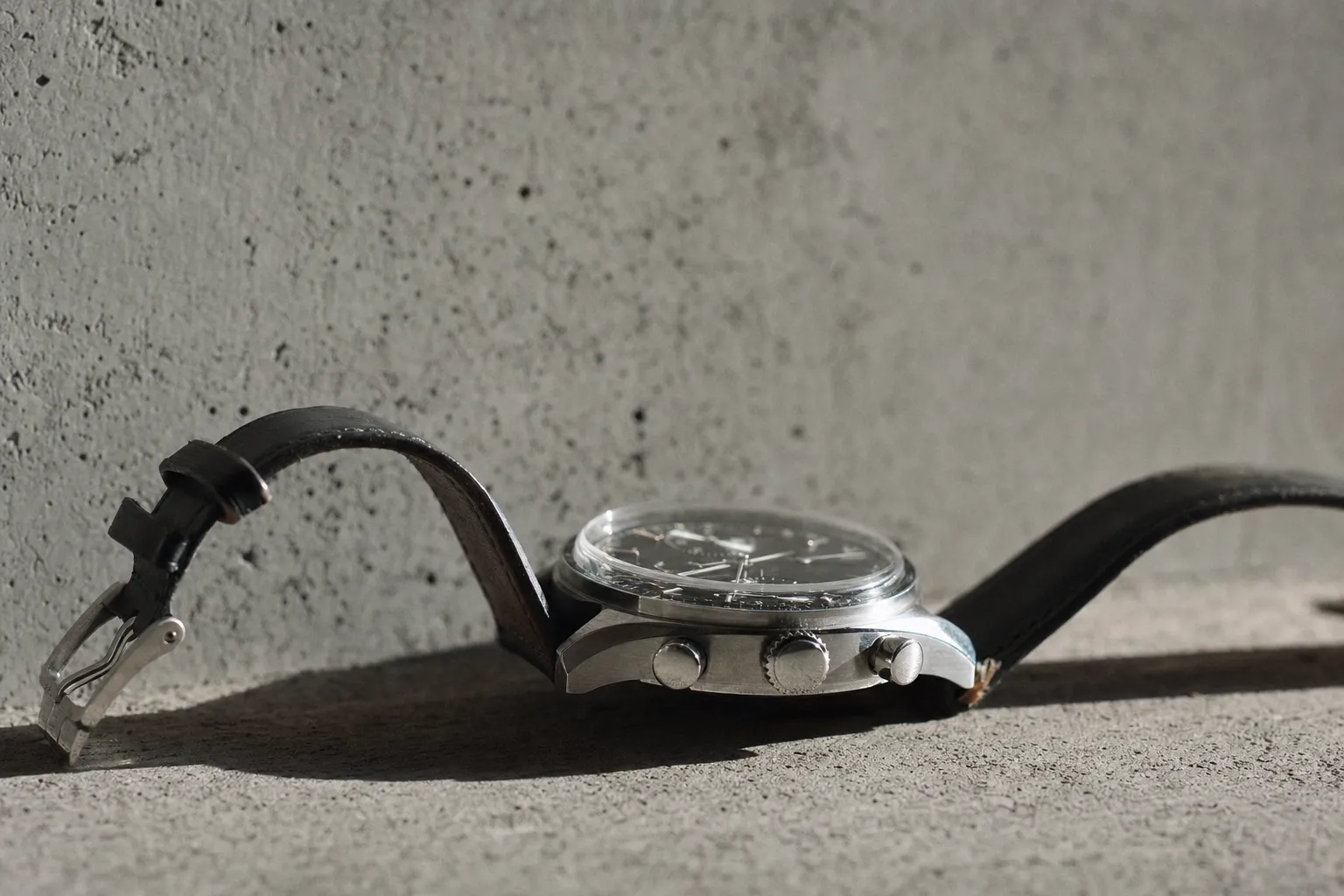
Spotting a redialed watch requires identifying uneven pad printing, misaligned serifs, incorrect font typography, obscured edge bevels, luminous compound bleed, and unnatural surface sheen under 10x to 40x magnification. A refinished or restored dial—frequently stripped down to the bare metal plate, repainted, and reprinted—can erase 50% to 80% of a vintage timepiece's collector market value compared to an untouched, factory-original example. Whether evaluating mid-century chronographs or vintage tool watches, distinguishing between genuine factory aging and aftermarket restoration is an indispensable horological skill.
At Lume Wrist Watches, dial integrity sits at the center of our in-house team independent authentication methodology. The dial represents the soul, identity, and primary financial value of any vintage or pre-owned timepiece. This comprehensive guide details the mechanical anatomy of dial manufacturing, historical restoration practices, forensic tells, market pricing impacts, and a systematic inspection checklist for collectors.
---
The Reference at a Glance: Dial Restoration, Mechanics, and Anatomy
To understand dial refinishing, one must understand how high-grade Swiss and American dial makers (such as Singer, Stern Frères, Beyeler, and Flückiger) manufactured original dials. A genuine factory dial is a micro-engineered component composed of a base plate, chemical surface finishes, pad-printed typography, and hand-applied hardware.
``` +-------------------------------------------------------------+ | ORIGINAL DIAL STACK | | 1. Clear Protective Varnish (Zapon / Cellulose) | | 2. Hand-Applied Lume (Radium, Tritium, Super-LumiNova) | | 3. Pad-Printed Graphics & Typography (Enamel / Oil Inks) | | 4. Base Finish (Galvanic / Sunburst / Lacquer / Enamel) | | 5. Base Plate (Brass, Copper Alloy, German Silver, Gold) | +-------------------------------------------------------------+ ```
When a dial is refinished, the restorer typically strips the original protective lacquer, ink graphics, and chemical base down to the raw metal. In historical watchmaking from the 1950s through the 1980s, "redialing" was not viewed as an act of deception; it was standard maintenance recommended by jewelers to clean water-damaged or discolored watches. Today, however, original dial preservation is paramount, as detailed in our broader pillar, Watch Authentication & Provenance: The Lume Wrist Watches Guide.
Core Components Altered During Refinishing
- The Dial Plate and Dial Feet: Original dial plates feature precise thickness, chamfered date windows, and copper dial feet micro-welded to the reverse side. Refinished dials often suffer heat discoloration or solder lumps on the reverse side from refitted dial feet.
- Surface Finishes: Original dials feature galvanic plating, circular graining (snailed sub-dials), sunburst brushing, or high-fire grand feu enamel. Restorers often use modern spray lacquers that lack the depth and microscopic crispness of factory electro-chemical baths.
- Pad Printing (Tampon Printing): Factory text was stamped using etched intaglio plates and gelatin or silicone transfer pads. Aftermarket printing clogs the crisp recesses, blunts serif tails, and creates ragged ink borders under magnification.
- Hardware and Indices: Original applied markers (gold, rhodium-plated brass) are staked through holes in the plate. Refinishers often glue markers back on or fail to polish around them cleanly, leaving residue.
For classic mid-century gold dress pieces, such as the Elgin Elgin Lord Elgin 4525 14k Yellow Gold Silver Dial, dial refinishing was rampant. Identifying authentic vintage pieces requires knowing these microscopic discrepancies.
---
Full Specification Table: Original vs. Refinished Dial Characteristics
The following table outlines the mechanical, typographic, and material distinctions between factory-original dials and refinished or restored variants:
| Inspection Category | Factory Original Dial Specification | Refinished / Redialed Indicator |
|---|---|---|
| :--- | :--- | :--- |
| Printing Sharpness | Sharp margins, consistent ink relief, micro-thin hairline tracks under 20x loupe | Fuzzy edges, ink pooling ("globbing"), uneven letter thickness, bleeding ink |
| Typography & Serifs | Brand-accurate font geometry, sharp serif terminals, period-correct kerning | Incorrect font families, rounded blunt serifs, inconsistent letter spacing |
| Minute Track Alignment | Perfectly centered around pivot; tick marks align with indices and case rehaut | Off-center alignment; tick marks cut off by applied markers or edge bevels |
| Swiss / T-Swiss Markings | Precise "SWISS", "- T SWISS T -", or "SWISS MADE" positioned at exact dial rim | Missing designations, shifted placement, incorrect era-designation for case serial |
| Sub-dial Snailing | Deep, distinct concentric circular grooves (guilloché / snailing) | Flattened, paint-filled grooves, missing texture beneath reprinted numerals |
| Date Window Aperture | Crisp, uniform factory-milled bevels or stepped window frames | Paint pooled into the date aperture corners, softened edges, missing frames |
| Luminous Compound | Organic patina, chalky texture, period-correct decay under UV radiation | Glows brightly under modern UV when it shouldn't, puffy acrylic binder, uneven dots |
| Base Plate Surface | Crisp radial sunburst or uniform semi-gloss galvanic layer | Peau d'orange (orange peel texture), dust inclusions, micro-bubbles in clear coat |
| Index Seating | Riveted/staked flush with dial base; zero adhesive residue | Misaligned facets, visible clear glue residue, dial surface scratched near feet |
For deeper cross-brand comparisons, refer to our manual on Counterfeit Tells Across Major Luxury Watch Brands: An Expert Guide.
---
Production Timeline and Dial Finishing Variations
Understanding production eras is vital when assessing originality. A dial might feature authentic period printing techniques, yet belong to a completely different era of the watch's lifecycle.
``` 1930s-1950s 1960s-1970s 1980s-1990s 2000s-Present +------------------+ +------------------+ +------------------+ +------------------+ | Radium Lume | --> | Tritium Lume | --> | Tritium -> Lumi- | --> | Super-LumiNova / | | Galvanic / Gilt | | Matte Dials | | Nova Transition | | Chromalight | | Enamel Printing | | Intaglio Pad | | Gloss + White | | High-Precision | | Hand-Staked | | Printed Tracks | | Gold Surrounds | | Laser & Tampon | +------------------+ +------------------+ +------------------+ +------------------+ ```
### 1. The Gilt and Galvanic Era (1930s – Mid-1960s) In early sports and dress watches from maisons in our Rolex collection and Omega collection, dials were produced using a subtractive galvanic process. The dial plate was given a mirrored golden or brass plating, and the text, minute tracks, and logos were printed in a chemical resist. The plate was then submerged in an electro-blackening bath, leaving the exposed gold text sunken beneath the black background.
The Redial Tell: Restorers cannot easily duplicate the galvanic process economically. Instead, they spray-paint the plate black and use gold or yellow ink pad printing on top of the black paint. Under an oblique light source, printed gold letters cast shadows and have physical relief; original gilt text sits flush or beneath the lacquer surface.
### 2. The Matte and Tritium Era (Mid-1960s – Late 1980s) During the tool-watch golden age, dials shifted to matte textured finishes (zinc sulfide/tritium markers, stark white pad printing). Dial makers utilized precise silicone or gelatin tampons with solvent-based enamel inks.
The Redial Tell: The matte texture on original watches exhibits a tight, fine-grain sandpaper appearance. Refinished matte dials frequently look chalky, satiny, or uneven. Furthermore, restorer prints of the signature "Submariner" or "Speedmaster" logos reveal distorted letter weights—such as the open "6" or flattened "S" characters.
Transitional sports watches like the Rolex Rolex Submariner Date 16803 Black Dial Steel & Yellow Gold bridge this era with glossy dials and applied yellow-gold surrounds. On these models, redials often exhibit incorrect gloss-level matching or poor date window magnification.
### 3. The Modern Gloss and Super-LumiNova Era (Late 1990s – Present) Modern dials incorporate brass or German silver plates coated in physical vapor deposition (PVD) finishes, laser-etched markers, and non-radioactive Super-LumiNova compounds. While full redials are less common on recent watches, partial touch-ups, luminous re-applications, and swapped counterfeit dials present ongoing challenges. More details on component swapping can be found in our analysis of Service Parts, Franken-Watches & Disclosure in Luxury Watch Authentication.
Advanced tool watches, including digital-analog hybrids like the Breitling Breitling Aerospace F65062 Blue Dial Titanium, feature printed dial apertures cut precisely to LCD tolerances. Refinishing these surfaces often introduces telltale paint bleeding along the digital display cutouts.
---
Wearing Experience and Sizing on the Wrist
A redialed watch often looks deceptive from an arm's length. At normal reading distance, a newly repainted dial appears bright, spotless, and legible. However, the horological experience quickly diminishes under closer observation.
### Macro Tells Visible Under Natural Sunlight When wearing an original vintage watch, the dial responds dynamically to lighting. Original patinated lacquer displays subtle shifts in tone—often developing warm tropical hues, spider web crazing, or delicate stippling that enhances character without compromising integrity. In contrast, a refinished dial behaves unnaturally:
- Reflective Sheen: Aftermarket polyurethane varnishes reflect direct sunlight with a harsh, plastic-like glare rather than the mellow diffusion of aged nitrocellulose lacquer.
- Floating Markers: When restorers fail to strip applied indices before repainting, paint pools against the metal edges. On the wrist, this creates a distinct "drowned" look where applied hour markers lose their crisp three-dimensional floating appearance.
- Rehaut Mismatch: Many vintage cases have internal rehauts cut to exact angles. When dials are refinished and clear-coated repeatedly, the added thickness can cause the movement to sit improperly in the case, resulting in subtle stem binding during hand-setting or hand clearance issues beneath the crystal.
When buying vintage watches across major regional markets—whether browsing for luxury watches in New York, luxury watches in California, or luxury watches in Florida—always insist on examining the dial in varied lighting conditions before finalizing a purchase.
---
Market Pricing and Which Variants Command a Premium
In the secondary and collector markets, dial originality is the single most critical driver of vintage watch valuations. Two identical references with matching serial years and case conditions can diverge in market value by hundreds of percent based purely on dial status.
``` +-------------------------------------------------------------------------+ | VALUATION HIERARCHY BY DIAL CONDITION | | [100% Value] Mint Factory Original (Flawless original printing & lume) | | [70% - 90%] Honest Patina Original (Even aging, slight fading) | | [40% - 60%] Factory Service Replacement (Genuine service dial) | | [15% - 35%] Third-Party Redial / Refinished (Repainted / Restored) | +-------------------------------------------------------------------------+ ```
Market Value Observations across Dial States
All figures represent general market observations across private sales and major auctions in recent seasons and must never be taken as formal quotes:
- Untouched Collector Grade (100% Baseline): Pristine vintage sports models (e.g., 1960s Rolex Submariner or vintage Omega Speedmaster) command baseline premiums ranging from $12,000 to $45,000+ depending on provenance, case unpolished status, and dial rarity.
- Honest Patina (75% – 90% of Baseline): Dials displaying uniform cream or amber tritium aging, minor lacquer crazing, or faint tropical browning trade stably. Connoisseurs prize untouched aging over artificial cleanliness, as explored in our Luxury Watch Investment & Market Guide: Navigating 2026.
- Factory Service Replacements (45% – 60% of Baseline): If an authorized service center replaced the dial during routine maintenance in the 1990s (e.g., replacing an original radium or tritium dial with a factory Super-LumiNova dial), the watch remains 100% authentic manufacturer-produced, but historic collectibility drops significantly.
- Third-Party Redial (15% – 35% of Baseline): A third-party repainted dial incurs severe depreciation. A vintage chronograph that would otherwise sell for $10,000 in original condition may struggle to trade between $2,000 and $3,500 with a refinished dial.
Before committing capital to high-value transactions, collectors should verify provenance safeguards through our guide on US Watch Return Window: What to Check Before Buying.
---
Authentication Checklist: Systematic Inspection for Dial Restoration
When inspecting a watch for dial authenticity, follow this systematic seven-point laboratory protocol developed by our specialists.
### 1. Loupe Inspection of Typography and Serifs Using a 10x or 20x achromatic loupe, examine all printed text: Inspect the crossbars on letters like "A", "E", and "H". Factory text maintains consistent micron-level dimensions. Look for serifs on letters. Restored dials frequently exhibit blunt, blobby ends rather than sharp diamond or triangular serif terminals. * Check the line weights. Pad printers used by restorers often apply excess ink, causing the inner loops of letters like "e", "o", and "a" to fill with ink.
### 2. Minute Track and Hash Mark Centering Trace the peripheral minute track around the entire circumference. Refinishers aligning a generic printing stamp often center the text incorrectly. Observe the distance between the dial edge and the hash marks. If the track wanders closer to the edge between 2 and 5 o'clock than between 8 and 11 o'clock, the dial was printed off-axis.
### 3. Date Window Framing and Edge Bevels Examine the aperture border. Original date windows feature polished, beveled, or stepped edges. Refinishing strips these edges or pools paint into corners, turning crisp 90-degree internal angles into rounded, soft contours.
### 4. Luminous Material and UV Behavior Utilize ultraviolet (365nm UV-A) illumination to assess chemical composition. Learn our complete UV diagnostic protocol in UV Light & Microscopic Analysis: Hidden Watch Authentication Clues. Radium (pre-1963): Should not glow under UV excitation, but the surrounding dial varnish may show burn rings caused by continuous alpha/gamma radiation. Tritium (1963–1998): Emits a brief, weak glow under UV that extinguishes within 2 to 3 seconds of removing the light source. If tritium-era dial markers glow intensely green or blue for several minutes, modern luminova has been fraudulently applied. * Relumed Markers: Look for luminous paste overflowing the borders of the hour plots or unevenly sitting on top of hands and markers.
### 5. Alignment with Period Serial Records Verify that the dial designation corresponds with the case reference and serial production year. Cross-reference our research on Serial Number Lookups vs Registry Verification: 2026 Guide. For instance, a 1958 case serial should never house a dial marked "- T SWISS T -", which was introduced around 1963–1964.
### 6. Edge Condition and Bezel Cleat Shadows Remove the movement from the case if possible, or inspect the dial boundary near the rehaut. Dials refinished on their original plate often show bare metal edges or paint accumulation where the dial-holding clamps held the plate during drying. * Original dials often display a faint, uniform unoxidized ring right where the bezel or dial-retaining ring sat for decades.
### 7. Sunk Sub-Dials and Textures On chronographs and small-seconds pieces, inspect the sub-dial step down. Restorers often paint over the fine concentric snailing, resulting in a flat, lifeless surface. Sub-dial numerals printed on a restored dial frequently bleed down into the sub-dial trough, indicating the print stamp slipped across the angled step.
If you are inspecting complex high-end pieces, combine these steps with broader laboratory diagnostics outlined in Forensic Techniques: Detecting Fake Luxury Watches in 2026.
---
Frequently Asked Questions
### Does dial restoration completely destroy a luxury watch's value? Dial restoration severely reduces commercial collector value—typically between 50% and 80% compared to an identical original dial. However, on vintage watches made of solid 18k gold or platinum, the case, movement, and intrinsic precious metal weight retain substantial baseline worth, as detailed in our guide to Testing Precious Metal Weight & Hallmarks in Watches.
### What is the difference between a refinished dial and a factory service dial? A refinished dial (or redial) is stripped and repainted by an aftermarket third-party workshop using non-original stamping plates and paint formulations. A factory service replacement dial is an authentic dial manufactured directly by the brand (e.g., Rolex, Patek Philippe, Omega) to replace a damaged dial during official factory service. While a factory service dial retains manufacturing legitimacy, it still commands lower collector value than the factory-original dial installed when the watch first left the manufacture.
### Can a redialed watch be restored back to original factory condition? No. Once a dial plate has been chemically stripped, machine-polished, and repainted, the original galvanic finish, factory pad-printed ink, and historical luminous compound are permanently destroyed. The only way to return such a watch to correct factory condition is to source a period-correct, authentic replacement dial from the same era and reference.
### Why did watchmakers historically redial so many vintage watches? From the 1940s through the 1980s, wristwatches were regarded strictly as precision utilitarian instruments rather than speculative collector assets. When moisture, oil, or UV exposure caused spotting, discoloration, or flaking, watchmakers routinely sent dials to specialist refinishing companies to restore clean legibility as part of standard overhauls.
### Is "tropical" dial discoloration considered a redial? No. A tropical dial is a factory-original dial that has aged naturally due to environmental exposure, chemical breakdown in clear-coat cellulose varnish, or UV light, shifting from black to chocolate brown or amber. Unlike redials, authentic tropical dials are highly coveted and frequently command steep market premiums when the typography and luminous plots remain original and untouched.
---
Contact Lume Wrist Watches
Whether you are acquiring your first vintage reference, verifying a dial prior to purchase, or seeking an expert independent evaluation, the specialists at Lume Wrist Watches are available to assist you.
- Email: sales@lumewrist.com
- Phone: +1 (332) 285-2190
- Office: 18 East 48th Street, Suite 1503, New York, NY 10017
- Hours: Monday – Friday: 9:00 AM – 7:00 PM ET · Closed Saturday & Sunday
To view our curated inventory or discuss an authentication appraisal, visit our contact page or browse our authenticated collection. We accept payment via credit card and bank wire transfer.
---
Final Thoughts
Mastering the art of spotting redials separates casual watch buyers from seasoned collectors. In an era where vintage values hinge on micro-details, possessing the skills and tools to evaluate pad printing, paint textures, font typography, and luminous chemistry ensures you invest only in authentic horological history. Always examine dials under magnification, demand clear macro photography, and partner with reputable dealers who guarantee dial originality. Explore our shop to view fully vetted, collector-grade vintage and modern timepieces authenticated with uncompromised rigor.