Tourbillon, Perpetual Calendar, Minute Repeater: Horology's Grand Complications
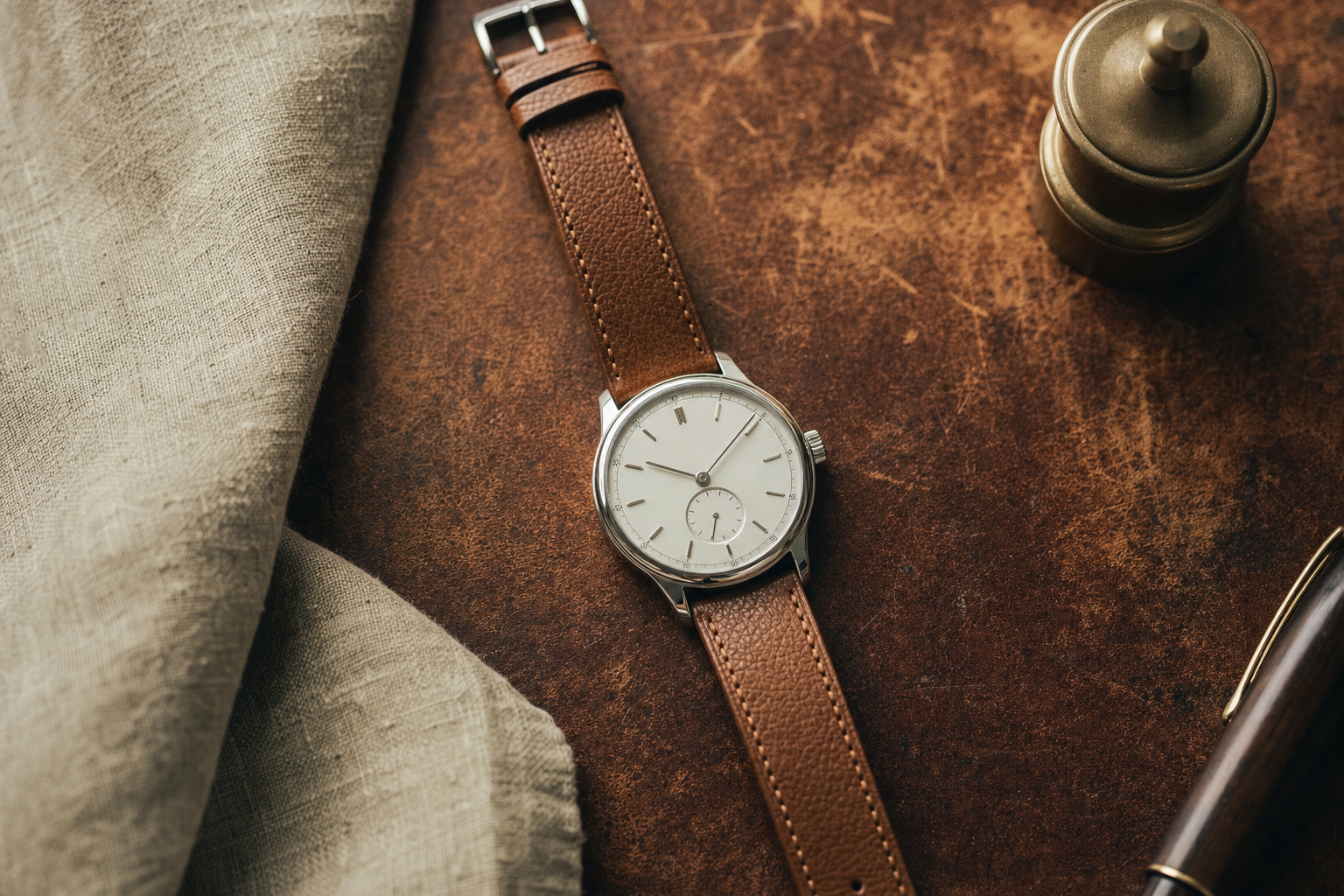
Explore the pinnacle of watchmaking: the tourbillon, perpetual calendar, and minute repeater. Dive deep into these grand complications with Lume Wrist Watches.
# Tourbillon, Perpetual Calendar, Minute Repeater: Horology's Grand Complications For the discerning collector, understanding the **grand complications**—the tourbillon, the perpetual calendar, and the minute repeater—is essential to appreciating the pinnacle of mechanical watchmaking artistry and engineering. These mechanisms represent centuries of innovation, requiring immense skill to design, assemble, and regulate, and they elevate a timepiece far beyond mere time-telling into a realm of horological mastery and profound aesthetic beauty. This deep dive from Lume Wrist Watches will demystify these intricate marvels, guiding you through their history, function, and enduring appeal. ## Why Grand Complications Matter in Horology Grand complications stand as the ultimate expression of a watchmaker's prowess, defining **haute horlogerie** through their complexity, precision, and historical significance. These mechanisms are not merely added features; they are foundational elements that dictate the architecture, design, and even the very soul of a timepiece. They represent the tireless pursuit of perfection, often requiring thousands of hours of hand-finishing and adjustment. Owning a watch with a tourbillon, perpetual calendar, or minute repeater signifies an appreciation for the highest echelons of craftsmanship and innovation, often commissioned by royalty and industrialists throughout history. These watches are for those who seek not just a time-telling instrument, but a piece of kinetic art, a legacy of human ingenuity encapsulated within a few cubic centimeters. They are the benchmarks against which watchmaking houses measure their technical capabilities and artistic vision, continually pushing the boundaries of what is possible in micromechanics. For a broader context on watch mechanics, explore our guide on [Watchmaking Explained: Movements & Complications – A Collector's Guide](/blog/watchmaking-explained-movements-complications-collectors-guide). ## A Brief History of Grand Complications and Their Defining Milestones The development of grand complications is a story intertwined with the very evolution of timekeeping itself, driven by the need for greater accuracy and functionality. * **The Tourbillon (c. 1801):** Invented by **Abraham-Louis Breguet**, the tourbillon (French for "whirlwind") was conceived to counteract the effects of gravity on the accuracy of a watch's balance wheel, hairspring, and escapement, particularly in pocket watches kept in a vertical position. Breguet's patent in 1801 marked a revolutionary step, housing the entire escapement within a rotating cage. Early examples, like the Breguet No. 160 "Marie-Antoinette" (though completed later), showcased its elegance. Modern tourbillons, while less critical for accuracy in wristwatches (which experience varied positions), remain a breathtaking display of mechanical art and micro-engineering, evolving into multi-axis and flying tourbillons. * **The Perpetual Calendar (c. 1762):** **Thomas Mudge** is credited with creating the first perpetual calendar mechanism in 1762, capable of correctly displaying the date, day, month, and even accounting for leap years, without manual adjustment until the year 2100. This complication solved a practical problem: the varying lengths of months and the quadrennial leap year cycle. Patek Philippe brought the perpetual calendar to wristwatches in 1925 with the reference 97975, a groundbreaking adaptation of a pendant watch movement. The perpetual calendar requires intricate gearing to differentiate between 30 and 31-day months and to add the 29th of February every four years. * **The Minute Repeater (c. 1676):** Invented potentially by **Edward Barlow** or **Daniel Quare** in the late 17th century, the minute repeater allows the wearer to tell the time by sound, particularly useful before the advent of widespread artificial lighting. It chimes the hours, quarters, and minutes upon activation, using distinct tones for each. Early repeaters were for hours and quarters; the minute repeater, chiming down to the minute, was a significant refinement. **Abraham-Louis Breguet** further perfected the mechanism with his "_timbre-rattrapante_" (sprung gongs) and **gong-spring** systems, allowing for clearer, more resonant chimes. The development of smaller, more reliable striking mechanisms for wristwatches in the 20th century, notably by companies like Patek Philippe, solidified its place as a grand complication. These three complications, each a marvel in its own right, often combine in **"grand complication" timepieces**, demonstrating the ultimate capabilities of a maison. For more on the core elements of watch movements, read about [Power Reserve, Hairsprings, & Accuracy Explained: The Core of Horology](/blog/power-reserve-hairsprings-accuracy-explained). ## Understanding Each Grand Complication: Function and Aesthetics ### The Tourbillon: A Dance Against Gravity At its core, a **tourbillon** is a rotating cage, housing the escapement and balance wheel, designed to minimize gravitational errors on timekeeping. While arguably less impactful on accuracy in modern wristwatches (which are constantly moving), its visual spectacle is undeniable. * **Mechanism:** The escapement (comprising the escape wheel, pallet fork, and balance wheel) is mounted within a carriage that rotates, typically once per minute, but sometimes faster or slower (e.g., 30-second or 4-minute rotations). This rotation averages out positional errors. * **Types:** * **Single-axis:** The most common, rotating on one plane. * **Flying Tourbillon:** Invented by **Alfred Helwig** in 1920, supported only from beneath, giving the illusion of floating. * **Multi-axis (e.g., Gyrotourbillon, Spherotourbillon):** Rotates on two or more axes, addressing gravitational effects in multiple dimensions. Found in ultra-high-end pieces like Jaeger-LeCoultre's Hybris Mechanica series. * **Aesthetics:** Often displayed prominently on the dial, a tourbillon is a captivating, hypnotic mechanical ballet, a testament to micro-engineering and hand-finishing. Brands like Breguet, Jaeger-LeCoultre, and A. Lange & Söhne are renowned for their tourbillons. ### The Perpetual Calendar: Master of Time's Irregularities A **perpetual calendar** is a purely mechanical marvel that automatically adjusts for the correct number of days in each month and even the leap year cycle, displaying the date, day, month, and often the year and moon phase, without requiring manual correction until the year 2100 (when the Gregorian calendar skips a leap year). * **Mechanism:** A complex system of cams, levers, and gears, often featuring a "48-month wheel" or a series of intricate memory cams, drives the displays. A **leap year indicator** is a common feature, typically a small sub-dial or aperture. * **Sub-Complications:** Often paired with **moon phase indicators**, which track the lunar cycle, and sometimes **day/night indicators** for ease of setting. Some ultra-complex versions also feature astronomical indications like the **equation of time**. * **Aesthetics:** Perpetual calendars are celebrated for their balanced and information-rich dials. While some prefer the classic sub-dial layout, others appreciate more modern, digital displays. Patek Philippe's Ref. 5270 (chronograph and perpetual calendar) or Vacheron Constantin's Patrimony Perpetual Calendar are iconic examples. ### The Minute Repeater: The Voice of Time The **minute repeater** is arguably the most poetic of the grand complications, translating time into sound. Activated by a slide or pusher, it strikes the hours, quarter-hours, and minutes using hammers and gongs. * **Mechanism:** A complex series of levers, snails, and rack-and-pinion systems "read" the time from the movement and translate it into distinct strikes. Two small hammers strike two gongs (typically coiled wires) producing two different tones. One tone for hours (low), two tones for quarters (high-low), and another tone for minutes (high). * **Chiming Sequence:** For example, 3:47 PM would be: three low chimes (hours), three high-low chimes (quarters), and twelve high chimes (minutes). The quality of the sound, known as "_timbre_," is paramount and dependent on the material, shape, and hand-tuning of the gongs and hammers. * **Aesthetics & Craftsmanship:** Minute repeaters are often minimalist on the dial side, concealing their complex mechanism within. However, open-worked or **squelette** versions reveal the intricate striking works. The skill required to tune the gongs and ensure a clear, harmonious chime is immense, making each minute repeater unique. Brands like Audemars Piguet (Royal Oak Minute Repeater Supersonnerie) and Patek Philippe are celebrated for their acoustic mastery. These pieces represent a profound connection to the historical roots of watchmaking. **Key Differences and Shared Virtues:** While distinct in function, all three grand complications share a common thread: they embody the highest levels of micro-mechanical engineering, artisanal skill, and a pursuit of horological excellence that defines **haute horlogerie**. They are not simply about telling time, but about celebrating the mechanical genius that allows us to measure and appreciate its passage in extraordinary ways. ## Movements and In-House Calibers: The Heart of Grand Complications Grand complications almost exclusively feature **in-house movements**, a testament to the technical prowess and self-sufficiency of the most prestigious maisons. Developing these calibers requires immense investment in research, development, and specialized manufacturing capabilities, often with dedicated workshops and master watchmakers. Here's a look at some notable examples: * **Patek Philippe:** Renowned for their comprehensive range of grand complications, including the legendary **Caliber R 27 PS** for minute repeaters, **Caliber 240 Q** for ultra-thin perpetual calendars, and various tourbillon movements found in models like the **Ref. 5101P** (10-day tourbillon). Patek's ability to combine multiple complications, often in their Grand Complications series like the Ref. 6300G-001 (Grandmaster Chime), showcases unparalleled mastery. * **Audemars Piguet:** Their **Caliber 2874** (minute repeater) found in their Royal Oak Concept series and the **Caliber 5133** (perpetual calendar) are iconic. AP's integration of grand complications into their sportier Royal Oak and Royal Oak Offshore lines demonstrates a modern approach to haute horlogerie, blending traditional craftsmanship with contemporary design. The Supersonnerie technology in their minute repeaters is a benchmark for acoustic performance. * **Vacheron Constantin:** Known for movements like the **Caliber 2755** (tourbillon, minute repeater, perpetual calendar) in the Traditionnelle collection, and their ultra-thin perpetual calendars powered by the **Caliber 1120 QP**. Their **Les Cabinotiers** division produces unique, bespoke grand complication timepieces, showcasing a vast array of specialized calibers. * **A. Lange & Söhne:** Celebrated for movements like the **Lange 1 Tourbillon Perpetual Calendar** and the **Zeitwerk Minute Repeater**. Their **Caliber L043.2** (minute repeater) is a mechanical and auditory masterpiece, often featuring intricate German silver plates and hand-engraved balance cocks. * **Breguet:** As the inventor of the tourbillon, Breguet continues to innovate with movements like the **Caliber 581DR** (extra-thin tourbillon with periphery rotor) and various perpetual calendar and minute repeater movements across their Classique and Tradition collections. The **Caliber 558 QP** is a classic perpetual calendar movement. * **Jaeger-LeCoultre:** A true **_manufacture des manufactures_**, JLC supplies movements to many other brands while also producing its own legendary grand complications. Their **Gyrotourbillon** and **Reverso Tribute Gyrotourbillon** movements (e.g., Caliber 179) are among the most complex tourbillons. Their master grande tradition minute repeaters feature advanced crystal gongs. These in-house calibers are not merely functional; they are works of art, meticulously finished with techniques like _Côtes de Genève_, _perlage_, anglage, and black polishing. This dedication to **finissage** is as critical as the complexity of the mechanism itself, ensuring both beauty and durability, and can be appreciated in watches from our curated collection, such as the [Grand Seiko Heritage Collection SBGH273 Blue Dial](/product/pre-owned-grand-seiko-heritage-collection-sbgh273-blue-dial) which showcases exceptional movement finishing. ## Price Tiers Today: Entry, Core, and Grail Grand Complications The price of grand complication watches reflects their extraordinary complexity, the hours of skilled labor, and the prestige of the maison. These are rarely "entry-level" in the conventional sense, but rather represent tiers within the ultra-luxury market. | Tier | Complication Type | Approximate Price Range (USD) | Example Maisons/References (Market Observation) | | :------------- | :----------------------------------------------- | :---------------------------- | :------------------------------------------------------------------------------------ | | **Entry-Level (for G.C.)** | Simplified Perpetual Calendars, Skeleton Tourbillons | $50,000 - $150,000 | Zenith Defy Tourbillon, Frederique Constant Perpetual Calendar, JLC Master Ultra Thin Perpetual, some pre-owned basic tourbillons from smaller independent brands. | | **Core Luxury**| Classic Perpetual Calendars, Flying Tourbillons, Entry Minute Repeaters | $150,000 - $500,000 | Patek Philippe Ref. 5327 (Perpetual Calendar), Audemars Piguet Royal Oak Tourbillon (pre-owned), Vacheron Constantin Traditionnelle Tourbillon, A. Lange & Söhne 1815 Rattrapante Perpetual Calendar. | | **Grail / Ultra-Luxury** | Combined Grand Complications, Multi-Axis Tourbillons, Elite Minute Repeaters | $500,000 - $5,000,000+ | Patek Philippe Grandmaster Chime, Vacheron Constantin Les Cabinotiers, Audemars Piguet Royal Oak Concept Supersonnerie, Greubel Forsey Double Tourbillon. These often feature unique finishing, precious metals, or bespoke elements. | It's important to remember these are **approximate market observations**. Prices can fluctuate significantly based on rarity, condition, materials (e.g., platinum vs. gold), and current market demand. Scarcity and the artisanal nature of these timepieces mean they are produced in extremely limited numbers, further influencing value. Investing in such pieces requires deep understanding of the market, as detailed in our [Luxury Watch Investment & Market Guide: Navigating 2026](/blog/luxury-watch-investment-market-guide-2026). ## What to Check Before Buying Pre-Owned Grand Complication Watches Acquiring a pre-owned grand complication is a significant investment that requires meticulous due diligence. Authentication and condition are paramount. 1. **Full Documentation and Provenance:** Insist on the original box and papers, including the certificate of origin, warranty card, and service records. This documentation proves the watch's authenticity, its specific reference and movement, and its service history. A lack of these items can significantly devalue the watch and raise red flags. 2. **Movement Authenticity and Condition:** The most critical aspect. The intricate movements of grand complications are difficult and costly to service or repair. Ensure the movement is original, untouched by unauthorized watchmakers, and has not undergone any "Franken-watch" modifications. Look for signs of proper servicing, such as clean bridges and plates, and undamaged screws. Our [Service Parts, Franken-Watches & Disclosure in Luxury Watch Authentication](/blog/service-parts-franken-watches-disclosure-authentication) article provides more detail on this. 3. **Functionality of Complications:** Test every aspect. For a perpetual calendar, check that all date, day, month, and leap year indicators advance correctly. For a minute repeater, activate it multiple times to ensure clear, consistent chiming for hours, quarters, and minutes, without any sticking or hesitation. For a tourbillon, observe its smooth and consistent rotation. 4. **Case and Dial Integrity:** Examine the case for significant dings, scratches, or evidence of excessive polishing, which can compromise its original lines. The dial should be original, free from damage, and with all markers and hands intact and matching the original specification. Re-dials can significantly impact value. 5. **Service History:** Grand complications require specialized and often expensive servicing, typically every 5-7 years, performed by the original manufacturer or highly accredited watchmakers. A recent service by a reputable entity adds value and peace of mind. 6. **Independent Authentication:** Always purchase from a trusted, reputable dealer like Lume Wrist Watches, who offers **[our in-house team independent authentication](/policies/authenticity)**. We rigorously inspect every timepiece to ensure authenticity and proper function, including all aspects of its grand complications. For specific guidance, especially for popular brands, consider articles like [How Much Does a Patek Philippe Cost in 2026? Pricing & Market Dynamics](/blog/how-much-does-a-patek-philippe-cost-2026) to understand brand-specific market nuances. ## Current Authenticated Stock at Lume Wrist Watches Lume Wrist Watches proudly offers a curated selection of exceptional timepieces, including those featuring sophisticated complications. While grand complications like minute repeaters and multi-axis tourbillons are extremely rare and often sell quickly, our inventory frequently includes watches from the brands renowned for them. We are continually updating our collection of [Patek Philippe timepieces](/shop?brand=Patek%20Philippe), [Audemars Piguet Royal Oaks](/shop?brand=Audemars%20Piguet), and other high-horology brands. For instance, while a minute repeater might be bespoke, you can find other marvels like a [Tudor Black Bay Chrono Steel 79360N Black Dial](/product/tudor-black-bay-chrono-steel-79360n-black-dial) which, while not a grand complication, showcases complex mechanical chronograph engineering. We also occasionally feature vintage pieces that may include earlier forms of these complications, such as a [Vintage Rolex Submariner Reference 5508](/product/vintage-rolex-submariner-reference-5508) which, while not a grand complication, is a historical icon of watchmaking. We also offer a [concierge sourcing service](/concierge) to help you find that specific, elusive grand complication piece. Explore our [authenticated collection](/shop) for the finest in horology, available for [luxury watches delivered to all 50 states](/watches). ## Frequently Asked Questions ### Q: Is a tourbillon purely for aesthetics in modern wristwatches? A: While initially designed to improve accuracy in pocket watches, a tourbillon's practical impact on accuracy in modern, frequently repositioned wristwatches is debated. Its primary appeal today is often aesthetic, showcasing supreme micro-mechanical skill and the mesmerizing ballet of the escapement. It remains a hallmark of haute horlogerie. ### Q: How often does a perpetual calendar need adjustment? A: A perpetual calendar is designed to correctly display the date, day, month, and leap year cycles without manual correction until the year 2100. It will only require manual adjustment for irregularities outside this cycle, such as at the start of a new century that is not a leap year (e.g., 2100). ### Q: Why are minute repeaters so expensive? A: Minute repeaters are among the most expensive complications due to their extreme complexity and the immense skill required for their creation. Each component, especially the gongs, must be hand-finished and meticulously tuned to produce a clear, harmonious sound. This artisanal process, combined with limited production numbers and the prestige of the brands, drives their high cost. ### Q: Can grand complications be water resistant? A: Generally, grand complication watches, especially minute repeaters with their case openings for sound transmission, have very limited water resistance. While some brands are developing more robust grand complications, collectors should typically treat them as dress watches and avoid water exposure. For robust water resistance, refer to our [Water Resistance Ratings Explained: A Collector's Guide 2026](/blog/water-resistance-ratings-explained-collectors-guide). ### Q: What is the difference between a perpetual calendar and an annual calendar? A: An annual calendar correctly accounts for months with 30 or 31 days and automatically adjusts, but it requires manual correction once a year at the end of February (for the leap year). A perpetual calendar goes further by also accounting for the leap year cycle, requiring no manual adjustment until 2100. ### Q: Are grand complications good investments? A: Certain grand complication watches, particularly from top-tier maisons like Patek Philippe, Audemars Piguet, and Vacheron Constantin, can be excellent long-term investments due to their rarity, craftsmanship, and historical significance. However, like all luxury assets, their value can fluctuate, and they should primarily be acquired for passion and appreciation of horology, not solely for financial gain. ## Contact Lume Wrist Watches Have more questions about grand complications or looking for a specific timepiece? Reach out to our expert team at Lume Wrist Watches. * **Email:** sales@lumewrist.com * **Phone:** +1 (315) 413-9130 * **Boutique:** 18 East 48th Street, Suite 1503, New York, NY 10017 * **Hours:** Mon–Fri 9:00 AM – 7:00 PM EST · Closed Saturday & Sunday Visit our [contact page](/contact) or explore our [shop](/shop) for further assistance. ## Final Thoughts The tourbillon, perpetual calendar, and minute repeater represent the zenith of mechanical watchmaking, each a testament to centuries of relentless innovation, artistry, and precision. To wear one of these grand complications is to carry a piece of horological history, a miniaturized world of intricate mechanics that continues to captivate and inspire. At Lume Wrist Watches, we understand the profound appeal of these masterpieces. Whether you're beginning your journey into high horology or seeking to add another 'grail' piece to your collection, our authenticated selection and expert advice are here to guide you. Discover the unparalleled craftsmanship of these horological wonders and browse our [all featured maisons](/brands) today to find your next extraordinary timepiece.