Power Reserve, Hairsprings, & Accuracy Explained: The Core of Horology
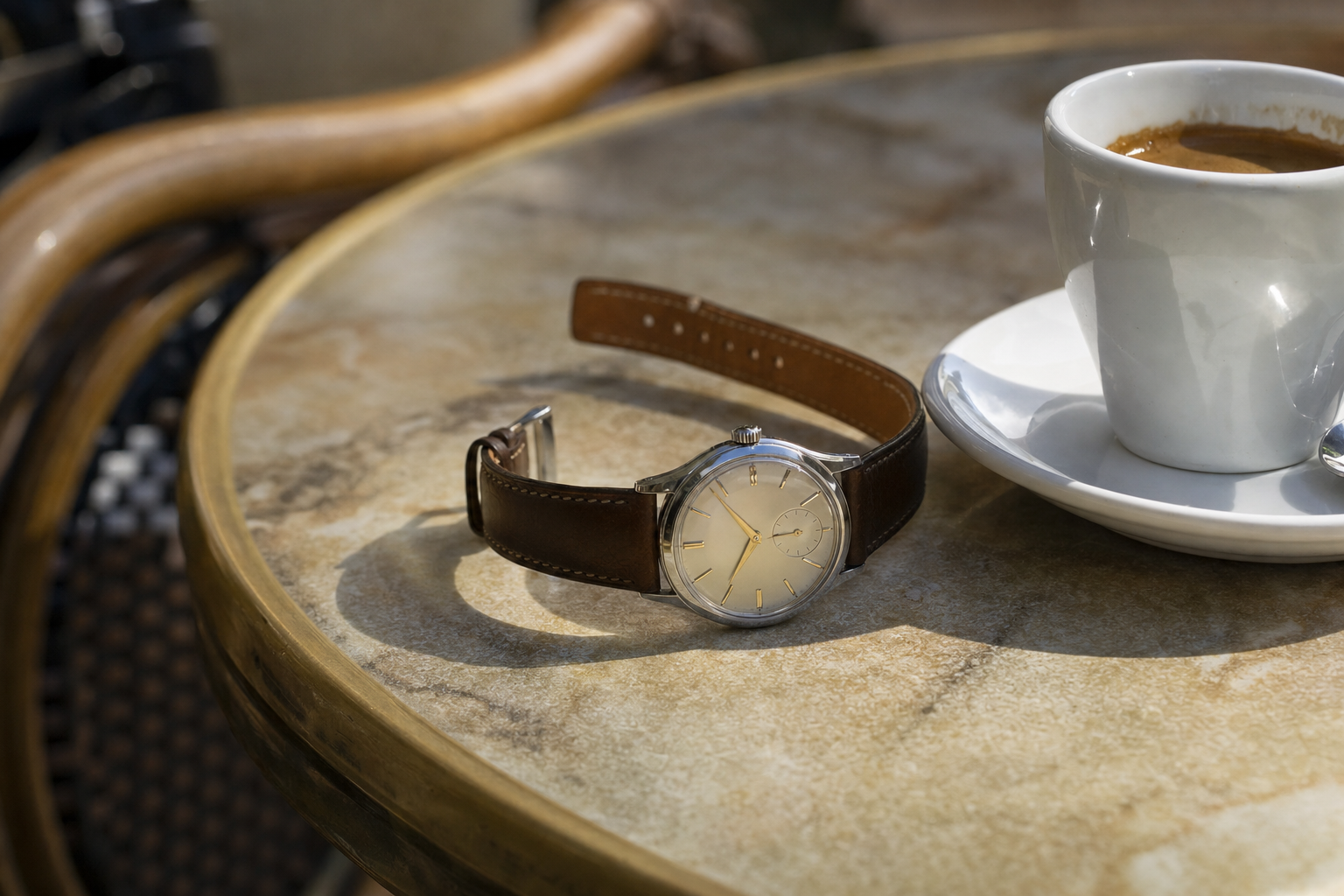
Dive deep into luxury watch mechanics: understand power reserve, hairsprings, and how they define watch accuracy. Essential reading for collectors.
# Power Reserve, Hairsprings, & Accuracy Explained: The Core of Horology Understanding a luxury watch's performance hinges on appreciating its **power reserve**, the kinetic energy storage capacity; its **hairspring**, the delicate heart regulating time; and the resulting **accuracy**, the precise measurement of time over a given period. These three interconnected elements are fundamental to a mechanical watch's identity, directly influencing its reliability, stability, and ultimately, its value and desirability among collectors. Delving into their intricacies reveals the genius of traditional watchmaking and the pursuit of chronometric perfection. ## The Power Reserve, Hairsprings, and Accuracy at a Glance: Foundational Principles At the core of every mechanical timepiece lies a complex interplay of components designed to deliver consistent timekeeping. The **power reserve** indicates how long a watch will run when fully wound without additional kinetic input, typically ranging from 38 to 80 hours in modern movements, though some haute horlogerie pieces can achieve weeks. The **hairspring**, a minuscule coiled wire, works in conjunction with the balance wheel to form the oscillating heart of the movement, dictating the watch's beat rate and thus its precision. This intricate system, combined with a well-engineered escapement, directly determines a watch's **accuracy**, which is often measured in seconds per day (SPD) deviation and rigorously tested for chronometer certifications. ## Full Specification Table: Key Metrics of Horological Performance While specific values vary immensely between calibers and brands, the table below provides a general overview of what defines excellence in power reserve, hairspring technology, and accuracy standards across luxury watchmaking. | Feature | Description | Typical Range (Modern Luxury) | Benchmark/Ideal | | :---------------- | :----------------------------------------------------------------- | :-------------------------------------- | :----------------------------------------------- | | **Power Reserve** | Duration a fully wound watch runs without intervention. | 38 - 80 hours (some >100 hours) | 70+ hours for practical daily wear | | **Hairspring Material** | Material composition of the balance spring. | Nivarox, Silicon (Si), Parachrom, Nivachron | Silicon for anti-magnetism/stability, proprietary alloys for resilience | | **Oscillation Rate** | Beats per hour (BPH) or Hertz (Hz) of the balance wheel. | 18,000 BPH (2.5 Hz) to 36,000 BPH (5 Hz) | 28,800 BPH (4 Hz) for good stability and longevity | | **Accuracy Standard** | Accepted deviation in seconds per day (SPD). | -4/+6 SPD (COSC), -2/+2 SPD (Master Chronometer) | Chronometer-certified (COSC, METAS) for reliable precision | | **Anti-magnetism** | Resistance to magnetic fields affecting the hairspring. | Basic (ISO 764) to 15,000 Gauss+ (METAS) | Master Chronometer level (e.g., Omega's coaxial movements) | | **Shock Resistance** | Ability to withstand impacts without compromising accuracy. | Incabloc, Kif, Parashock systems | Integrated into movement design, protecting delicate components | ## The Evolution of Power Reserve, Hairsprings, and Accuracy The journey toward modern chronometric excellence has been a continuous evolution, marked by significant innovations. ### The Mainspring and Power Reserve Development The **mainspring** is the heart of a watch's power source, storing energy when wound. Early mainsprings offered limited power, often requiring daily winding. The 20th century saw advancements in mainspring alloys and barrel designs, leading to extended power reserves. Brands like **Panerai** have pushed boundaries, with some Luminor models, such as the [Panerai Luminor Base Logo (PAM01087)](/product/panerai-luminor-base-logo-pam01087), boasting three-day power reserves, making them highly practical for daily wear. Other manufacturers, like Patek Philippe and A. Lange & Söhne, have developed multi-barrel systems or extraordinarily long mainsprings to achieve power reserves exceeding a week, moving from purely functional to a hallmark of mechanical prowess. This pursuit for longevity reflects a broader desire for convenience and reduced interaction, as discussed in our sibling article on [Automatic vs Manual Winding: Which Should You Buy in 2026?](/blog/automatic-vs-manual-winding-luxury-watch-guide). ### The Hairspring: Regulator of Time The **hairspring**, or balance spring, is arguably the most critical component for a watch's accuracy. Invented in the late 17th century by Christiaan Huygens and Robert Hooke, it revolutionized timekeeping by allowing for a much more precise oscillation than earlier folio balances. Initially made from blued steel, hairsprings were susceptible to temperature changes, magnetism, and shock. Major advancements include: * **Nivarox**: Developed in the 1930s, this non-magnetic, corrosion-resistant, and thermally stable alloy became the industry standard for decades, significantly improving accuracy across a wide range of conditions. * **Proprietary Alloys**: Brands like **Rolex** introduced their own advanced hairsprings, such as the **Parachrom** hairspring (seen in models like the [Rolex Rolex Datejust 41 (126331)](/product/rolex-datejust-41-126331)), made from a niobium-zirconium alloy. It boasts exceptional resistance to magnetic fields and temperature variations, and is up to 10 times more resistant to shocks than traditional hairsprings. * **Silicon (Si)**: A 21st-century innovation, silicon hairsprings offer unparalleled resistance to magnetism, temperature fluctuations, and shock. They are also lighter and can be manufactured with extreme precision using advanced etching techniques, leading to superior chronometry. **Omega** was a pioneer in integrating silicon balance springs, which are now a standard feature in their Master Chronometer certified movements, exemplified by their Co-Axial calibers and discussed further in [Omega Co-Axial & Master Chronometer Explained: The Ultimate Guide](/blog/omega-co-axial-master-chronometer-explained). ### The Pursuit of Accuracy: From Observatories to Certification Early accuracy measurements were conducted in observatories, where watches competed for coveted ratings. Today, independent bodies and brand-specific certifications ensure high standards: * **COSC (Contrôle Officiel Suisse des Chronomètres)**: The most widely recognized certification, COSC tests uncased movements over 15 days in five positions and at three temperatures. A mechanical watch must achieve an average daily rate of -4 to +6 seconds to be certified. Many high-end luxury watches, including most Rolex and certain Omega models, carry this certification. * **METAS (Swiss Federal Institute of Metrology) / Master Chronometer**: Introduced by Omega, the Master Chronometer certification builds upon COSC, testing the entire cased watch and subjecting it to extreme magnetic fields (up to 15,000 gauss), water resistance, and extended power reserve tests. This represents one of the industry's highest standards for magnetic resistance and overall performance, evident in watches like the [Omega Speedmaster ‘Dark Side of the Moon’ (311.92.44.51.01.005)](/product/omega-speedmaster-dark-side-of-the-moon-311-92.44.51.01.005). * **Patek Philippe Seal**: Patek Philippe maintains its own rigorous internal standards, testing fully cased watches for accuracy, aesthetics, and long-term reliability. Their standards are even stricter than COSC, ensuring a deviation of -3/+2 seconds per day for movements over 20mm and -5/+5 seconds for smaller movements, reflecting their commitment to uncompromised quality, a topic we explore in [Patek Philippe Complications & Perpetual Calendars Explained](/blog/patek-philippe-complications-perpetual-calendars-explained). ## The Impact of Power Reserve, Hairsprings, and Accuracy on Wearing Experience The practical implications of these technical specifications directly translate to the user's experience: * **Convenience**: A longer **power reserve** means less frequent winding, especially beneficial for automatic watches worn intermittently or for manual-wind pieces. A 70-hour reserve, for instance, allows a watch to be taken off on Friday evening and still be running on Monday morning, a significant convenience factor. * **Reliability**: Superior **hairspring** technology (e.g., silicon, Parachrom) enhances a watch's resistance to everyday hazards like magnetic fields from electronics or accidental bumps, contributing to consistent performance and fewer service interventions. This is crucial for maintaining a watch's long-term **accuracy**. * **Trust and Precision**: A highly **accurate** and certified watch instills confidence. Knowing your timepiece deviates only a few seconds a day (or less) reaffirms its quality and the mastery of its watchmakers. For those seeking absolute precision in their daily lives, these factors are paramount. Understanding these core components helps collectors appreciate the distinction between a mass-produced timepiece and a luxury mechanical instrument, where every component is engineered for optimal performance. Our comprehensive guide [Watchmaking Explained: Movements & Complications – A Collector's Guide](/blog/watchmaking-explained-movements-complications-collectors-guide) provides a broader context for these intricate mechanisms. ## Market Observations: Value and Desirability Watches excelling in power reserve, hairspring innovation, and accuracy often command a premium in the market. This isn't merely about bragging rights; it reflects significant research and development investment by the maisons. * **Long Power Reserves**: Timepieces from brands like Patek Philippe, A. Lange & Söhne, and Panerai with extended power reserves (5-day, 8-day, or even 10-day) are highly sought after. These features are often associated with more complex and finely finished movements, which contributes to their higher market value. * **Innovative Hairsprings**: Watches featuring silicon hairsprings (e.g., from Omega, Patek Philippe, Ulysse Nardin) or proprietary alloy hairsprings (e.g., Rolex's Parachrom, Breguet's silicon) are generally perceived as technologically superior and more durable. This advanced material science contributes to a watch's desirability and can influence its long-term value, especially as anti-magnetism becomes increasingly important in our digital world. * **Chronometer Certification**: While COSC certification is standard for many luxury brands, METAS Master Chronometer certification from Omega adds a distinct premium due to its stringent anti-magnetic and comprehensive performance tests. Watches like the [Omega Speedmaster ‘Dark Side of the Moon’ (311.92.44.51.01.005)](/product/omega-speedmaster-dark-side-of-the-moon-311-92.44.51.01.005) benefit from this enhanced credibility. Generally, a watch that combines robust power reserve, advanced hairspring technology, and verifiable accuracy will be more valued by collectors and enthusiasts. This holds true for [luxury watches in New York](/watches/new-york), [luxury watches in California](/watches/california), and indeed, for [luxury watches delivered to all 50 states](/watches). ## Authentication Considerations: Verifying Core Performance While authentication primarily focuses on external aesthetics and movement components, understanding the expected performance metrics of power reserve and accuracy is crucial for authenticating a watch's *functional integrity*. 1. **Check Documentation**: Authentic luxury watches typically come with documentation detailing movement specifications, including power reserve. For COSC-certified watches, a chronometer certificate should accompany the timepiece. Omega Master Chronometer watches have a specific card detailing their METAS certification. 2. **Test Power Reserve**: A genuine watch should meet or exceed its stated power reserve. A watch with a significantly shorter power reserve than advertised might indicate issues with the mainspring or winding mechanism, potentially requiring service. Our [our in-house team independent authentication](/policies/authenticity) process includes checking such functional aspects. 3. **Accuracy Testing**: An experienced watchmaker can test a watch's accuracy on a timegrapher, measuring its daily deviation. While normal wear can affect accuracy slightly, extreme deviations (e.g., +/- 30 seconds per day for a modern luxury watch) might suggest a compromised hairspring, escapement issue, or lack of proper regulation. For example, a **Rolex** or **Patek Philippe** should perform within chronometer standards. 4. **Movement Inspection**: While subtle, an expert eye can sometimes identify non-standard hairsprings or escapement components, which could be indicators of an inauthentic movement or improper repair. Visual inspection requires specialized knowledge of specific calibers, such as those found in [Patek Philippe timepieces](/shop?brand=Patek%20Philippe) or [Audemars Piguet Royal Oaks](/shop?brand=Audemars%20Piguet). When buying a pre-owned luxury watch, verifying these core functional elements is as important as verifying aesthetic authenticity. [Lume Wrist Watches](/shop) ensures every timepiece undergoes stringent checks, including performance evaluations. ## Frequently Asked Questions ### What is a good power reserve for a luxury watch? A good power reserve for a modern luxury watch is generally considered to be 48 hours or more, providing sufficient running time for daily wear or if the watch is taken off for a day. Many contemporary luxury watches now offer 70-hour or even 80-hour power reserves, offering greater convenience. ### How does the hairspring affect watch accuracy? The hairspring, in conjunction with the balance wheel, forms the oscillating heart of a mechanical watch. Its consistent expansion and contraction at a precise frequency (e.g., 28,800 vibrations per hour) directly dictates the watch's accuracy. Any deviation in its material properties, shape, or susceptibility to external factors like magnetism or temperature will impact timekeeping precision. ### What makes a watch 'accurate'? A watch is deemed accurate if its timekeeping deviates minimally from true time over a given period, typically measured in seconds per day. Factors contributing to high accuracy include a stable hairspring and balance wheel, a well-engineered escapement, proper lubrication, and meticulous regulation by a skilled watchmaker, often verified by independent chronometer certifications like COSC or METAS. ### Can magnetism affect a watch's accuracy? Yes, magnetism is one of the most common causes of accuracy loss in mechanical watches. Magnetic fields can cause the delicate coils of the hairspring to stick together, shortening its effective length and causing the watch to run fast. Modern luxury watches often incorporate anti-magnetic materials like silicon or specific alloys in their hairsprings and components to combat this issue. ### What is the difference between COSC and Master Chronometer certification? COSC certification tests uncased movements for accuracy in various positions and temperatures, requiring an average daily rate of -4/+6 seconds. Master Chronometer certification, developed by Omega and METAS, is a more rigorous standard that tests the entire cased watch for accuracy after exposure to extreme magnetic fields (up to 15,000 gauss), water resistance, and power reserve, among other criteria. ## Contact Lume Wrist Watches For further inquiries or to explore our curated collection of timepieces renowned for their precision and reliability, please reach out to us: * **Email**: sales@lumewrist.com * **Phone**: +1 (315) 413-9130 * **Boutique**: 18 East 48th Street, Suite 1503, New York, NY 10017 * **Hours**: Mon–Fri 9:00 AM – 7:00 PM EST · Closed Saturday & Sunday You can also visit [our contact page](/contact) or browse [our shop](/shop) for exceptional luxury watches. ## Final Thoughts The power reserve, the hairspring, and accuracy are not merely technical specifications; they are the bedrock upon which the legacy of horology is built. These elements define a mechanical watch's soul, representing centuries of innovation aimed at perfecting the art of timekeeping. For the discerning collector, understanding these fundamental principles deepens appreciation for the craftsmanship, engineering prowess, and enduring value of luxury timepieces. Whether you prioritize longevity, precision, or cutting-edge material science, these aspects are central to any truly great watch. Explore our authenticated collection and discover watches that embody these pillars of horological excellence in our [Horology at Lume Wrist Watches](/shop?brand=Horology) section today.