Watch Crystal Authentication: Complete 2026 Verification Guide
Published October 30, 2026 · Last updated October 31, 2026 · By Lume Wrist Watches
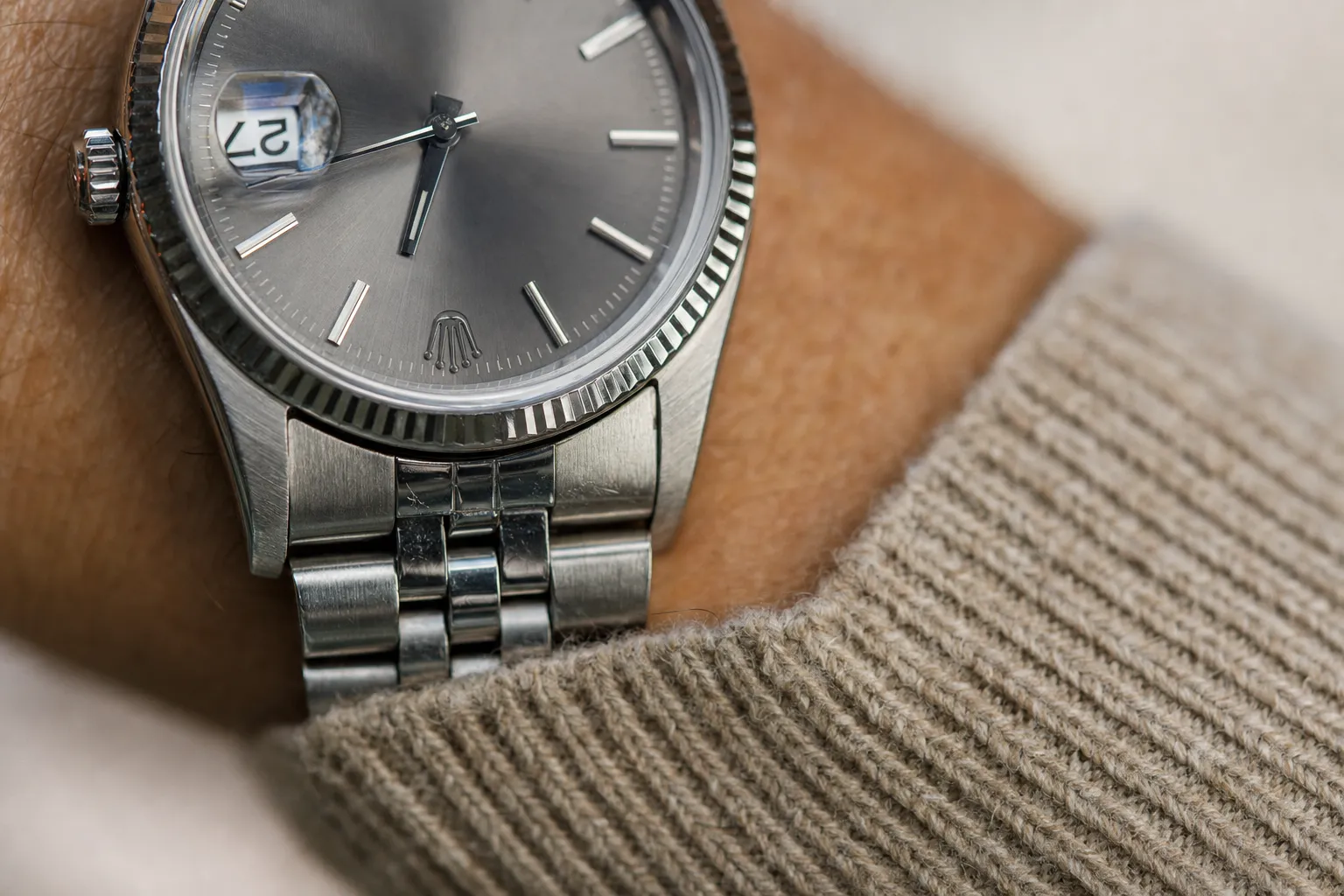
Authenticating a luxury watch crystal requires verifying material composition, date aperture magnification power, anti-reflective coating hue, edge beveling, and laser etching fidelity. On modern references, an authentic Rolex Cyclops delivers exact 2.5x magnification that completely fills the aperture window without optical distortion, while an authentic synthetic sapphire crystal registers a 9 on the Mohs hardness scale. Scrutinizing the crystal's profile height, date wheel depth, and microscopic coronet markings instantly exposes aftermarket replacements, generic service crystals, and deceptive superclone counterfeits.
Whether examining a modern ceramic diver or an archival plexiglass reference, understanding crystal construction is vital. This guide delivers exhaustive technical benchmarks, optical tolerances, and hands-on laboratory methodologies for collectors navigating pre-owned timepieces in 2026.
---
Why Crystal & Cyclops Verification Matters
Within luxury horology, the crystal is far more than a protective barrier; it serves as a primary optical lens engineered to microscopic tolerances. While counterfeiters often mimic exterior case brushing or bezel colorways with remarkable superficial fidelity, replicating genuine crystal physics remains economically prohibitive. As explored in Watch Authentication & Provenance: The Lume Wrist Watches Guide, authenticators analyze physical tolerances that high-volume replication factories consistently compromise.
Top-tier manufactures engineer their crystals to function seamlessly with proprietary dial architecture. When an aftermarket crystal is fitted, or when a counterfeit watch attempts to replicate an authentic profile, subtle optical errors emerge:
- Distorted Focal Geometry: Incorrect lens curvature creates peripheral fish-eye warping around numerals.
- Aperture Misalignment: Sub-millimeter discrepancies in date wheel placement alter reading angles.
- Compromised Water Resistance: Aftermarket crystal gaskets fail under pressure testing due to improper seat dimensions.
- Degraded Light Transmission: Inferior crystal batches lack optical purity, causing dial reflections that obscure fine texturing.
Evaluating the crystal is a decisive diagnostic phase when assessing timepieces from all featured maisons. A flawed lens often indicates deeper internal issues, pointing toward a frankenwatch assembled from disparate components or an outright replica.
---
Horological Crystal History and Defining Milestones
The technological evolution of the watch crystal reflects a century-long quest for optical clarity, scratch resistance, and structural resilience under depth.
``` 1930s–1950s: Acrylic / Polymethyl Methacrylate (Plexiglas, Hesalite) │ Flexible, shatterproof, easily scratched, warm vintage optic ▼ 1953–1954: Rolex Patents the Cyclops Lens │ External magnifying bubble bonded to Plexiglas; debuted on Datejust ref. 6305 ▼ 1970s: Synthetic Sapphire Adoption │ Corundum crystal (Al2O3) offering Mohs 9 hardness; early Rolex ref. 5100 Beta 21 ▼ 2001–2002: Rolex Introduces the Laser-Etched Coronet (LEC) │ Micro-dots etched at varying depths at 6 o'clock to curb counterfeit crystals ▼ 2005–Present: Dual Anti-Reflective (AR) Coatings & Cyclops AR Under-Treatments │ Elimination of surface glare; specialized blue/colorless AR beneath the Cyclops lens ```
Defining Historical Milestones
- 1953: Rolex founder Hans Wilsdorf conceives the magnifying lens to assist his wife in reading the date on her timepiece. Rolex patents the Cyclops lens on October 28, 1953, introducing it commercially across the Datejust line in 1954.
- 1970: The quartz revolution prompts ultra-luxury mechanical and quartz developments, with Rolex deploying synthetic sapphire on the limited-production reference 5100.
- 1978: Sapphire crystals become standardized on core sports tool references, beginning with the Sea-Dweller ref. 16660 "Triple Six" and Submariner Date ref. 16800.
- 2001: Rolex introduces the Laser-Etched Coronet (LEC) at the 6 o'clock position on the Submariner ref. 14060M, progressively rolling out the security marker across the entire catalogue by 2004.
- 2005: Modern anti-reflective (AR) treatments evolve. Rolex introduces double AR coating exclusively beneath the Cyclops lens on the GMT-Master II ref. 116710LN, eliminating glare while preserving pristine outdoor readability.
---
Crystal Types & Magnification Systems Across Major Maisons
Different luxury manufacturers deploy distinct crystal architectures and optical geometries. Understanding these specifications is essential for our in-house team independent authentication process.
Rolex: The 2.5x Optical Cyclops Standard
Rolex specifies an uncompromising standard: exactly 2.5 times magnification. When viewing an authentic Datejust or Submariner Date dead-center, the date numeral expands to fill approximately 90% to 95% of the visual aperture under the bubble.
Counterfeit components routinely provide only 1.5x to 1.8x magnification because manufacturing an authentic convex sapphire curve with zero edge distortion is expensive. On an authentic piece, viewing the aperture from an oblique 45-degree angle reveals a sharp, legible numeral without chromatic aberration (color fringing) or blurriness.
Omega, Cartier, and Patek Philippe: Flush Apertures and Coatings
Other prestigious houses handle date magnification and anti-reflective engineering differently:
- Omega: Rather than utilizing an external magnifier, Omega relies on custom dial apertures with bevel-cut frames and domed sapphire crystals coated with dual-sided anti-reflective treatments. As collectors note when evaluating a Rolex Submariner versus GMT for Collectors alongside an Omega diver, Omega achieves readability through crystal clarity rather than external magnification.
- Cartier: Known for faceted, curved crystals contoured to geometric cases—such as the Tank Americaine and Santos—the maison relies on flush dials where date wheels sit directly beneath the dial plate, minimizing depth parallax.
- Patek Philippe: Classic complications feature ultra-thin date wheels nestled directly beneath aperture windows, avoiding the optical distortion inherent to thicker sports watch assemblies.
| Maison / Model Series | Crystal Material | Magnification | AR Coating Location | Distinguishing Security Feature |
|---|---|---|---|---|
| :--- | :--- | :--- | :--- | :--- |
| Rolex Datejust / Sub Date | Synthetic Sapphire | 2.5x Exact | Under Cyclops lens only | Laser-Etched Coronet (LEC) at 6 o'clock |
| Rolex Milgauss (116400GV) | Synthetic Sapphire | None (Time-only) | None | Tinted green throughout crystal mass |
| Rolex Sea-Dweller / Deepsea | Sapphire (Domed/Thick) | None / 2.5x (126600) | Full underside | Engineered bevel edge for extreme depth |
| Omega Seamaster Diver 300M | Domed Sapphire | None (Dial framed) | Dual-sided (Interior/Exterior) | Slight blue-violet hue under incandescent light |
| Tudor Heritage Models | Domed Sapphire | None | Underside only | Dramatic vintage top-hat curvature profile |
| Patek Philippe Calatrava | Ultra-Thin Sapphire | None | Underside only | Flawless edge bevel and friction-fit gasket |
---
Movements, Date Discs, and Alignment Mechanics
Magnification authentication extends beyond the outer lens; it requires analyzing the mechanical interface between the crystal, dial aperture, and date wheel. Counterfeiters often struggle with this alignment, a flaw readily exposed when identifying superclone movements and replicas.
Mechanical Parallax and Date Wheel Depth
In genuine calibers—such as the Rolex 3135, 3235, or Tudor MT5612—the date disc sits fractions of a millimeter below the dial surface. This tight vertical tolerance minimizes parallax:
- The Dial Window Gap: On authentic calibers, the vertical gap between the top surface of the date indicator disc and the underside of the dial plate measures approximately 0.10 mm to 0.15 mm.
- The Counterfeit Drop: Replicas utilizing modified Asian 2824 or 2836 movements with overlay discs exhibit an exaggerated vertical gap often exceeding 0.35 mm. Under a 2.5x Cyclops, this mechanical drop casts a noticeable interior shadow across the date disc, obscuring numerals in low light.
Typography, Serif Structure, and Font Weight
Authentic date wheels utilize bespoke pad-printed typography tailored to each caliber generation:
- Serif Accents: On authentic Rolex 3135 date wheels, numerals like "6", "9", and "2" feature pronounced serifs and open loops on older references, or uniform flat-topped "3" fonts on specific modern series.
- Pad Printing Relief: Under 20x stereo microscopes, genuine numerals demonstrate clean, razor-sharp edges with slight, even ink pooling known as three-dimensional relief. Counterfeit wheels display fuzzy edges, bleeding ink into the date disc substrate, or flat digital print transfers.
- Window Centering: Cycling the watch through days 1 to 31 should show dead-center vertical and horizontal alignment. Inauthentic timepieces frequently exhibit "floating" numerals that drift toward the top or bottom edge of the aperture window.
Inspectors also verify dial surface preservation using our guide on spotting redialed watches and dial refinishing, confirming the dial aperture has not been recut or repainted.
---
Replacement Crystal & Component Price Tiers Today
Authentic factory crystals represent precision engineering, and market replacement costs vary significantly between vintage acrylics, modern sapphire components, and proprietary specialty glass.
Note: All figures reflect current secondary market parts trading observations and independent watchmaker billing ranges for 2026; they do not represent binding quotes.
### Entry Tier: Standard Sapphire & Vintage Acrylic ($150 – $450) - Components: Factory Plexiglas/Hesalite crystals for vintage models, standard flat sapphire crystals for modern Omega and Tudor models without magnification bubbles. - Market Observations: OEM replacement parts purchased through authorized restoration channels or reputable independent parts distributors generally trade between $150 and $450, excluding gasket replacement and pressure testing.
### Core Tier: Rolex OEM Magnified Sapphire Crystals ($450 – $950) - Components: Factory Rolex sapphire crystals featuring the 2.5x Cyclops with anti-reflective undercoating and Laser-Etched Coronet (part codes including B25-295-CAR-C1). - Market Observations: Unopened blister-pack Rolex service crystals command between $450 and $950 in the secondary parts market. Sourcing authentic service components requires caution, as counterfeiters replicate blister-pack packaging with alarming accuracy.
### Grail Tier: Proprietary & Complicated Crystals ($1,000 – $2,800+) - Components: Specialized crystals such as the Rolex Milgauss green sapphire crystal (ref. 116400GV), thick domed crystals for deep-sea models (ref. 126660/136660), and faceted sapphire crystals for high-complication Patek Philippe or Audemars Piguet watches. - Market Observations: Due to complex manufacturing processes—such as doping sapphire with copper and iron ions to produce unalterable green coloration—authentic green crystals trade between $1,200 and $2,800 on the secondary exchange.
---
What to Check Before Buying Pre-Owned: The Crystal Verification Checklist
Whether acquiring luxury watches in California, reviewing options in New York, or ordering luxury watches in Florida, use this step-by-step diagnostic checklist.
``` STEP 1: Thermal & Scratch Test (Electronic Gem Tester / Mohs Probe) │ Confirm synthetic sapphire (Mohs 9) vs. mineral glass (Mohs 5-6) ▼ STEP 2: 2.5x Magnification & Optical Distortion Audit │ Check date fill ratio (90-95%) and edge clarity at 45-degree angle ▼ STEP 3: Laser-Etched Coronet (LEC) Structural Examination │ Inspect via 10x loupe; verify stacked micro-bubbles, not solid surface etch ▼ STEP 4: Anti-Reflective (AR) Coating Reflection Profile │ Confirm presence of under-Cyclops AR; ensure zero milky glare ▼ STEP 5: Bevel Height & Edge Gasket Inspection │ Check for chips, service "S" mark, and correct nylon gasket compression ```
### 1. The Laser-Etched Coronet (LEC) Inspection Position an LED light source at an acute angle from the 12 o'clock side while examining the 6 o'clock edge through a 10x or 20x loupe. - Genuine Characteristics: The coronet is virtually invisible to the naked eye under direct lighting. It consists of dozens of micro-bubbles etched at varying internal depths within the sapphire matrix. The oval base ring of the coronet contains clear, separated dots rather than a continuous groove. - Counterfeit Characteristics: Replicas frequently etch the coronet onto the exterior surface via laser engraving, leaving a bright, milky white mark that is easily visible across a room. Running a fingernail over an authentic crystal reveals a perfectly smooth surface; if you can feel the coronet, the crystal is aftermarket or counterfeit. - The Service Replacement Mark: When Rolex replaces a crystal during official maintenance, the replacement crystal often features a miniature horizontal "S" etched inside the coronet's bottom oval. This denotes a genuine service replacement rather than a factory-original component.
### 2. The Droplet Surface Tension Test Synthetic sapphire exhibits higher surface energy than mineral glass or acrylic: - Place a single drop of distilled water on the clean crystal using a fine pipette. - On authentic sapphire, the water beads tightly into a high-contact-angle dome that slides across the surface without spreading. - On mineral glass or acrylic, the droplet breaks down, flattening across the crystal surface.
### 3. Verification of Physical Weight and Case Mounts Crystal replacement often coincides with case work. Authenticators confirm case integrity by referencing guides on testing precious metal weight and hallmarks and checking serial number lookups and registries to ensure case parameters match the fitted crystal generation.
---
Current Authenticated Stock at Lume Wrist Watches
Every timepiece in our authenticated collection undergoes comprehensive optical, mechanical, and material verification before entering inventory. Our specialists inspect crystal components, date discs, and bezel tolerances across our entire catalog.
Explore these certified timepieces currently in stock:
- Precision Tool Engineering: The Grand Seiko Grand Seiko Sport Collection SBGN019 GMT Black Dial Stainless Steel showcases dual-curved sapphire crystal with anti-reflective coating on the inner surface, providing pristine clarity across its geometric indices.
- Military Heritage Specification: The Hamilton Hamilton Khaki Field Mechanical H69439931 Black Dial Steel utilizes a scratch-resistant sapphire crystal seated securely into a bead-blasted 38mm stainless steel case.
- Modern Sports Chronograph: The Tudor Tudor Black Bay Chrono 79360N Black Dial Stainless Steel – No. 2 features a prominent domed sapphire crystal that honors vintage racing chronographs while delivering modern scratch resilience.
Looking for a specific model? Explore our curated inventory: - Browse our certified Rolex collection - Discover fine Patek Philippe timepieces - Inquire about iconic Audemars Piguet Royal Oaks - Review our versatile Omega collection - Admire refined Cartier watches - Connect with our concierge sourcing service for bespoke acquisitions.
---
Frequently Asked Questions
### How can I tell if a Rolex Cyclops is authentic or aftermarket? An authentic Rolex Cyclops produces a precise 2.5x magnification that fills almost the entire aperture window with the date numeral without peripheral distortion. Aftermarket and counterfeit crystals generally deliver weak 1.5x magnification, causing the numeral to appear noticeably smaller inside the bubble. Additionally, modern Rolex Cyclops lenses feature an anti-reflective coating applied specifically to the underside of the bubble, preventing reflective glare under direct lighting.
### Can you see the Rolex laser-etched coronet with the naked eye? On an authentic watch, the Laser-Etched Coronet (LEC) at 6 o'clock is nearly invisible to the naked eye under standard perpendicular lighting. It requires viewing under magnification with an angled LED beam shining from 12 o'clock. If the etched coronet is immediately and clearly visible without magnification under regular room lighting, it is almost certainly a counterfeit or aftermarket crystal.
### What does an 'S' inside the laser-etched coronet mean? A miniature horizontal letter "S" etched inside the lower oval of the coronet indicates a factory-original Rolex service replacement crystal. Rolex watchmakers install these crystals during routine overhaul procedures when the original crystal is chipped or scratched. While not original to the watch's factory birth, it remains an authentic Rolex OEM component.
### How do watchmakers test whether a crystal is real sapphire or mineral glass? Watchmakers utilize thermal conductivity gem testers, such as a Presidium diamond-and-sapphire tester, which instantly distinguishes corundum sapphire from mineral glass based on heat dissipation rates. Alternatively, water droplet surface-tension testing and optical refractometry verify the refractive index (1.76 to 1.77 for synthetic sapphire versus 1.52 for mineral glass) without risking cosmetic damage to the watch.
### Do vintage Rolex watches have the laser-etched coronet? No, vintage Rolex models produced before 2001 do not feature a laser-etched coronet. Acrylic (Plexiglas) crystals used on references such as the Submariner 1680 or Datejust 1601 never received laser etching. If a vintage reference features an etched coronet on an acrylic crystal, the crystal is a modern aftermarket reproduction or an altered component.
---
Contact Lume Wrist Watches
Our authentication team inspects every crystal, movement, and case component using high-resolution optical loupes, refractometers, and pressure-testing chambers. We invite you to schedule private viewing appointments at our Midtown Manhattan office or arrange a consultation to sell your watch to us.
- Email: sales@lumewrist.com
- Phone: +1 (332) 285-2190
- Office: 18 East 48th Street, Suite 1503, New York, NY 10017
- Business Hours: Mon–Fri 9:00 AM – 7:00 PM ET · Closed Saturday & Sunday
We provide secure, insured shipping & delivery for clients purchasing luxury watches delivered to all 50 states, including collectors purchasing luxury watches in Texas. Payment transactions are conducted strictly via secure card processing or direct bank wire.
---
Final Thoughts
The crystal and its date magnification lens serve as the optical gateway to a luxury watch. Verifying the 2.5x magnification geometry, examining the multi-depth micro-bubbles of the laser-etched coronet, and checking anti-reflective coatings will protect your capital from sophisticated replicas and frankenwatches.
Every timepiece in our catalog undergoes rigorous multi-point verification before listing.