Chronograph Watches
Two pushers, a central sweep hand and a dial that means business. The chronograph is the most useful complication in watchmaking and the most demanding to build well.
Chronograph Watches available now
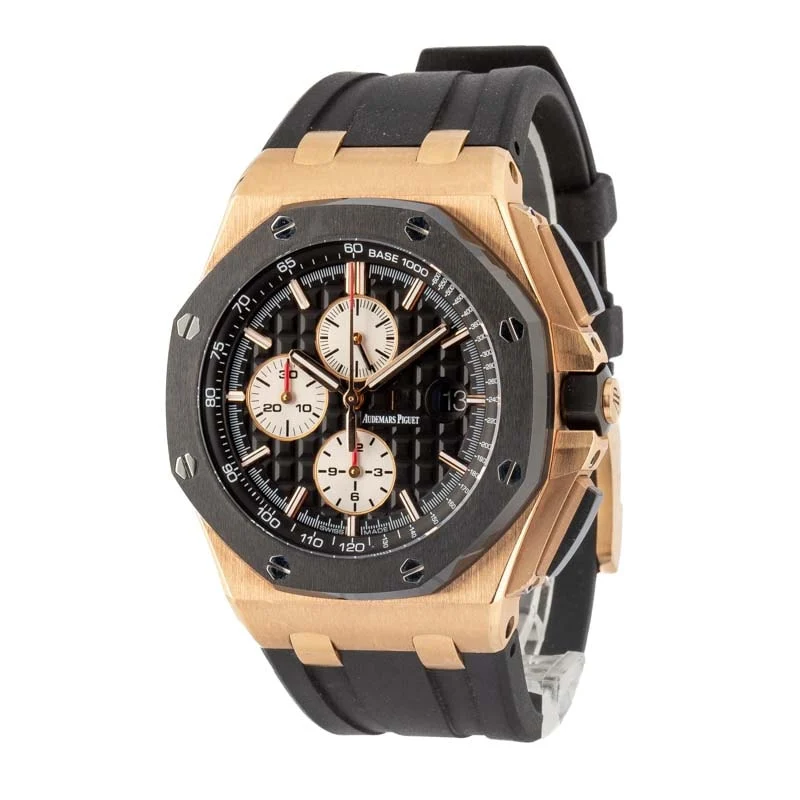 Audemars Piguet Audemars Piguet Royal Oak Offshore Chronograph Rose Gold
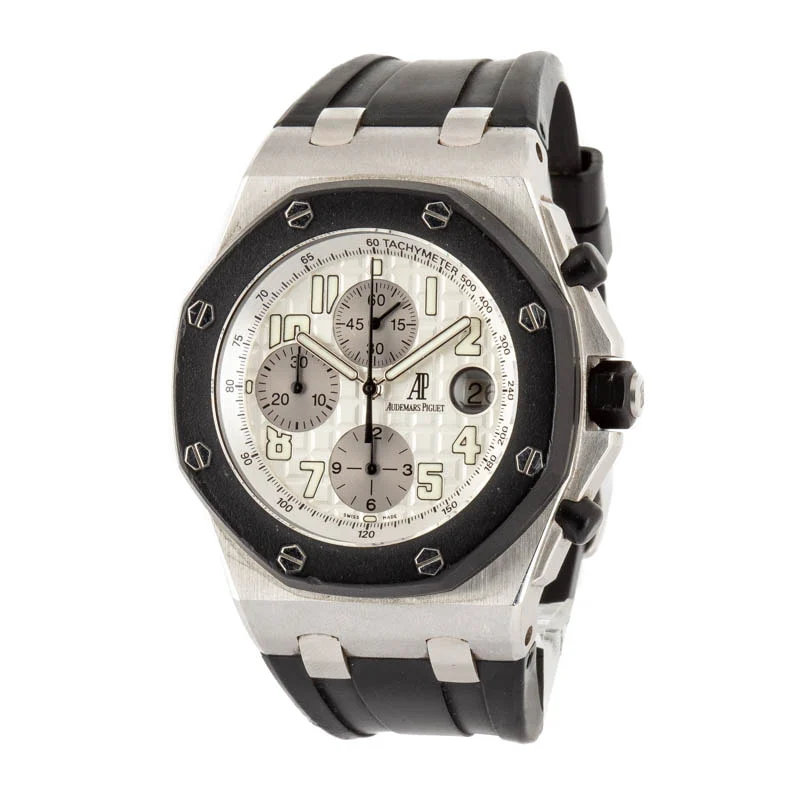 Audemars Piguet Audemars Piguet Royal Oak Offshore Chronograph Silver Dial
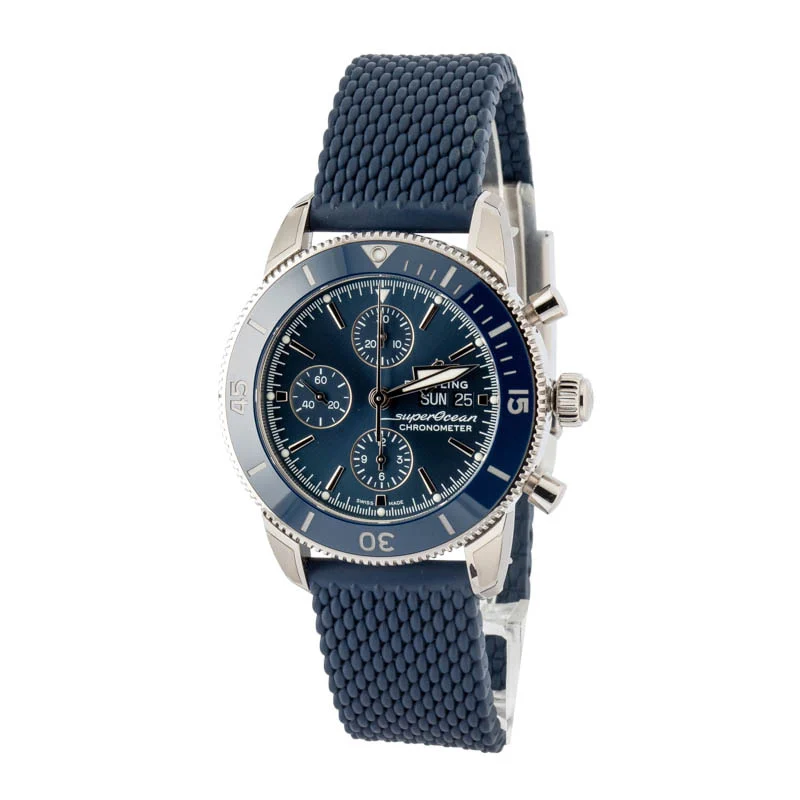 Breitling Breitling Blue Dial Superocean Heritage Chronograph 44 Steel on Rubber
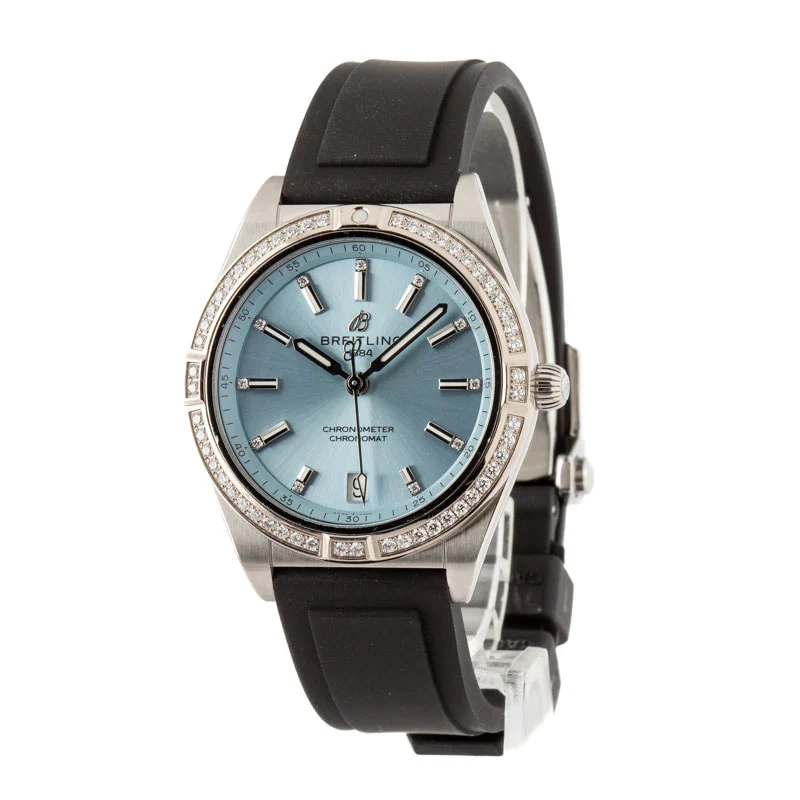 Breitling Breitling Chronomat 36 Blue Dial
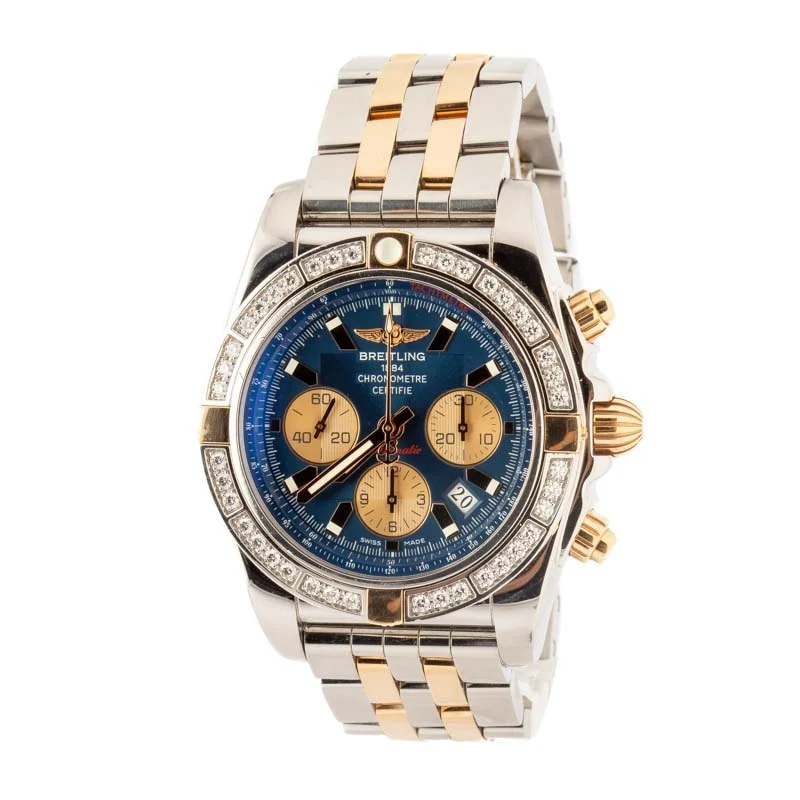 Breitling Breitling Chronomat 44 Blue Dial Diamond Bezel
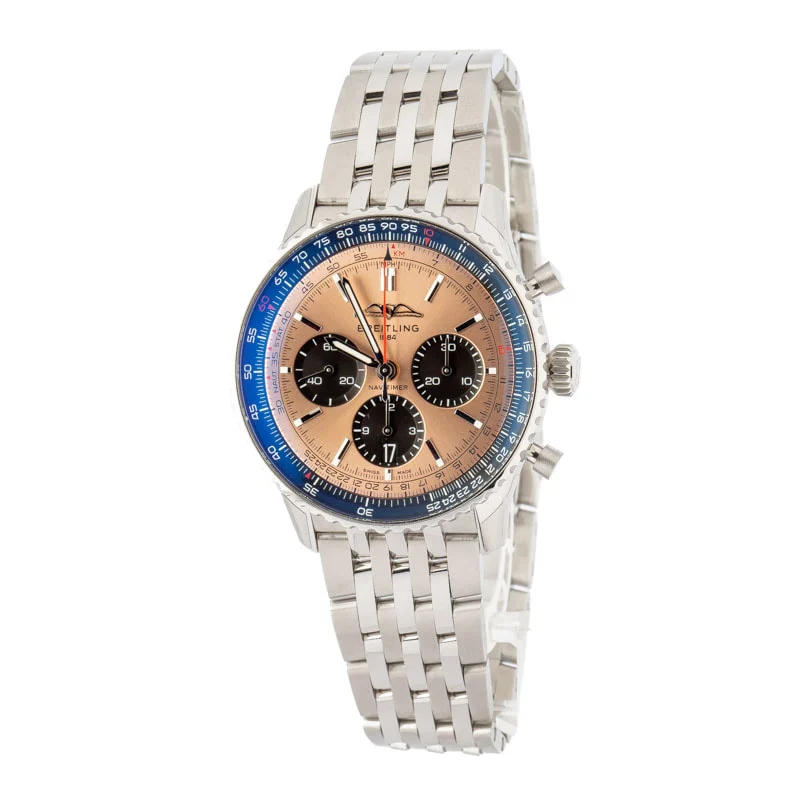 Breitling Breitling Navitimer B01 Chronograph 43 Cooper Dial
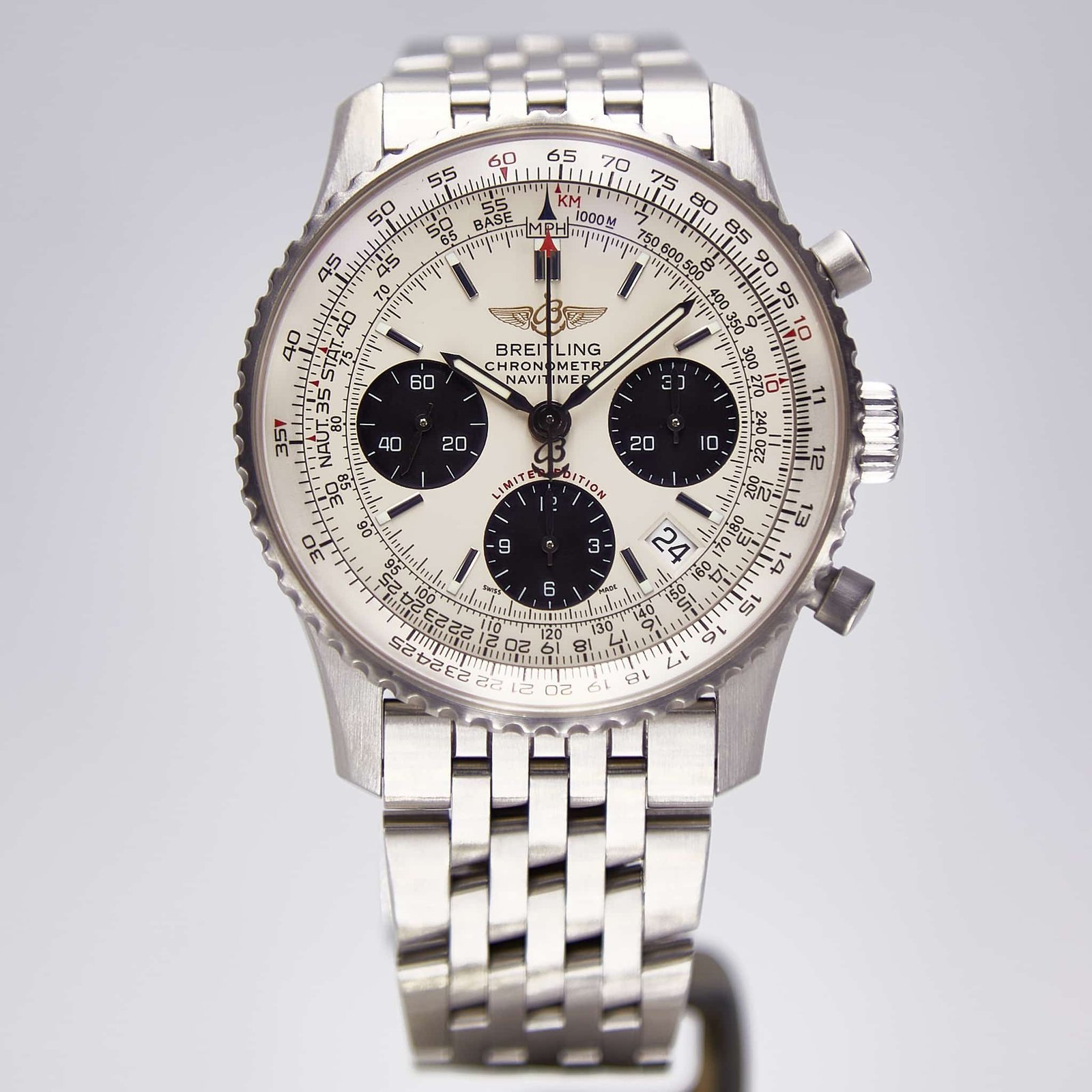 Breitling Breitling Navitimer Limited Edition
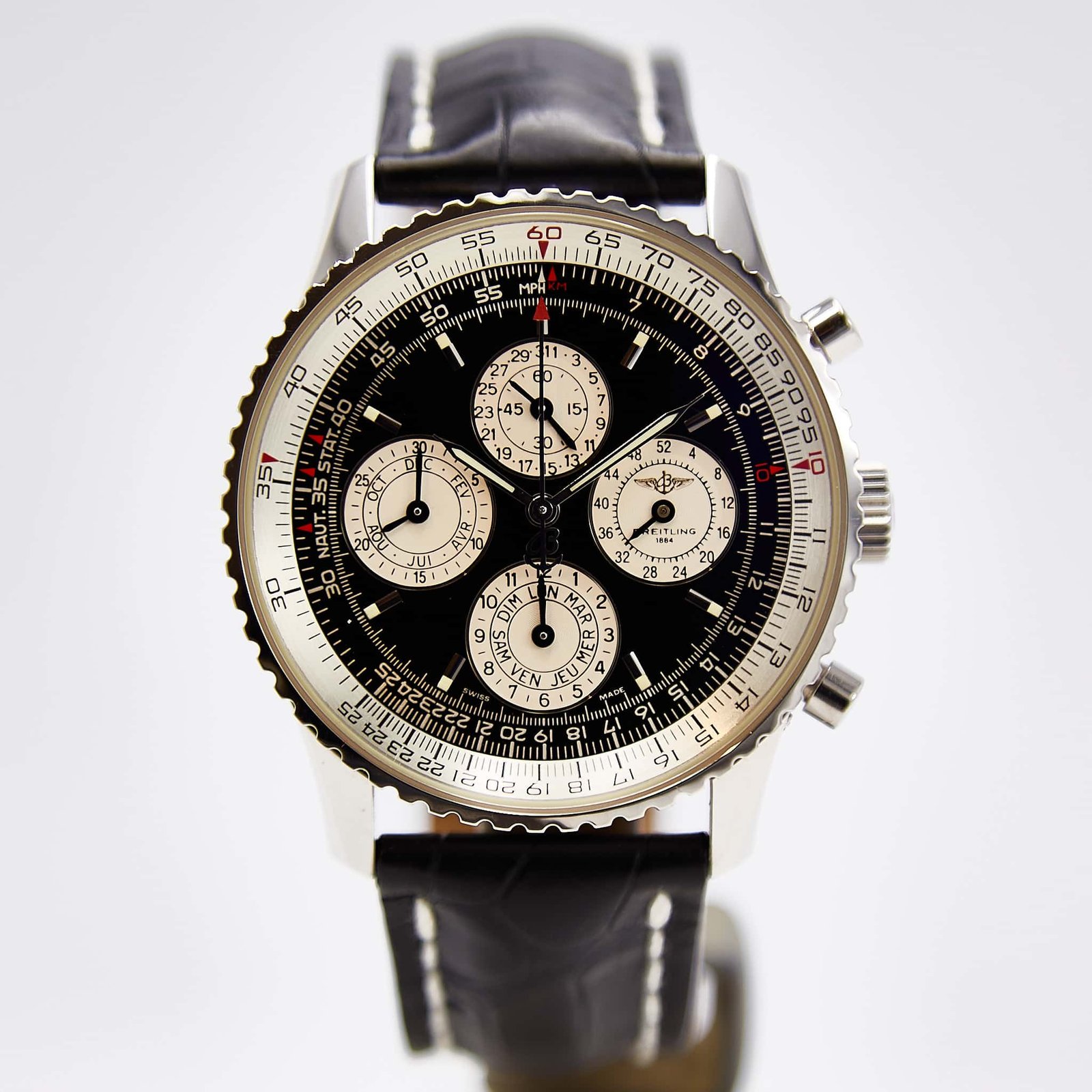 Breitling Breitling Navitimer Perpetual Calendar (1461)
What a chronograph does, and why it is difficult
A chronograph is a watch with a built-in stopwatch. Press the upper pusher and a central hand starts sweeping; press it again to stop; press the lower pusher to reset to zero. Elapsed minutes and hours accumulate in small subdials, called registers, arranged around the dial. It sounds simple. It is, in fact, the complication that separates competent movement manufacturers from great ones.
The difficulty is that the chronograph mechanism has to engage with a movement that is already running, without disturbing its rate. Two approaches dominate: the cam-and-lever system, which is robust and cost-effective, and the column wheel, which uses a rotating pillared component to coordinate the functions and delivers a noticeably crisper pusher feel. On top of that sits the coupling — horizontal clutch, where two wheels mesh laterally, or vertical clutch, which engages from above and eliminates the small stutter of the seconds hand at start-up.
Chronographs are visually busier than any other category, which is part of their appeal. They read as instruments. Many carry a tachymeter scale on the bezel for calculating speed over a measured distance, a direct inheritance from motorsport timing. If you like the aesthetic but rarely time anything, that is a perfectly legitimate reason to buy one — but consider also the cleaner sports watches or a dive watch with an elapsed-time bezel.
Choosing a chronograph
Where the meaningful differences lie.
Column wheel versus cam
Column-wheel chronographs cost more and feel better under the finger — a clean, low-resistance click. Cam-actuated versions are more resistant to abuse and easier to service. Both keep perfect time.
Register layout
Two-register dials (bicompax) are cleaner and more classical; three-register (tricompax) add an hour counter and read more technical. This is purely a design decision.
Case size runs large
The extra mechanism needs room. Chronographs typically sit 2–3mm larger and noticeably thicker than a three-hand watch from the same maker. Size accordingly.
Do not run it constantly
Leaving a horizontal-clutch chronograph running permanently accelerates wear on the coupling. Use it, then reset it.
Chronograph terminology
The words you will meet on the product pages.
- Tachymeter
- A bezel scale converting elapsed seconds over one mile or kilometre into average speed. Time a measured mile, read the figure opposite the hand.
- Bicompax / tricompax
- Two or three subdials respectively. Tricompax normally adds a 12-hour totaliser.
- Flyback
- A single press resets and restarts the timing hand without stopping first. Developed for aviation navigation.
- Pulsometer
- A dial scale for counting heartbeats over a fixed number of pulses — the physician’s chronograph.
- Vertical clutch
- A coupling design that engages from above, giving a jump-free start and permitting continuous running.
Chronographs from Lume Wrist Watches
Every function tested
Start, stop, reset and register alignment are checked on each chronograph before it is listed.
Pusher feel assessed
A spongy pusher indicates a mechanism needing attention — we report it or we do not list the watch.
Reset-to-zero verified
We confirm the hands return precisely to zero, which is where poorly serviced chronographs give themselves away.
Two-year warranty
Covering the chronograph module as well as the base calibre.
Chronograph Watches — frequently asked questions
What is a chronograph watch?
A watch with an integrated stopwatch operated by pushers, displaying elapsed time on a central hand and one or more subdials.
Can I leave the chronograph running all the time?
On a vertical-clutch movement, yes. On a horizontal-clutch movement it is better to reset after use to limit wear on the coupling wheels.
How does a tachymeter bezel work?
Start the chronograph at the beginning of a measured mile or kilometre, stop at the end, and read the average speed on the bezel opposite the seconds hand.
Are chronographs harder to service?
They have more components, so a full service costs more than for a simple three-hand watch. The interval is the same five to seven years.
Do chronographs wear larger?
Yes, usually 2–3mm wider and noticeably thicker. Check the case dimensions against your wrist before ordering.
Are all your chronographs mechanical?
Most are — see mechanical watches. Each listing states the movement type explicitly.
Related collections
- Sports Watches — The wider performance category chronographs belong to.
- Automatic Watches — Self-winding chronograph calibres.
- Men's Luxury Watches — Where the larger chronograph cases sit best.
- Stainless Steel Watches — The traditional chronograph case material.
- Dive Watches — Elapsed-time timing by bezel instead of pushers.
Shop All Watches · Speak to a specialist
Popular searches
- Luxury Watches For Sale
- Luxury Watches Online
- Men's Luxury Watches
- Women's Luxury Watches
- Automatic Watches
- Mechanical Watches
- Chronograph Watches
- Skeleton Watches
- Dress Watches
- Sports Watches
- Dive Watches
- Gold Watches
- Rose Gold Watches
- Stainless Steel Watches
- Sapphire Crystal Watches
- Premium Wrist Watches
- Affordable Luxury Watches
- Luxury Watches Under $500
- Luxury Watches Under $1,000
- Luxury Watches For Gifts