Stainless Steel Watches
Corrosion-resistant, hypoallergenic, repairable and tough enough to ignore. Steel is not the compromise material in luxury watchmaking — it is usually the correct one.
Stainless Steel Watches available now
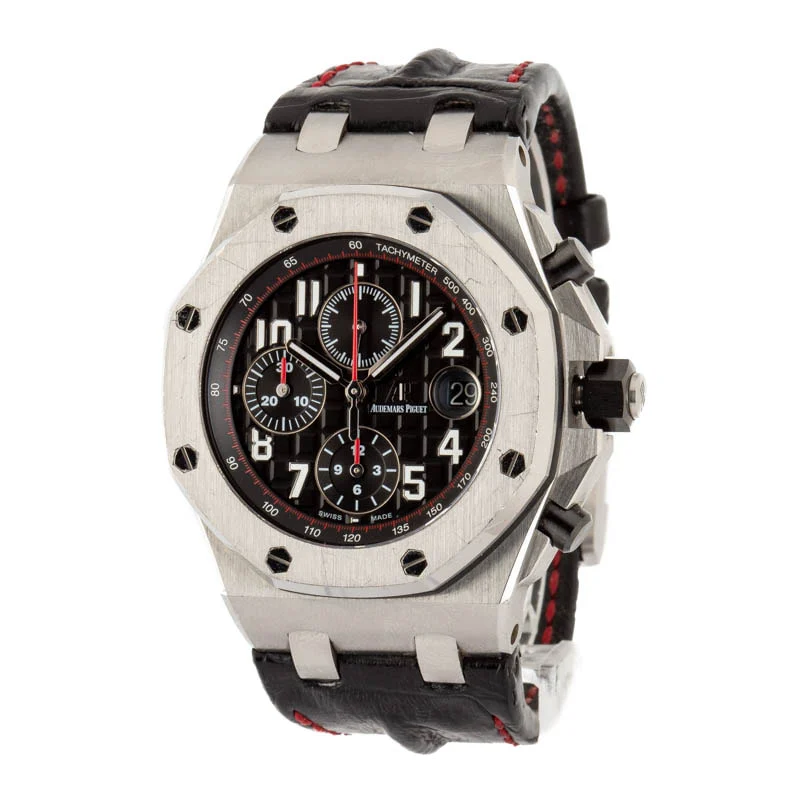 Audemars Piguet Audemars Piguet Royal Oak Offshore 42MM Stainless Steel
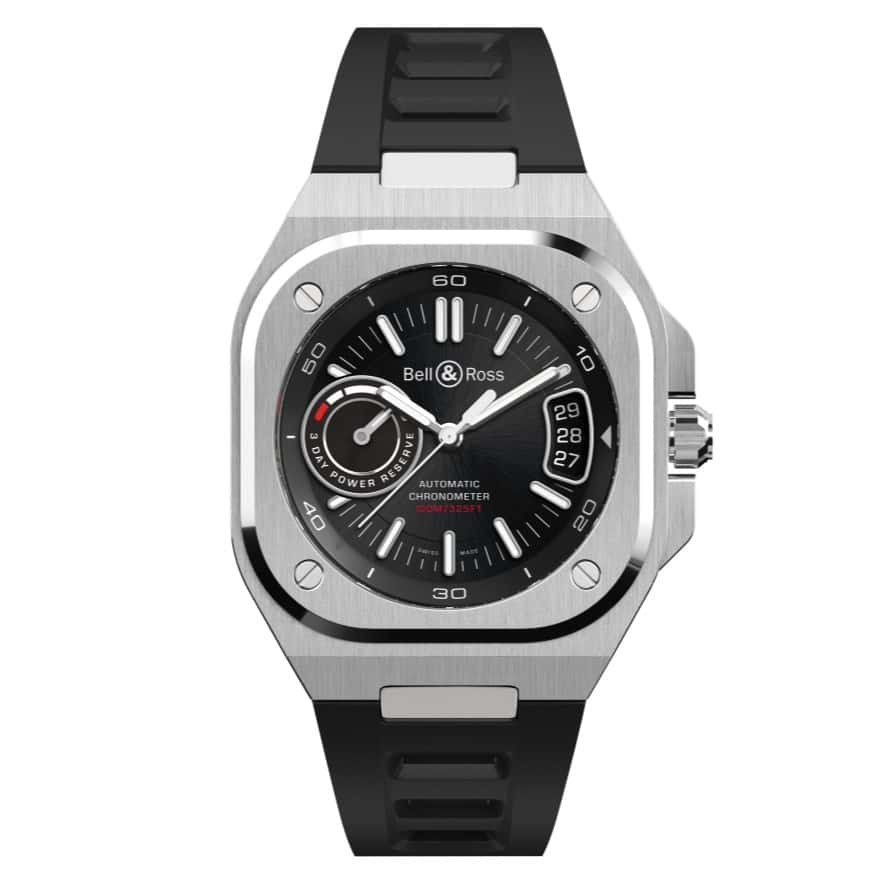 Bell & Ross Bell & Ross BR-X5 Black Steel (BRX5R-BL-ST/SRB)
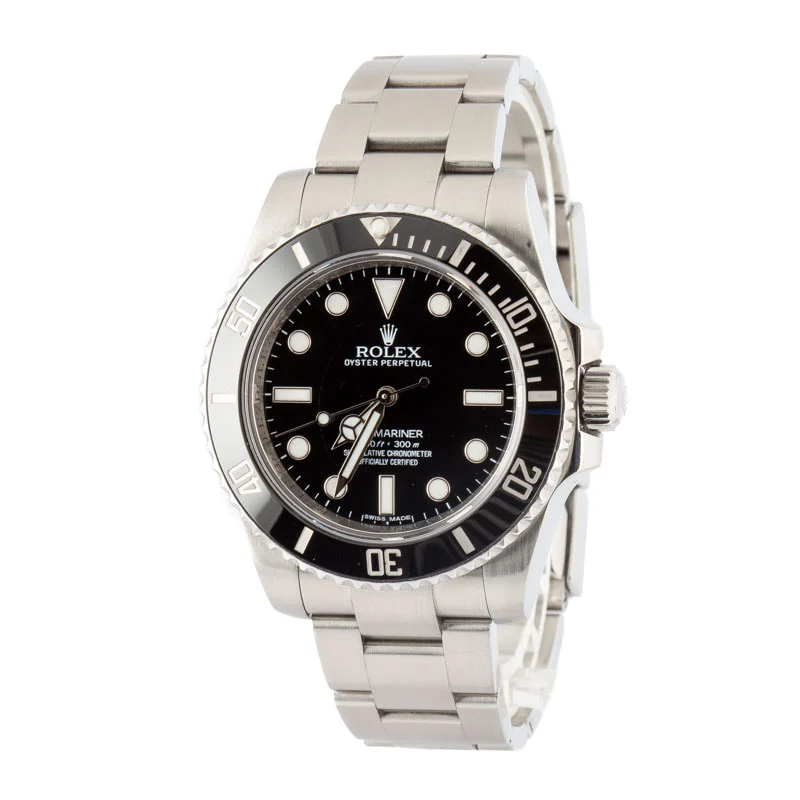 Rolex Black Dial Rolex Submariner Ref 114060 Stainless Steel
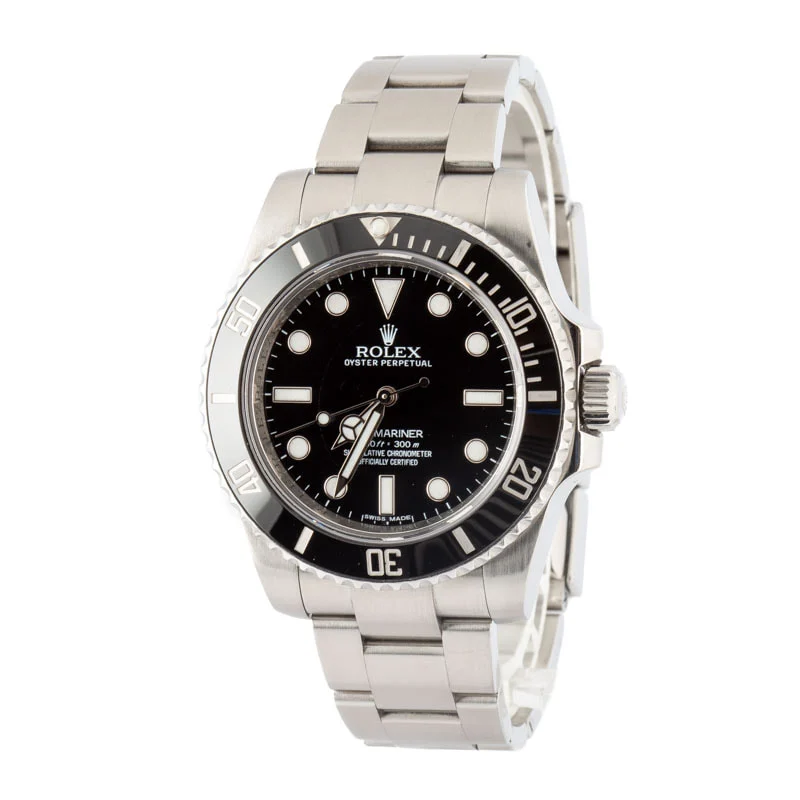 Rolex Black Dial Rolex Submariner Ref 114060 Stainless Steel
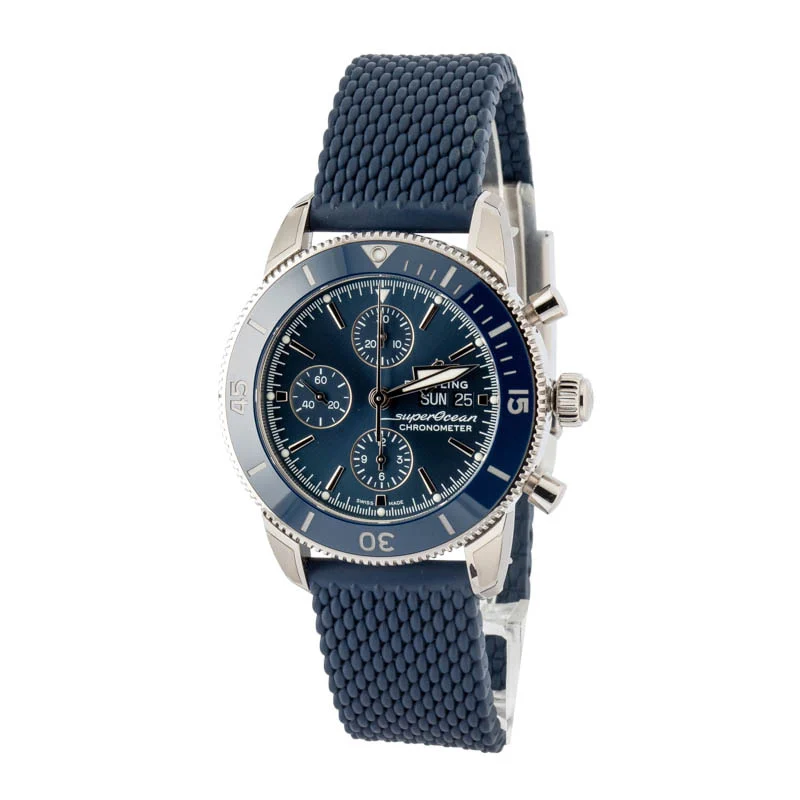 Breitling Breitling Blue Dial Superocean Heritage Chronograph 44 Steel on Rubber
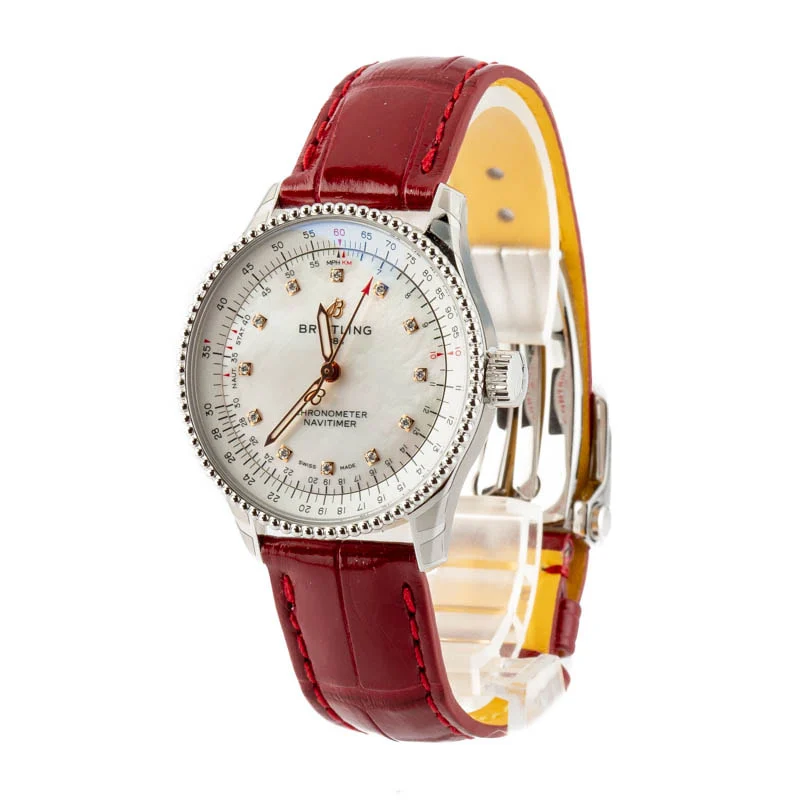 Breitling Breitling Navitimer Automatic 35 Steel on Red Leather Strap
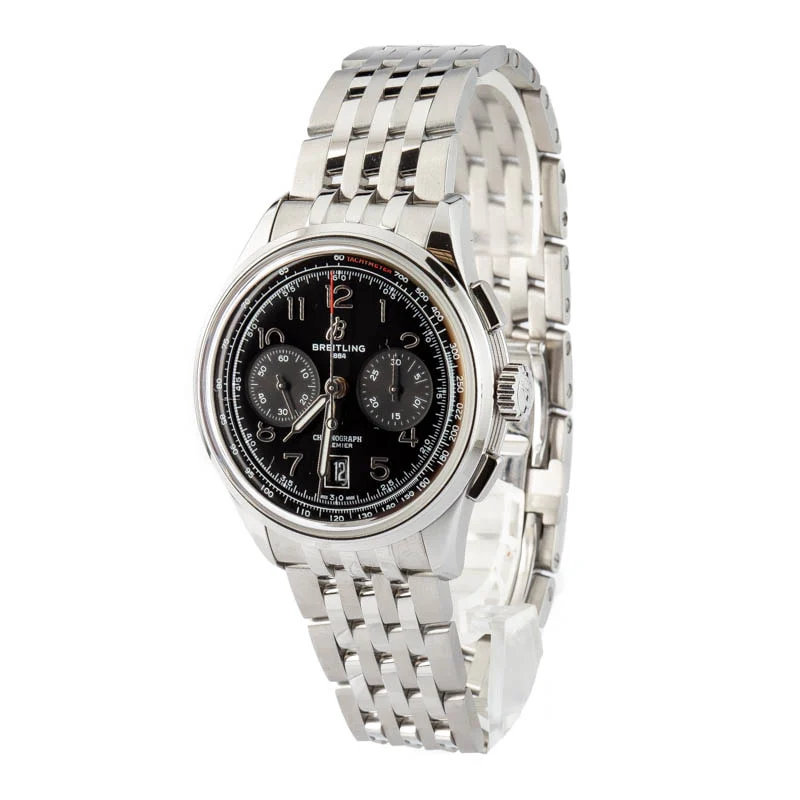 Breitling Breitling Premier Chronograph Stainless Steel
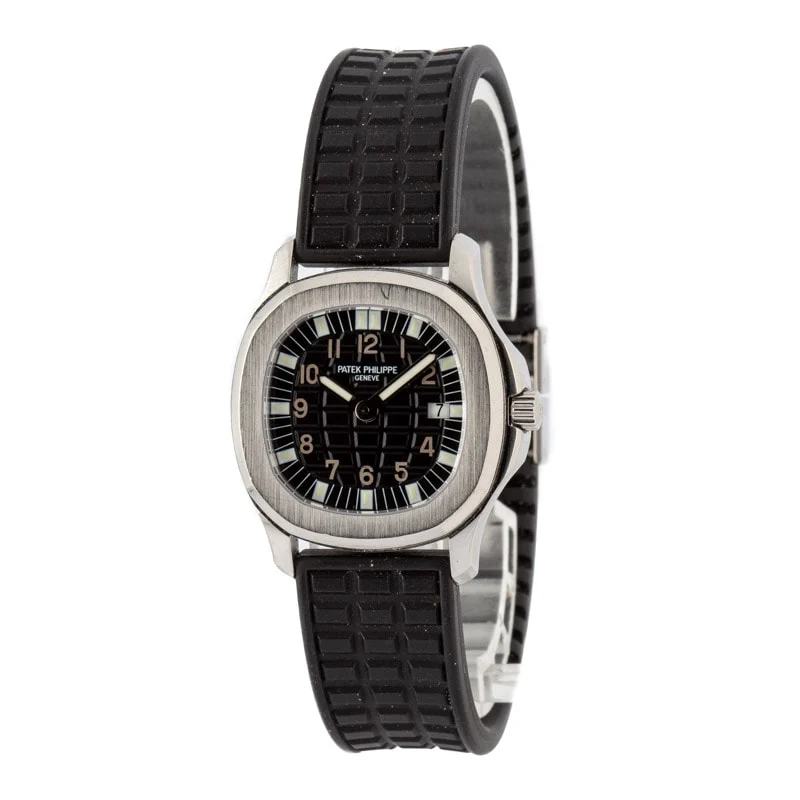 Patek Philippe Ladies Patek Philippe Aquanaut 4960A Stainless Steel
Why steel dominates serious watchmaking
Steel became the standard watch case material because it solves problems no precious metal can. It resists corrosion from sweat and saltwater, it is hard enough to survive daily contact with doorframes and desks, it is hypoallergenic for most wearers, and when it does mark, a watchmaker can refinish it. Gold cannot be refinished indefinitely without losing material and definition. Steel can take several careful refinishes over a lifetime.
Grades matter. 316L is the industry standard — a low-carbon austenitic stainless with strong corrosion resistance and excellent machinability. 904L, used by a handful of manufacturers, adds chromium, nickel, molybdenum and copper for greater resistance to acids and a subtly brighter polish, at the cost of being significantly harder to machine. In real-world wear, both are excellent; 904L is a manufacturing statement more than a functional necessity for most owners.
The visual quality of a steel watch comes almost entirely from finishing. Brushed surfaces absorb light and hide fine scratches; polished surfaces reflect it and show every mark. Where the two meet, a crisp bevel with no rounding is the mark of careful case work — and the single most reliable way to judge build quality at a glance. Steel underpins nearly all of our sports watches, dive watches and chronographs.
Judging and maintaining a steel case
Where the quality is, and how to keep it.
Look at the transition lines
Where brushing meets polishing, the edge should be sharp and dead straight. Soft, rounded transitions indicate either cheap manufacture or heavy over-polishing during a past service.
Beware the over-polished case
Repeated polishing removes metal and softens the case geometry. Collectors pay a premium for unpolished, sharp-edged cases. We note polishing history where it is evident.
Clean it properly
Warm water, mild soap and a soft toothbrush on the bracelet, especially between the links. Steel tolerates this; do not do it to a leather strap.
Fine scratches are refinishable
A brushed surface can be restored with a proper grain. This is a job for a watchmaker, not a household abrasive.
Steel specification terms
What you will see referenced on product pages and in the industry.
- 316L stainless
- The industry standard. Low carbon, highly corrosion resistant, easily machined and refinished.
- 904L stainless
- A higher-alloy grade with additional chromium and molybdenum. Brighter polish, harder to machine, used selectively.
- Brushed finish
- A directional grain that diffuses light and disguises everyday hairlines.
- Polished finish
- Mirror surfaces, usually reserved for bezels, chamfers and centre links to add contrast.
- Bead-blasted
- A uniform matte texture used on tool and military-derived watches to eliminate reflection.
Steel watches from Lume Wrist Watches
Case condition reported precisely
We describe hairlines, dings and any evidence of prior polishing rather than photographing around them.
Bracelet stretch checked
Link play is the clearest sign of a hard-worn steel bracelet, and we assess it on every piece.
Sized free before dispatch
Give us your wrist measurement with the order.
Two-year warranty
Mechanical coverage direct from our office.
Stainless Steel Watches — frequently asked questions
Is 904L steel better than 316L?
It is more corrosion resistant and takes a brighter polish, but 316L is excellent and used by the overwhelming majority of fine watchmakers. For daily wear the difference is negligible.
Do stainless steel watches rust?
Not under normal conditions. The chromium content forms a passive oxide layer that protects the surface, including against saltwater.
Can scratches be removed from a steel watch?
Yes. A watchmaker can rebrush or repolish the affected surfaces. Do this sparingly — each refinish removes a small amount of metal.
Is steel suitable for sensitive skin?
Generally yes. 316L is considered hypoallergenic, though a small number of people react to its nickel content.
Why do steel sports watches sell for so much?
Demand for the most sought-after steel references exceeds production, and the finishing on a high-end steel case is more labour-intensive than most buyers realise.
Steel or gold for everyday wear?
Steel, almost always. Reserve gold for occasions where the statement is the point.
Related collections
- Sports Watches — Where steel does its best work.
- Dive Watches — Corrosion resistance in the water.
- Chronograph Watches — The traditional steel instrument watch.
- Men's Luxury Watches — The everyday default case material.
- Affordable Luxury Watches — Steel keeps quality accessible.
View All Lume Watches · Speak to a specialist
Popular searches
- Luxury Watches For Sale
- Luxury Watches Online
- Men's Luxury Watches
- Women's Luxury Watches
- Automatic Watches
- Mechanical Watches
- Chronograph Watches
- Skeleton Watches
- Dress Watches
- Sports Watches
- Dive Watches
- Gold Watches
- Rose Gold Watches
- Stainless Steel Watches
- Sapphire Crystal Watches
- Premium Wrist Watches
- Affordable Luxury Watches
- Luxury Watches Under $500
- Luxury Watches Under $1,000
- Luxury Watches For Gifts