Dive Watches
A rotating bezel, a luminous dial and a case sealed against pressure. The dive watch is the most capable everyday watch ever designed — most of which never sees the ocean.
Dive Watches available now
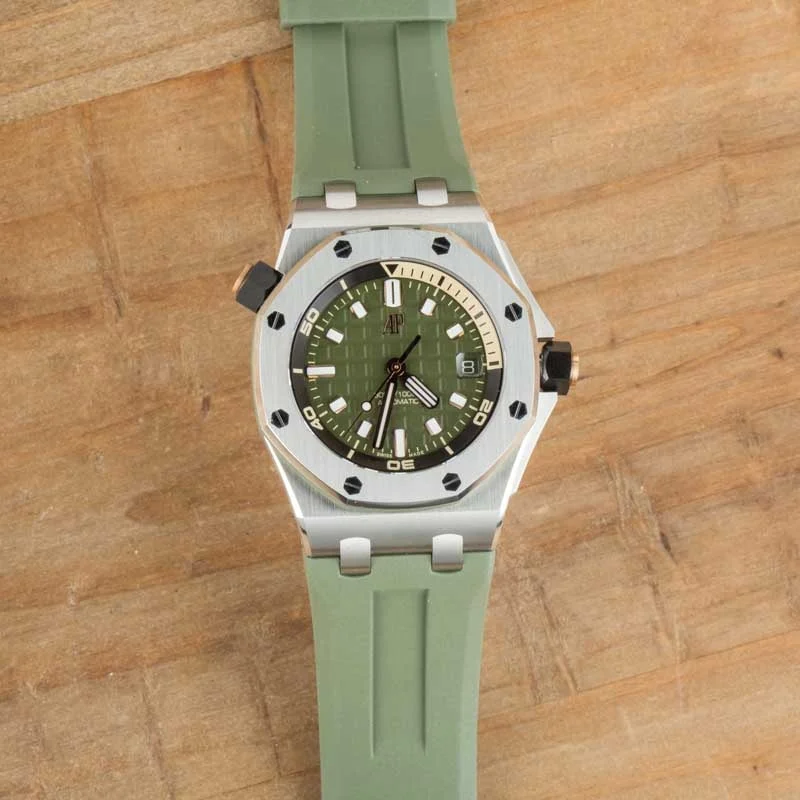 Audemars Piguet Audemars Piguet Royal Oak Offshore Diver Khaki Green
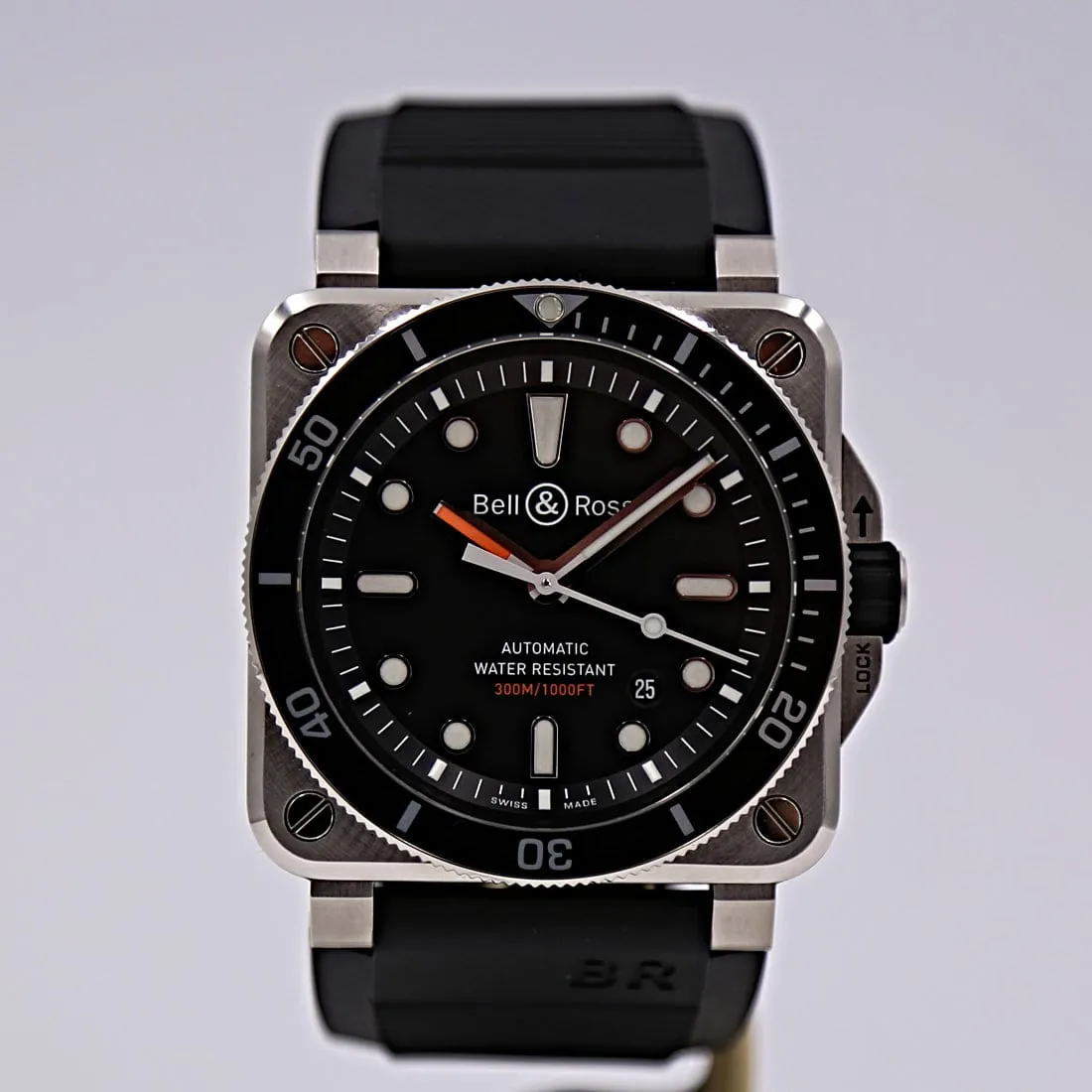 Bell & Ross Bell & Ross BR 03-92 Diver (BR0392-D-BL-ST/SRB)
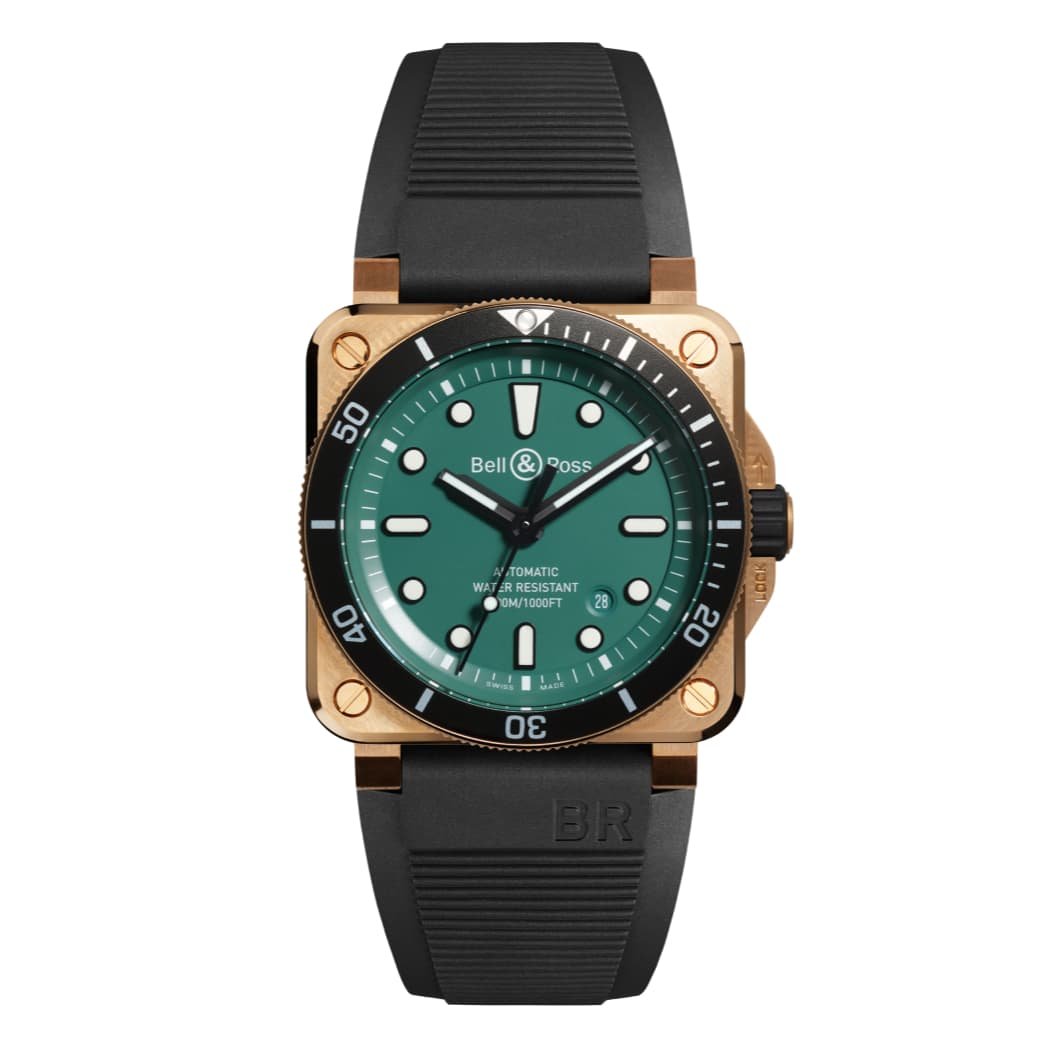 Bell & Ross Bell & Ross BR 03-92 Diver Black & Green Bronze (BR0392-D-LT-BR/SRB)
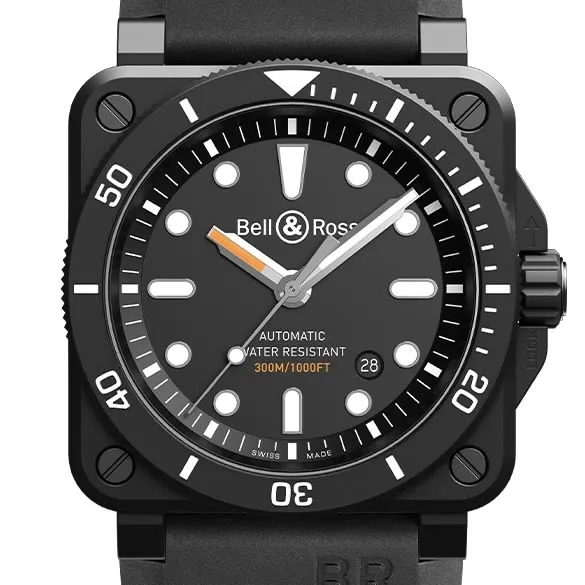 Bell & Ross Bell & Ross BR 03-92 Diver Black Matte (BR0392-D-BL-CE/SRB)
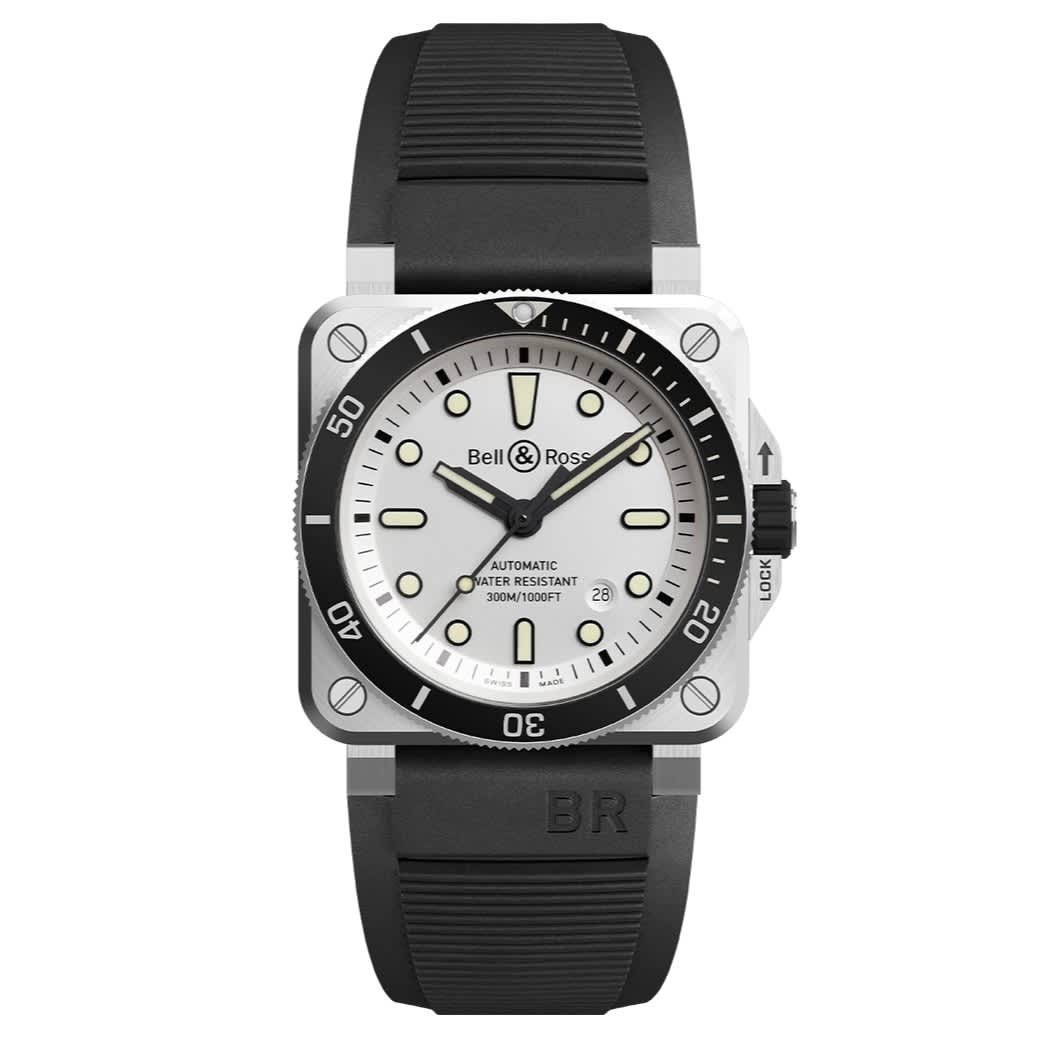 Bell & Ross Bell & Ross BR 03-92 Diver White (BR0392-D-WH-ST/SRB)
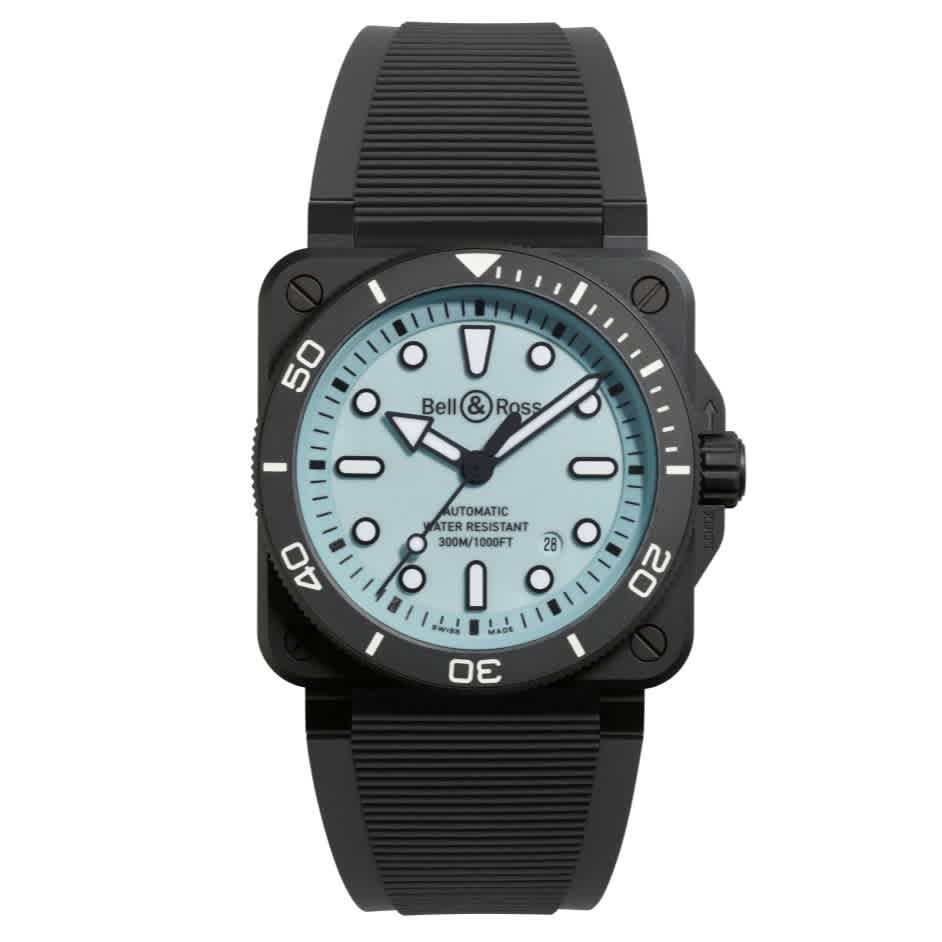 Bell & Ross Bell & Ross BR-03 Diver Full Lum Ceramic (BR03A-D-LM-CE/SRB)
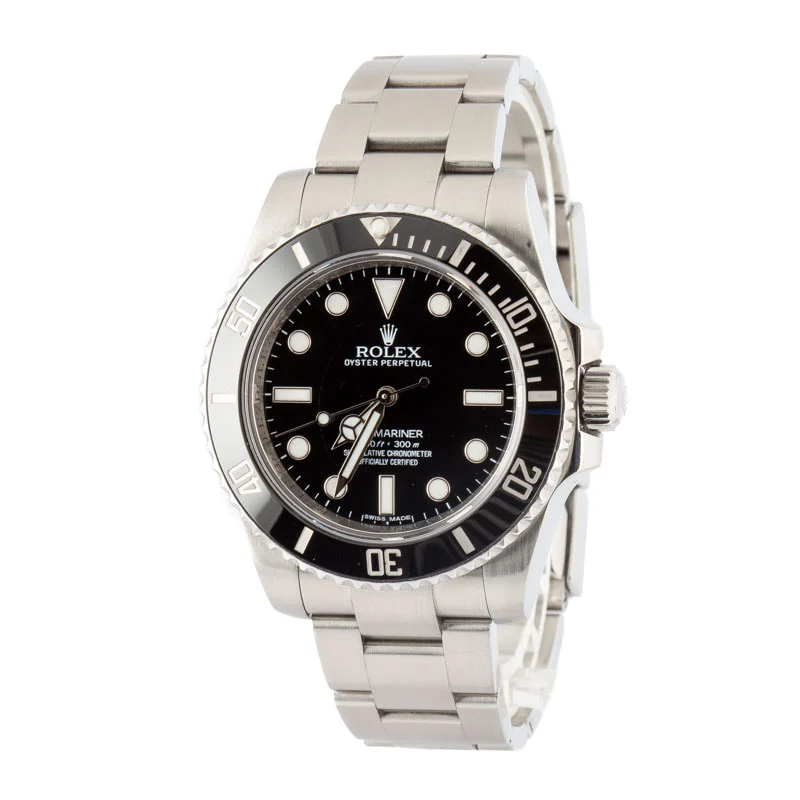 Rolex Black Dial Rolex Submariner Ref 114060 Stainless Steel
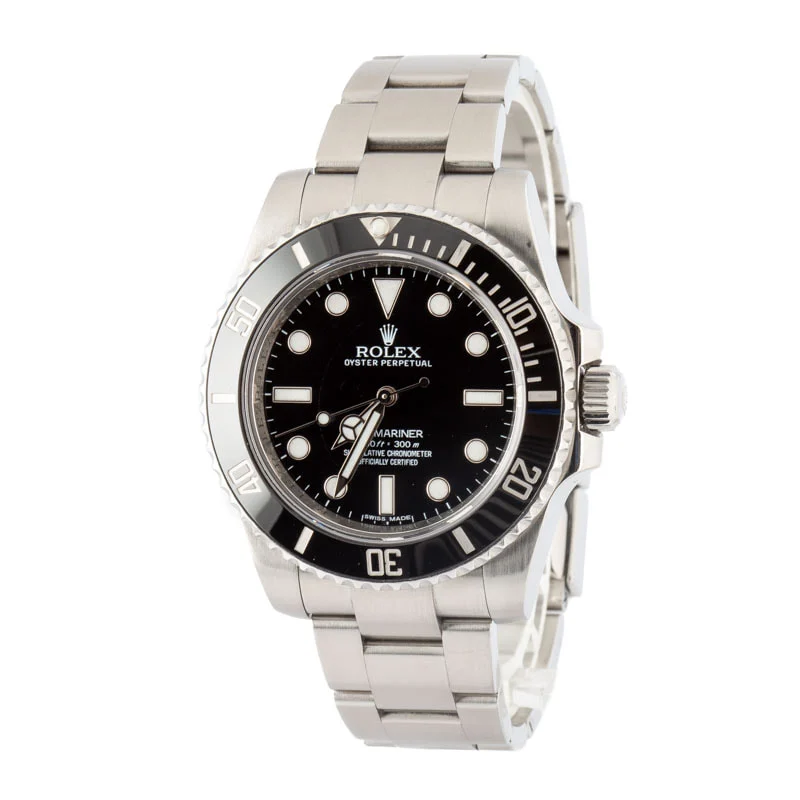 Rolex Black Dial Rolex Submariner Ref 114060 Stainless Steel
The anatomy of a dive watch
The modern dive watch was standardised in the 1950s and has barely changed since, because the original solution was correct. A unidirectional rotating bezel lets a diver mark the moment of descent — it turns only counter-clockwise, so if it is knocked it can only ever overstate elapsed time, never understate it. A screw-down crown threads into the case and compresses a gasket. The dial carries oversized luminous markers because visibility at depth is poor. Together these make a watch that is essentially indifferent to water.
Depth ratings are static pressure tests, not swimming depth guidance, but the practical hierarchy holds: 100m handles swimming and snorkelling without thought, 200m is the accepted threshold for recreational scuba, and 300m and beyond covers professional and saturation use. Almost nobody needs 300m. Almost everybody enjoys owning it, because the same engineering that survives pressure also survives twenty years of daily life.
That is why dive watches dominate the sports watch category and why they are the standard recommendation for a first serious purchase. They read well with a suit at 40mm, they take a bracelet or a rubber strap without complaint, and they are the most forgiving category to buy in stainless steel. Almost all of them are automatic.
Choosing and using a dive watch
What matters in the water, and what matters on land.
Always screw the crown down
The single cause of nearly every flooded dive watch. Check it before water contact, every time. A crown left unscrewed defeats a 300m rating entirely.
Bezel action tells you a lot
A good bezel has firm, evenly spaced clicks — 120 per rotation is standard — with no back-play. A loose or gritty bezel means neglect and usually a service.
Rinse after saltwater
Fresh water over the case, bezel and bracelet after any sea exposure. Salt crystallises in the bezel track and clasp and will eventually seize both.
Pressure test every service
Gaskets are rubber and they age whether the watch gets wet or not. Have the seals tested every few years if you swim in it.
Dive watch specifications
The terms you will see on each listing.
- Unidirectional bezel
- Rotates counter-clockwise only, so accidental movement can never make a diver believe they have more air remaining than they do.
- Screw-down crown
- A threaded crown compressing a gasket against the case tube. Essential to any rating above 100m.
- Depth rating
- 100m for swimming, 200m for recreational scuba, 300m+ for professional use. A static pressure figure, not a diving depth limit.
- Helium escape valve
- Found on saturation-diving models, releasing helium that permeates the case during decompression. Irrelevant to almost all owners.
- Luminous compound
- Modern strontium-aluminate lume charges quickly in daylight and stays legible for hours. Fully applied lume is a mark of a serious tool watch.
Dive watches from Lume Wrist Watches
Crowns and gaskets inspected
We check the sealing surfaces and crown threads on every dive watch before it is listed.
Bezel action assessed
Click precision and back-play are reported in the condition notes.
Lume tested
We charge and photograph the luminous material so you know what you are getting.
Two-year warranty
Mechanical coverage direct from our New York office.
Dive Watches — frequently asked questions
Can I swim with a 100m dive watch?
Yes. 100m comfortably covers swimming, showering and rain, provided the crown is screwed down.
What does the rotating bezel do?
You align the zero marker with the minute hand at the start of a dive and read elapsed time directly from the bezel scale.
Why does the bezel only turn one way?
So an accidental knock can only shorten the indicated remaining time, never extend it — a safety principle from professional diving.
Do I need 300m water resistance?
Almost certainly not. 200m covers recreational diving. Higher ratings are chosen for the over-engineering rather than the necessity.
How often should the seals be tested?
Every few years if you swim with the watch, and always at full service. Gaskets degrade with age regardless of use.
Can a dive watch be worn formally?
A 39–40mm dive watch on a steel bracelet works with most tailoring. For strict formal wear, a dress watch remains the correct choice.
Related collections
- Sports Watches — The wider category dive watches lead.
- Automatic Watches — The movement almost every dive watch uses.
- Stainless Steel Watches — Corrosion resistance in saltwater.
- Men's Luxury Watches — Where dive sizing sits most naturally.
- Sapphire Crystal Watches — Scratch resistance for a tool watch.
Explore The Full Collection · Speak to a specialist
Popular searches
- Luxury Watches For Sale
- Luxury Watches Online
- Men's Luxury Watches
- Women's Luxury Watches
- Automatic Watches
- Mechanical Watches
- Chronograph Watches
- Skeleton Watches
- Dress Watches
- Sports Watches
- Dive Watches
- Gold Watches
- Rose Gold Watches
- Stainless Steel Watches
- Sapphire Crystal Watches
- Premium Wrist Watches
- Affordable Luxury Watches
- Luxury Watches Under $500
- Luxury Watches Under $1,000
- Luxury Watches For Gifts