Skeleton Watches
Remove the dial, cut away everything the movement does not strictly need, and finish every remaining edge by hand. Skeletonisation is watchmaking with nothing to hide behind.
Skeleton Watches available now
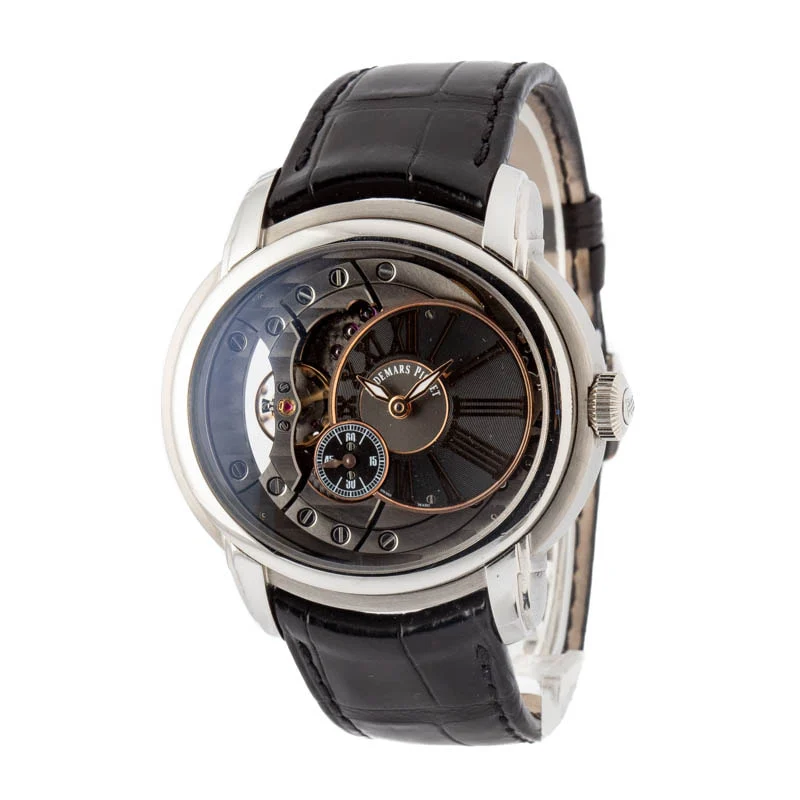 Audemars Piguet Audemars Piguet Millenary 4101 Skeleton Dial
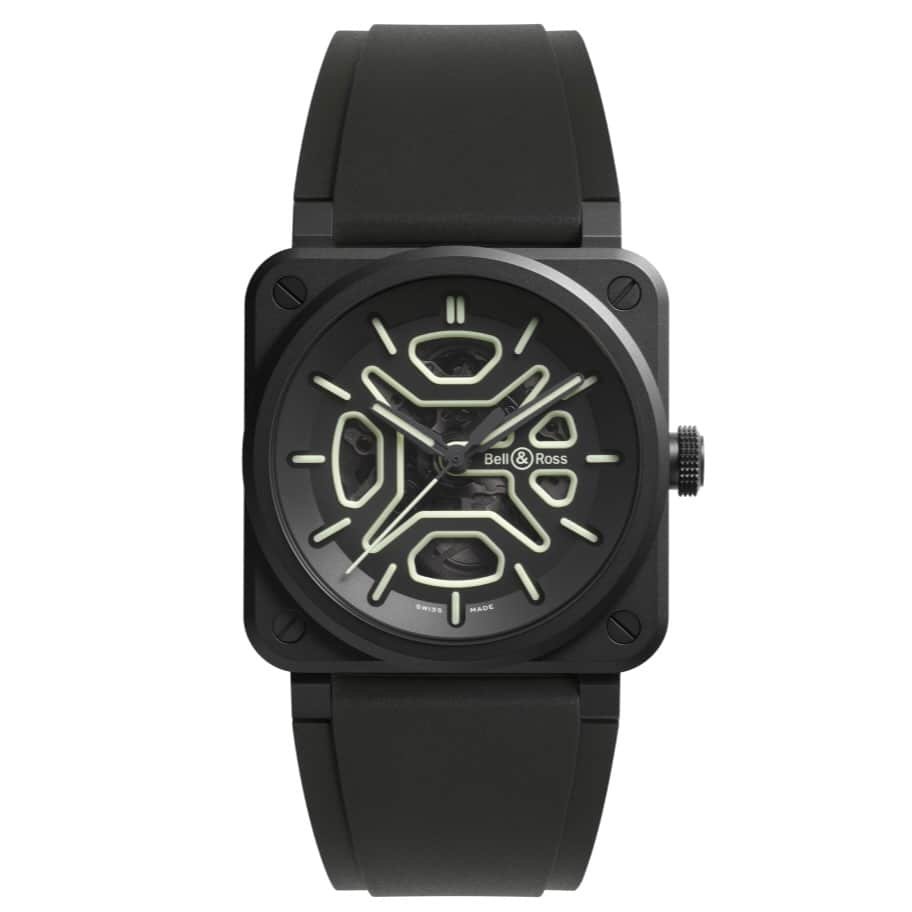 Bell & Ross Bell & Ross BR-03 Skeleton Lum Ceramic (BR03A-LM-SKCE/SRB)
 Bell & Ross Bell & Ross BR-05 Skeleton Black Ceramic (BR05A-BL-SK-CE/SCE)
 Cvstos Cvstos Jetliner PS Grey Brancard Black Titanium (A00103.4110001)
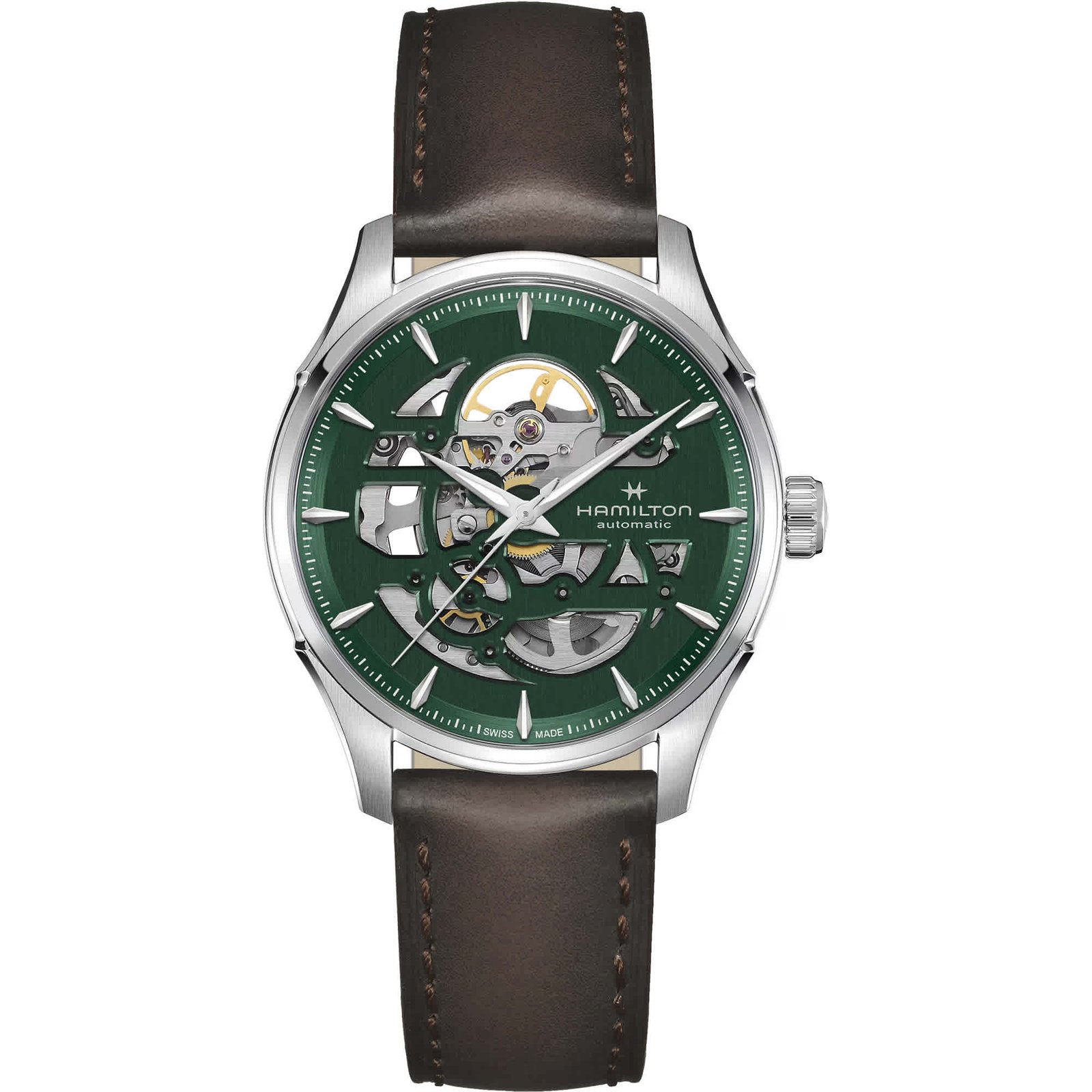 Hamilton Hamilton Jazzmaster Skeleton (H42535560)
 Panerai Panerai Luminor Tourbillon GMT Skeleton Dial
What makes a watch a skeleton
A skeleton watch removes as much material as structurally possible from the plates and bridges of the movement, and either removes the dial entirely or cuts it down to a chapter ring, so the mechanism is visible from the front. It is not a cosmetic exercise. Every gram removed reduces rigidity, so the remaining architecture has to be engineered to keep the gear train in perfect alignment under shock — and every new edge created by the cutting has to be bevelled and polished, because a skeleton hides nothing.
Traditionally this was done by hand with a piercing saw and files, and the very finest examples still are. Modern CNC machining handles the bulk removal, but the anglage — the bevelled, mirror-polished internal angles — remains hand work, because no machine cuts a sharp inward corner. When you evaluate a skeleton watch, look at those internal angles. They are the honest measure of how much labour went in.
Skeletons are dramatic rather than discreet. They suit someone who wants the watch to be a conversation, and they pair naturally with the mechanical and automatic enthusiasm that usually leads people here. Because the pieces are inherently limited in number, our skeleton holdings are small and change frequently — if nothing below suits, our specialists can source a specific reference.
Living with an open-worked dial
The honest trade-offs of the most visually demanding category in watchmaking.
Legibility takes a hit
Hands crossing an open movement lose contrast. The best designs solve this with skeletonised hands filled with luminous material or a contrasting chapter ring. Try reading the watch in a photograph before you commit.
Judge it by the angles
Sharp, mirror-polished inward bevels indicate hand finishing. Rounded, matte edges indicate machining alone. The price difference between the two is enormous and entirely justified.
Expect a thicker case
A display of this kind usually pairs with a sapphire case back and a movement designed to be seen from both sides, which adds height.
Dust and service
Nothing enters a properly sealed watch, but any mark on the movement is now visible. Skeletons reward keeping to the service schedule.
The craftsmanship vocabulary
Terms that appear in skeleton watch descriptions.
- Open-work
- The general term for cutting away plates and bridges to reveal the mechanism beneath.
- Anglage
- Bevelling and polishing the edges of bridges to a mirror finish at a 45-degree angle. The hallmark of hand finishing.
- Chapter ring
- The narrow ring carrying hour markers, retained when the main dial is removed so the watch remains readable.
- Sapphire case back
- A transparent back allowing the movement to be viewed from the reverse as well — see sapphire crystal watches.
- Perlage
- Overlapping circular graining applied to flat surfaces, often visible in the gaps of a skeletonised plate.
Buying a skeleton watch from us
Photographed in macro
We shoot the movement close enough that you can assess the finishing yourself before buying.
Small, curated holdings
Skeletons are rare in the secondary market. We list what we genuinely have rather than padding the category.
Sourcing on request
Tell our specialists the reference you want and we will hunt it — see our concierge service.
Two-year warranty
Mechanical coverage as with every watch we sell.
Skeleton Watches — frequently asked questions
What is a skeleton watch?
A watch whose dial and movement plates have been cut away so the mechanism is visible from the front, with every exposed edge finished by hand.
Are skeleton watches hard to read?
They can be. Look for a contrasting chapter ring and luminous-filled hands, which restore most of the legibility lost to the open dial.
Are skeleton watches less durable?
A well-engineered skeleton is as robust as a conventional watch — the remaining structure is designed for the load. Poorly executed ones are not, which is why provenance matters.
Why are skeleton watches expensive?
The hand-finishing of every newly created edge is enormously labour-intensive, and cannot be automated at the quality level collectors expect.
Do you always have skeleton watches in stock?
Not always — the category is genuinely scarce. If the current selection is short, our specialists can source a specific reference for you.
Are skeleton watches automatic?
Both automatic and hand-wound skeletons exist. Hand-wound versions show more of the mechanism because there is no rotor covering it.
Related collections
- Mechanical Watches — The engineering being displayed.
- Automatic Watches — Self-winding calibres with visible rotors.
- Sapphire Crystal Watches — The crystal that makes the display possible.
- Dress Watches — Where an open dial reads most elegantly.
- Premium Wrist Watches — Hand-finishing as a measure of quality.
View All Lume Watches · Speak to a specialist
Popular searches
- Luxury Watches For Sale
- Luxury Watches Online
- Men's Luxury Watches
- Women's Luxury Watches
- Automatic Watches
- Mechanical Watches
- Chronograph Watches
- Skeleton Watches
- Dress Watches
- Sports Watches
- Dive Watches
- Gold Watches
- Rose Gold Watches
- Stainless Steel Watches
- Sapphire Crystal Watches
- Premium Wrist Watches
- Affordable Luxury Watches
- Luxury Watches Under $500
- Luxury Watches Under $1,000
- Luxury Watches For Gifts